
What Is Carnival Glass? A Collector’s Guide
A practical way to recognize the shimmering pressed glass that has brightened collectors' cabinets for more than a century.
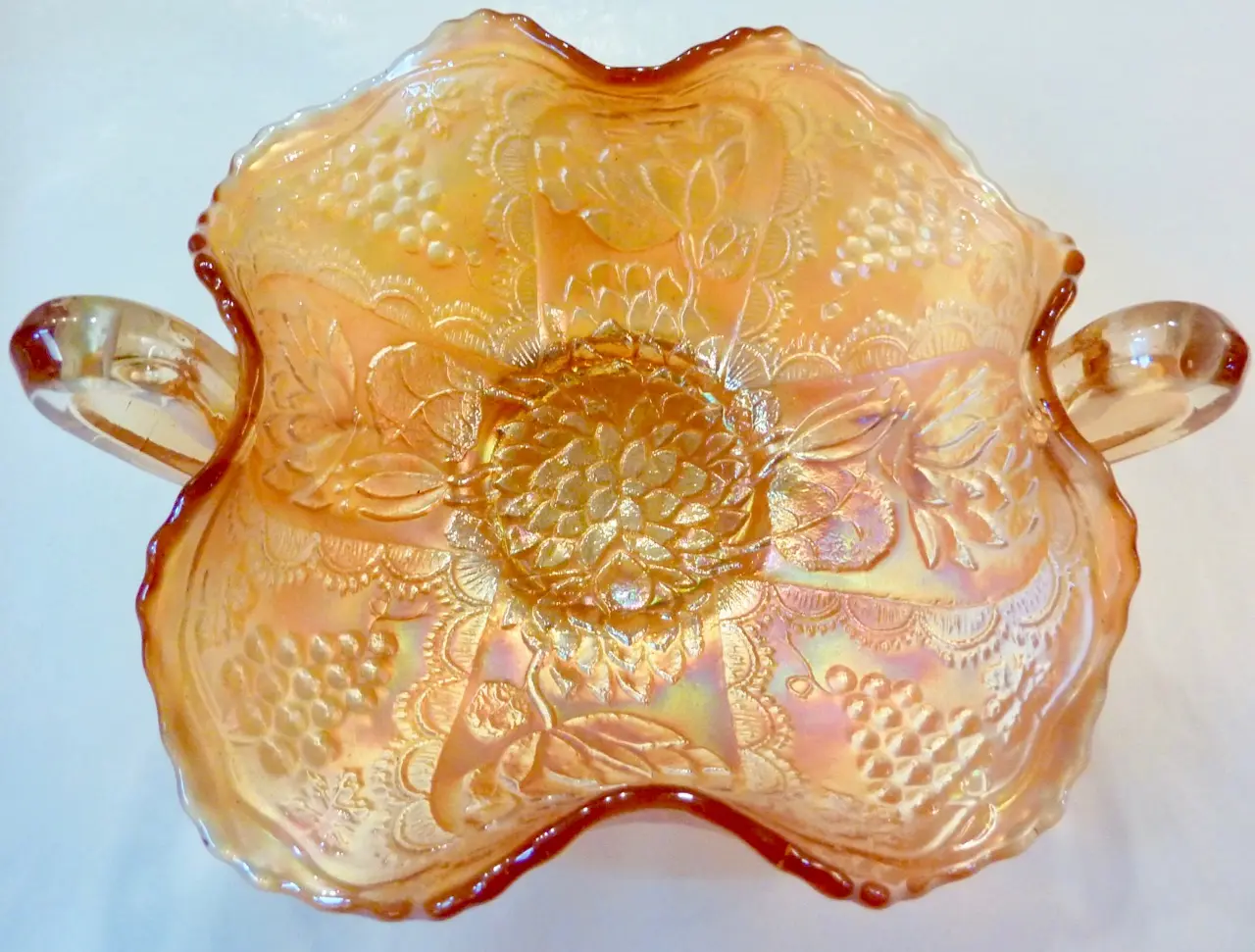
Carnival glass is hard to miss once you know what you are seeing. A bowl may flash orange, gold, violet, or blue as it moves through the light. A plate can look almost ordinary from one angle, then bloom with color from another. That changing surface is the first clue, but it is not the whole answer. For collectors, the real pleasure is learning to read the pattern, shape, base color, and condition together.
You might meet carnival glass in a family cabinet, at an estate sale, or among mixed pieces at an antique store. It was made in many forms, including bowls, plates, vases, compotes, tumblers, and covered dishes. A careful look can tell you much more than a quick label. This guide will help you decide what to inspect first and when to keep researching.
Carnival glass is molded glass with an iridescent finish
Carnival glass is usually pressed or molded glass with a vivid iridescent surface. The Corning Museum of Glass describes it as inexpensive pressed glass with strong gold, orange, and purple iridescence, made in the United States around the turn of the twentieth century. The surface shimmer comes from a treatment applied after the glass was formed, not from a rainbow painted on afterward.
The basic form matters. Most carnival pieces have a molded design that is part of the glass itself: grapes, leaves, fans, stars, flowers, geometric panels, or a pictorial scene. Many also have ruffled, crimped, or flared edges shaped while the glass was still warm. Those details give collectors more to compare than color alone.
Not every iridescent piece is carnival glass. Fine blown art glass, later decorative glass, and other factory finishes can also throw color in the light. Start with the combination of a molded pattern and a glowing treatment. Then build the identification from there, just as you would with any piece of vintage glassware.

Why it is called carnival glass
The name came later than the glass itself. Fenton introduced its iridescent ware in 1907, and other American makers quickly joined the market. The Kent State University Museum's history notes that collectors began using the name “carnival glass” in the 1950s, after stories circulated about pieces used as midway prizes. The nickname stayed, even though the original makers sold the glass under other names.
That history explains why you may see older descriptions such as iridescent ware, Iridill, Golden Iris, or other trade names. These are useful research clues, but they do not prove a maker by themselves. A label can be a helpful lead. The full pattern, shape, base color, and any mark still need to agree.
Carnival glass also had a practical appeal. Its reflective finish brought life to a shelf or table in homes where a dramatic art-glass piece would have been out of reach. That mix of accessible tableware and showy surface is still part of its charm. A small bowl can change character every time you move it near a window.
Look for iridescence, then find the base color
Iridescence is the color-shifting sheen on the surface. It can look like oil on water, a soap bubble, or a thin metallic glow. Marigold is the color most people recognize first: warm amber or clear glass beneath an orange-gold finish. But carnival glass can also appear in amethyst, blue, green, red, white, smoke, and other shades.
To identify the base color, do not rely only on the brightest part of the surface. Hold the piece to indirect daylight and inspect the underside, foot, edge, or thinner areas where the base glass reads more clearly. The International Carnival Glass Association recommends looking through the base in strong light, because the glass color and the iridescent treatment can tell different stories.
Describe what you see in plain language before searching. “Amethyst footed bowl with an orange sheen” is more useful than simply “purple carnival glass.” You are creating a reliable trail of clues for yourself, especially when comparing online photographs that may be lit or edited very differently.

Read the molded pattern and the shape together
Pattern identification is the center of carnival-glass collecting. Begin with the form. Is it a bowl, plate, vase, bonbon dish, water set, tumbler, or compote? Does it have a collar base, a foot, a handle, or a shaped edge? Next, study the raised decoration from center to rim. Count the panels and note whether the pattern includes flowers, grapes, birds, peacocks, scrolls, or geometric relief.
Then turn the piece over. Check whether the pattern continues onto the base, whether the foot is plain or decorated, and whether any mark is visible. A maker's mark is valuable evidence, but many pieces are unmarked. In that case, a strong match must explain the whole object, not only one leaf or one scallop.
Fenton, Northwood, Imperial, Dugan, and Millersburg were important American makers in the early years. Northwood's underlined N and some Imperial marks can help when they are present. But a mark should support the pattern evidence, not replace it. Our Fenton glass guide follows the same collector habit: let marks, shape, color, finish, and condition agree before you settle on an attribution.
A simple first-look checklist
When you are standing in front of a piece, work from the broadest clue to the smallest. First, look at the full silhouette. Note its purpose, whether it is a bowl, plate, vase, or another form, and whether the edge is plain, ruffled, or crimped. Next, move it through the light to see the iridescent treatment, then look through the base or foot to describe the glass beneath it.
After that, photograph or write down the molded pattern. Include the center, rim, base, and any repeated panels. Measure the height and widest diameter. Finally, inspect the rim and foot for damage before you begin a serious search. That short record prevents a familiar problem: finding one attractive detail online and deciding it must be the same pattern before the rest of the piece has been checked.
If you cannot identify it immediately, keep the description open. “Likely carnival glass, maker unconfirmed” is more useful than an elaborate name that has not been supported. Good collecting leaves room to learn. It also makes the piece easier to research again when you find a better reference or a closer comparison.
Check condition before you fall for the shine
Bright iridescence can make small flaws easy to overlook. Examine the rim, the highest points of the pattern, feet, handles, and any crimped edge under a strong but indirect light. Look for chips, cracks, rough spots, repairs, cloudy patches, and worn areas where the sheen has thinned. A beautiful surface does not erase a crack, and a tiny nick does not make a piece worthless. It helps you decide what the piece is worth to you and how carefully to use it.
Ruffled rims deserve extra attention because they are vulnerable. Check each high point instead of sweeping a finger quickly around the edge. Look inside and outside a bowl, then hold it against a pale wall to see whether hairline cracks or haze appear. When you are buying online, ask for photographs of the rim, base, and the most reflective areas before treating a listing as a close match.
Use the same calm approach when cleaning it. Hand-wash with mild soap, lukewarm water, and a soft cloth. Avoid sudden temperature changes and abrasive cleaners. Our vintage glassware care guide explains a cautious routine that protects delicate edges and older surfaces.
Identify first, then judge value
Price is tempting because the surface looks special, but carnival glass value depends on much more than a bright sheen. Pattern, maker, form, color, condition, rarity, completeness, and current collector interest all matter. A common marigold bowl can be a wonderful piece to enjoy, while a less common color in a scarce pattern may attract more attention. Neither outcome can be proven from a single asking price.
Once you have a likely identification, compare recently sold examples that match the same form, pattern, base color, and condition. Be cautious with descriptions that use “rare” without showing why. A listing title can be a useful search term, not a final authority. The practical checks in our guide to what vintage glassware is worth can help you separate a documented match from an optimistic label.
Personal value belongs in the decision too. A modest piece with a pattern you love may be a better choice than a more expensive one that never earns a place in your home. Carnival glass was made to catch the eye. If a piece does that for you, it has already done something worth noticing.
Build your identification from good comparisons
A useful comparison gives you more than a pretty photograph. Look for a full view of the same form, close views of the pattern, an image of the base, and measurements. Museum records, established collector references, old maker catalogs, and well-photographed auction archives can all be helpful places to begin. The goal is to find several examples that agree, not one listing that happens to use the word you were hoping to find.
Keep notes as you go. Record the shape, diameter, height, base color, edge treatment, pattern description, and any mark. Save the details that made a possible match convincing, such as the same number of panels or the same motif continuing across the foot. If a comparison only matches the color or one small part of the design, treat it as a related lead rather than an answer.
It also helps to separate observations from conclusions. “The bowl has a marigold sheen, a ruffled rim, and a grape pattern” is an observation. “It is a Northwood bowl from 1910” is a conclusion that needs evidence. That distinction keeps a collection grounded and makes future research easier. It is perfectly fine to enjoy a piece while its maker or pattern remains open.
Display carnival glass where the light can do its work
Carnival glass is made for changing light, so placement makes a real difference. A spot near a window can reveal its shifting surface, but direct, harsh sun is not the only way to enjoy it. Indirect daylight, a softly lit cabinet, or a shelf against a darker wall often shows the pattern and color more clearly. Give a bowl or vase enough room that its outline is not lost among crowded objects.
Group pieces by a detail you enjoy: a family of marigold forms, several similar ruffled edges, or a few colors that change differently in the room. You do not need a large matched set to make a display feel intentional. A single favorite bowl can be a strong focal point, while a small group gives visitors more shapes and surfaces to notice.
For everyday care, avoid stacking pieces directly on their rims or letting a heavy plate press on a delicate edge. Use shelf liners or small clear supports when needed, and leave enough space to lift each piece without knocking its neighbor. Our guide to displaying vintage glassware offers more ways to give fragile favorites a safe, satisfying place at home.
How Tucson Collectibles helps guests discover glass with character
Vintage glass is more enjoyable when the small details are easy to see. Tucson Collectibles brings together individual finds with clear photographs and candid condition details, so guests can choose a piece for a shelf, a table, or a meaningful gift with a collector's eye.
Browse the current vintage collection for available glass, china, and decorative pieces, or visit Collections to explore the kinds of finds that make a home feel more personal. The best vintage piece is not always the rarest. It is the one whose color, shape, and story feel right when you see it.
Frequently asked questions
Is all iridescent glass carnival glass?
No. Carnival glass is usually pressed or molded glass with an iridescent surface treatment and a patterned form. Other types of art glass can be iridescent too, so look at the complete construction, pattern, and age before naming a piece.
What is the most common carnival glass color?
Marigold is one of the most familiar colors. It often has an amber or clear base glass with a warm orange-gold sheen. The base color matters more than a surface photograph, so hold the piece to light and inspect an uncoated area when possible.
Is carnival glass always marked?
No. Some makers used marks on some pieces, but many carnival glass pieces are unmarked. A maker attribution should come from a matching pattern, form, color, measurements, and mark when one is present, not from one detail alone.
Can carnival glass be used for food or drink?
A sound, undecorated piece may be fine for gentle occasional use, but older finishes, damage, and unknown history call for caution. Hand-wash it, avoid sudden temperature changes, and enjoy questionable pieces as display glass instead.
Related posts
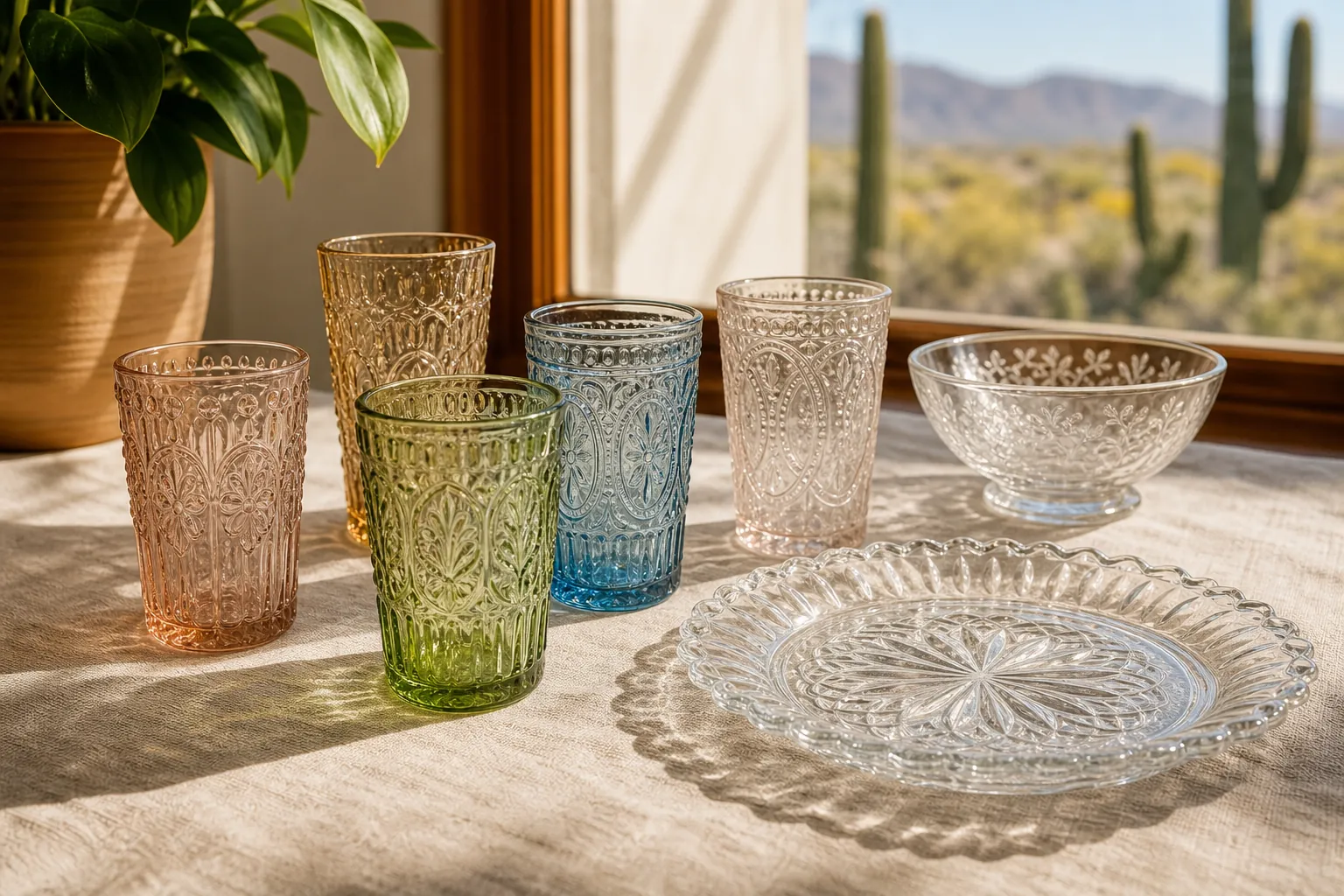
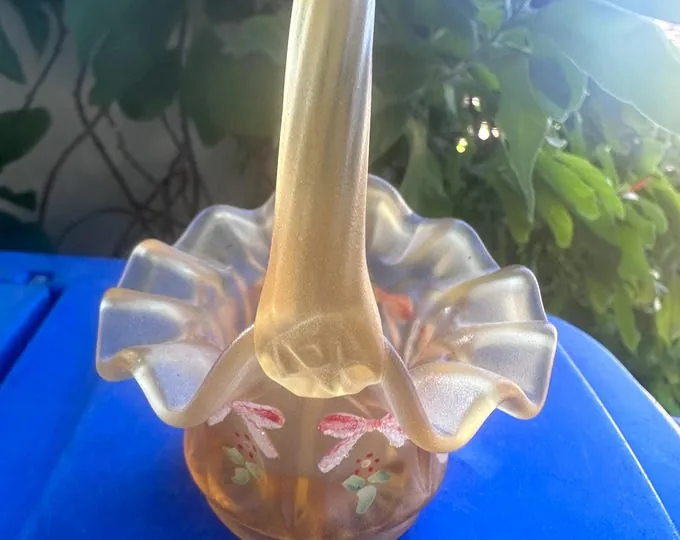
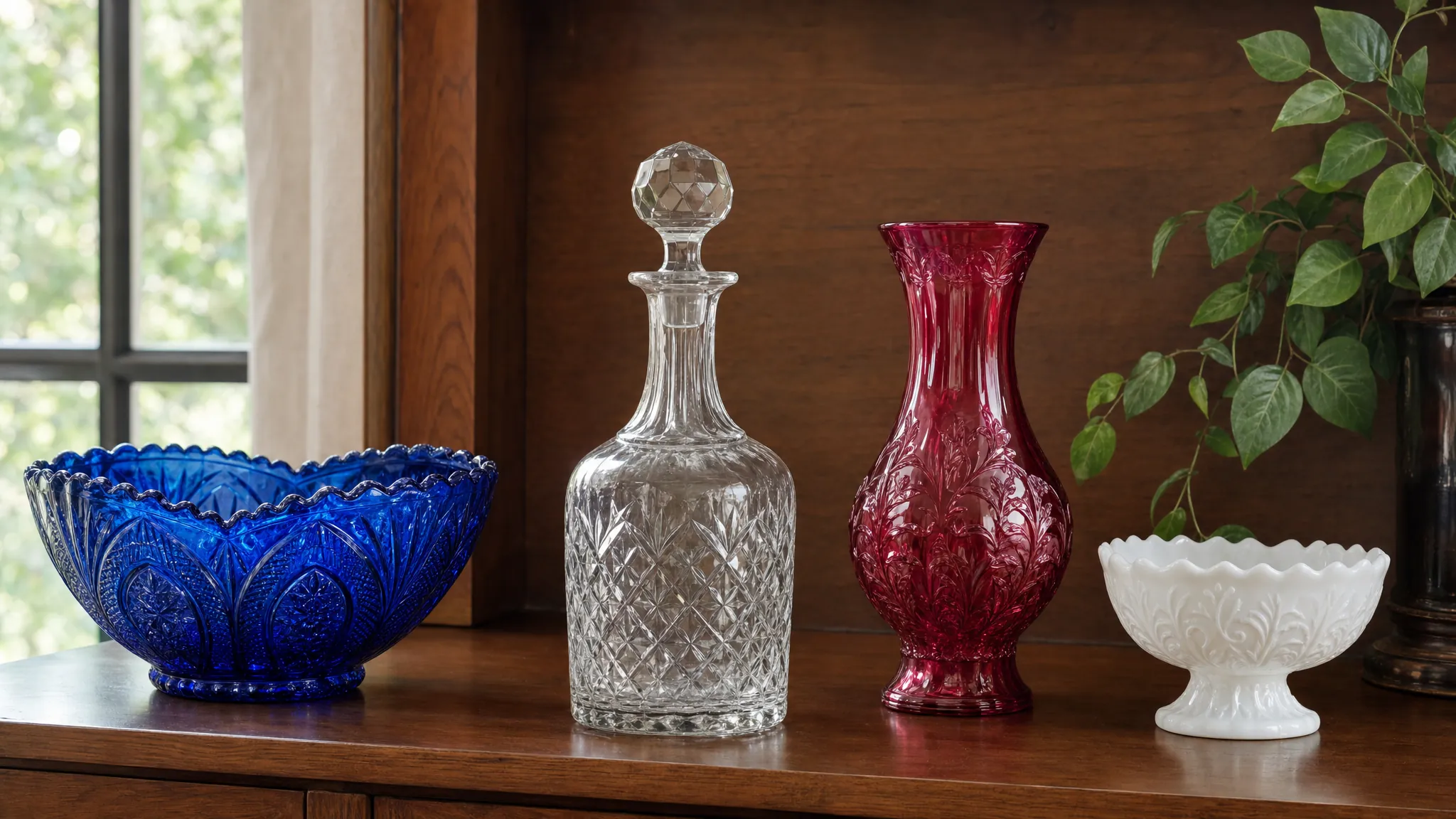
Carnival-glass photographs: Carnival Glass Bowl by Tangerineduel, CC BY-SA 4.0; Carnival Glass Pattern by aussiegall, CC BY 2.0; Carnival glass vase by Kjersti Magnussen, public domain.
Find a piece that catches the light.
Browse vintage glass, china, décor, and one-of-a-kind finds in the current Tucson Collectibles collection.
Shop Vintage