
How to Display Vintage Glassware at Home
A practical way to make a favorite collection feel intentional, not crowded, while giving every piece room to shine.
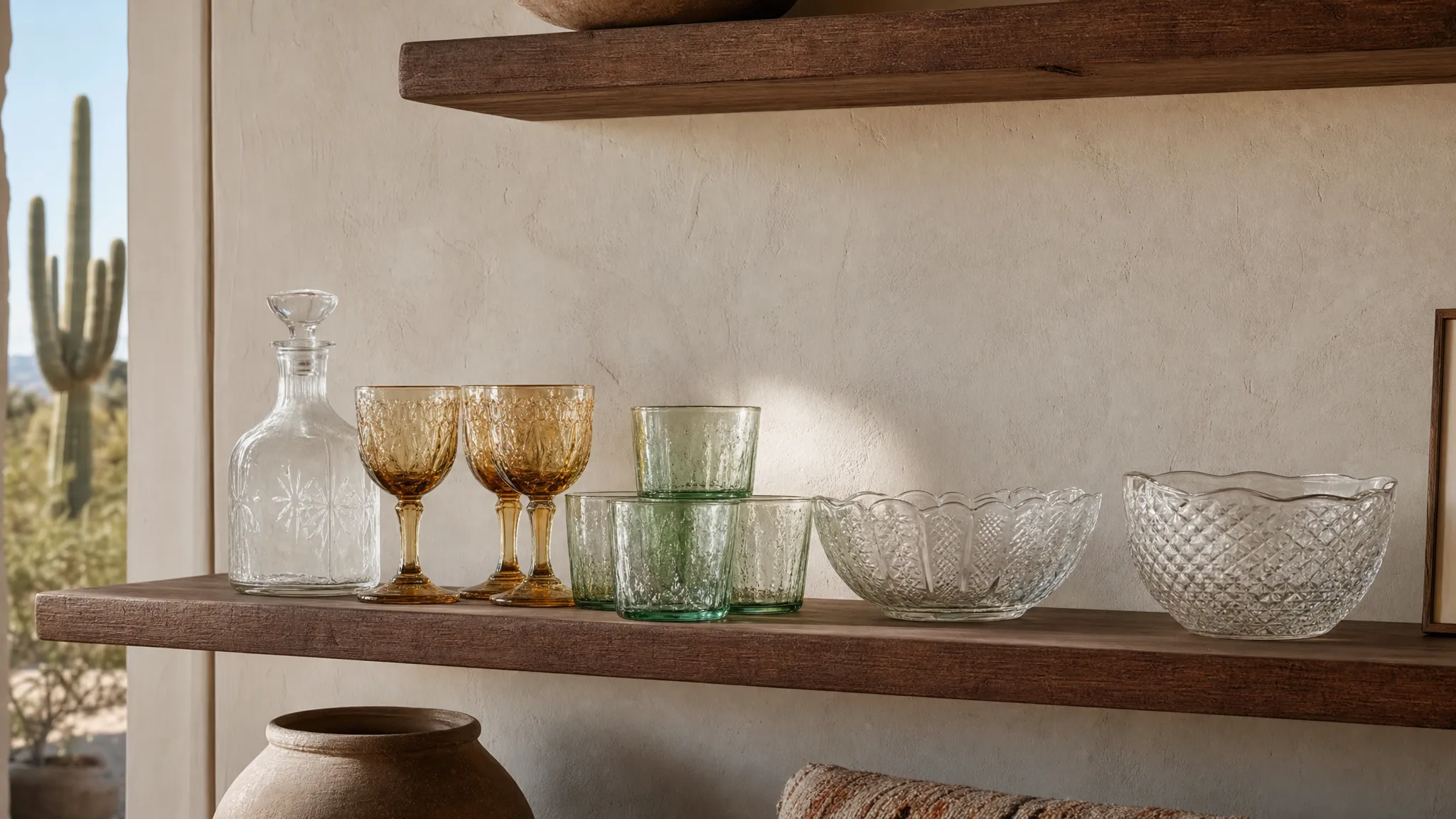
Vintage glassware does not need a formal china cabinet to look at home. A shelf, sideboard, bookcase, or small corner of a kitchen can become a beautiful place for a few favorite pieces. The trick is not finding more room for everything. It is deciding what deserves to be seen, then arranging it so the shape, color, and history of each piece can register at a glance.
That approach also makes a collection easier to live with. You are less likely to knock a delicate rim when pieces are not crowded together, and you are more likely to enjoy the details that made you bring them home in the first place. Whether you have one pressed-glass bowl, inherited stemware, or a growing group of colored tumblers, these ideas can help you display vintage glassware with confidence.
Start by choosing the feeling you want the display to have
Before moving a single piece, decide what you want the collection to do in the room. A row of clear goblets can make a dining space feel welcoming and ready for company. A single dramatic vase may give a quiet shelf more character than ten smaller objects. Colored glass can act like a small piece of art when light reaches it, while etched stemware often feels most at home in a more formal, calm setting.
Choose one simple idea: a display built around color, a group that is useful at the table, a collection from one era, or just the pieces that make you happiest to see. This gives you a filter when every pretty object starts asking to come out of storage. A display feels collected when the pieces have something in common, even if that common thread is simply that they belong in your home.
For collectors still learning the vocabulary of a piece, our guide to identifying vintage glassware is a useful first step. Knowing whether a bowl is pressed, etched, cut-looking, or hand-finished makes it easier to pair it with pieces that let its details stand out.
Give every piece a stable, low-stress home
The prettiest display is not worth much if you have to worry about it every time someone passes by. Choose a surface that does not wobble and keep delicate pieces out of a doorway, a crowded counter, or the edge of a high-traffic table. A cabinet, a shelf against a wall, or the back of a sideboard gives glass more protection than a narrow ledge that gets bumped every day.
Leave a little breathing room between rims, handles, stems, and bowls. The goal is not to make every shelf look sparse. It is to avoid the slow, accidental wear that happens when glass touches glass during dusting or daily movement. A larger serving bowl often needs more space around it than you expect. Stemware benefits from being easy to pick up without threading your hand between other stems.
A glass-front cabinet is useful because it limits dust and lets a small collection read as one composed scene. An open shelf works just as well when you keep it edited. Museum care guidance consistently emphasizes stable support and careful handling, and the same common-sense habits are useful at home when you are arranging fragile objects.

Work in small groups instead of filling every inch
Glassware has presence. A single patterned bowl catches light, repeats its texture, and creates a visual pause. When every inch of a shelf is full, those qualities disappear into one busy surface. Start with three to five pieces, then step back. If the shelf feels bare, add one item at a time until the arrangement looks complete rather than merely full.
Grouping by a shared detail keeps a mixed collection from feeling random. You might place pale green tumblers together, group clear pressed glass by pattern, or show a decanter with two coordinating glasses. Vary height and width so the eye moves naturally through the arrangement: a taller vase near the back, a medium piece beside it, and a lower bowl or dish in front can create depth without hiding anything.
Do not be afraid to leave empty space. Empty space is what lets a scalloped rim, a thick base, or a beautiful color register. It also gives you room to rotate pieces later. A display that changes with the season or your mood feels more personal than one that has been packed tight and forgotten.
Use light to show off color and pattern, not to overwhelm it
Indirect daylight can make colored glass look extraordinary. Place an amber dish, a blue vase, or a pale green tumbler where it receives soft light from nearby, then look at it at different times of day. You may find that a piece you barely noticed on a dark shelf becomes the focal point of the room when the light reaches it gently.
Be cautious about harsh, all-day sun. It can make a display difficult to see through glare, heat the shelf, and put unnecessary strain on surrounding finishes and fabrics. A location near a window but out of the direct beam is usually easier to live with. If the light is strong, try a side wall, a lower shelf, or a cabinet where the glass can still reflect the room without sitting in the brightest spot.
Clear glass benefits from contrast. Set it against a warm wall, a wood shelf, or a soft linen runner rather than a busy background. The outline and pattern will read more clearly. Colored glass can stand on its own, so give it a quieter neighbor. The Corning Museum of Glass introduction to glass is a useful reference for appreciating the material itself, from its transparency to the way different forms catch light.

Mix useful pieces with decorative pieces thoughtfully
Some collections are meant to be used. A set of goblets can be part of a dining room display and still come down for a birthday dinner. A favorite bowl can sit on a sideboard until it is needed for wrapped candies, keys, or a special serving. Keeping useful pieces within reach gives the collection a life beyond the shelf.
Separate the pieces you reach for often from those that are display-only. A daily tumbler does not need to balance beside a fragile etched goblet, and a bowl with a chipped rim is better appreciated as a decorative object than passed around at a party. This is not about making a collection precious. It is about making choices that fit the condition and purpose of each item.
For table settings, a little mismatch can be charming. A clear bowl, a colored vase, and classic china can share a table when the palette feels deliberate. The Crystal & Elegant Glass collection and Fine China collection offer a good reminder that tableware can be practical and expressive at the same time.
Create a small vignette when you only have a few pieces
You do not need a whole cabinet to make vintage glassware feel special. A small tray on a sideboard, a single shelf in a bookcase, or the top of a dresser can hold a satisfying little arrangement. Start with one larger anchor piece, such as a bowl, vase, or cake stand. Add two smaller companions, then stop before the surface loses its calm.
Books, a folded linen, or a low wooden tray can add height and texture without competing with the glass. Use them sparingly. The supporting pieces should make the glass easier to see, not turn the display into a still life with too many props. Avoid resting a delicate rim against a hard stand or stacking heavy pieces where they can slide.
This is a good place for a sentimental piece that does not match the rest of the house perfectly. A grandmother's bowl, one unusual tumbler, or a small dish found on a memorable trip can become the point of the display. The story is part of the beauty, and a restrained arrangement gives that story room.

Keep cleaning and rotation simple
A display stays appealing when it is easy to care for. Dust with a soft, dry microfiber cloth and handle pieces one at a time with clean, dry hands. When something needs a deeper clean, give yourself a cleared counter and a towel-lined surface rather than trying to wash it in the middle of a crowded sink. Slow is better than hurried around thin rims and stems.
Rotate a few pieces when you want a change. Bringing a bowl out for autumn, swapping in colored glass for a summer table, or moving a favorite decanter to a new shelf makes a collection feel fresh without requiring another purchase. Store the resting pieces with enough padding that they do not rub together, and avoid putting heavy objects directly on top of fragile glass.
The National Park Service's museum collections guidance is a useful reminder that preservation begins with good support, thoughtful handling, and an environment that protects the object from unnecessary risk. At home, the goal is simpler: make it easy to enjoy your glassware for years to come.
How Tucson Collectibles helps you build a display with character
The most memorable displays are not bought all at once. They grow from individual finds that have shape, color, and a little history. Tucson Collectibles curates vintage glass, china, and decorative pieces that can become the starting point for a table, a cabinet, or a shelf that feels distinctly yours.
Browse the current vintage collection when you are looking for a statement bowl, a pair of goblets, or an unexpected accent. Each listing is a chance to find the piece that gives your display a new direction. For help with a listing, condition details, or local pickup, the contact page is the best place to reach the shop.
Frequently asked questions
What is the best place to display vintage glassware?
A stable shelf, cabinet, sideboard, or wall-mounted display that stays away from busy walkways and harsh direct sun is usually a good choice. Pick a place where you can see the pieces easily without needing to move them often.
How do I keep glassware from looking crowded?
Start with fewer pieces than you think you need. Leave open space between shapes, group by color or purpose, and let one larger bowl or vase act as the focal point. Adding more only works when every piece can still be seen clearly.
Can vintage glassware be displayed in a kitchen?
Yes, provided the shelf is away from steam, grease, and the knock-and-bump zone around a stove or sink. A cabinet, high shelf, or sideboard is often a better choice than a crowded counter.
Should I use plate stands or risers with vintage glass?
They can be useful when they keep a plate, small bowl, or special piece stable. Choose a stand with a broad, secure base and make sure no hard edge is pressing against a delicate rim or painted surface.
Find the piece that completes the shelf.
Browse vintage glass, china, decor, and gifts in the current Tucson Collectibles collection.
Shop Vintage