
How to Identify Vintage Glassware: A Practical Guide
A practical way to look past a pretty pattern and recognize the clues that give a piece its story.
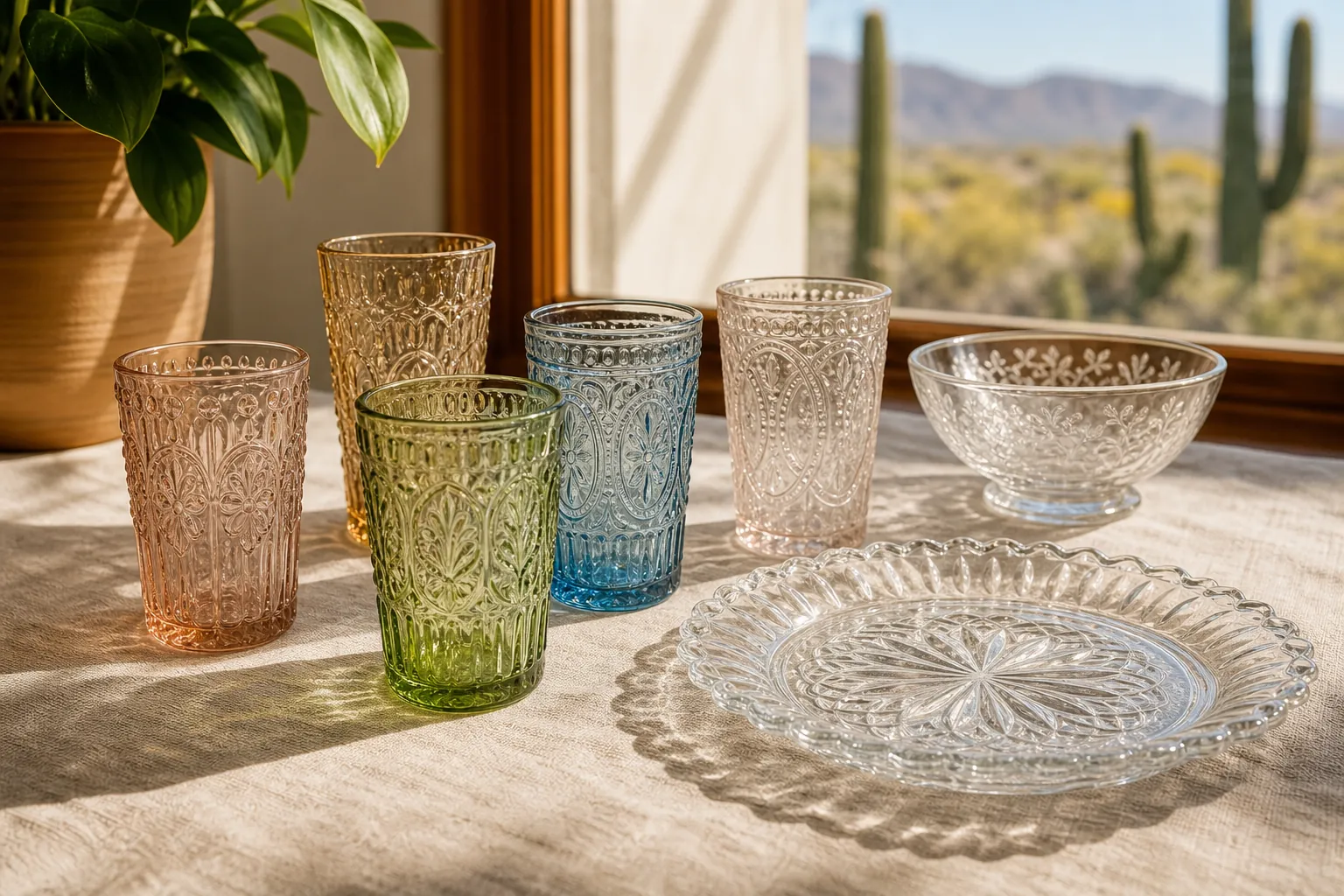
Vintage glassware has a way of making people pause. A pale green tumbler, a dramatic pressed-glass bowl, or a delicate etched stem can feel familiar even when its name is not. The good news is that identifying a piece does not require instant expertise. It requires a calm look at the object, a few useful measurements, and a willingness to let several clues work together.
This guide is for the collector, decorator, or gift-giver who wants to describe glassware more confidently. It will not turn every bowl into a rare find, and that is a good thing. The goal is to recognize what you actually have, notice condition before you fall in love with a pattern, and know when research is worth the extra time.
Start with the whole piece, not the label you hope it has
Begin by setting the glass on a plain surface in daylight. Look at the overall silhouette before you inspect tiny details. Is it a tumbler, a sherbet dish, a vase, a serving bowl, or a stemmed glass? Is the shape crisp and geometric, soft and floral, heavy and sculptural, or thin and formal? Form often narrows the field faster than color alone.
Next, describe what you can see without guessing: clear, amber, pale green, cobalt, milk glass, frosted, opalescent, pressed, etched, cut-looking, hand-painted, or gilded. A simple list is more useful than a confident but incorrect maker name. That description gives you better search terms and helps you compare the piece against the right family of glassware.
For example, "clear pressed bowl with a scalloped rim and repeated leaf motif" is a strong starting point. "Old crystal bowl" is not. Crystal, pressed glass, molded glass, and hand-blown glass can all be beautiful, but they are made and finished differently. The more plainly you describe what is in front of you, the easier it is to find a pattern match later.
When you are building a table or a display, the name is only part of the pleasure. The glass and crystal collection at Tucson Collectibles is organized around the visual character of a piece too, because a well-chosen bowl or set of goblets can earn its place before every detail of its history is known.
Look for manufacturing clues around the rim, seams, and base
Turn the piece slowly in your hands and let the light move across it. Mold seams can suggest that a piece was made in a mold, while a hand-finished rim, small irregularities, or a scar on the base may point toward different production methods. None of these clues should be treated as a verdict on its own. They are part of a larger picture.
Pressed glass often has a raised pattern that repeats evenly around the form. The details may be bold, from hobnail texture to starbursts, arches, or flowers. Etched glass usually has decoration that looks cut or frosted into the surface rather than pushed up from the glass itself. Cut glass often catches the light with sharper, more angular facets. Use those words carefully, because a molded pattern can imitate the look of cutting without being cut by hand.
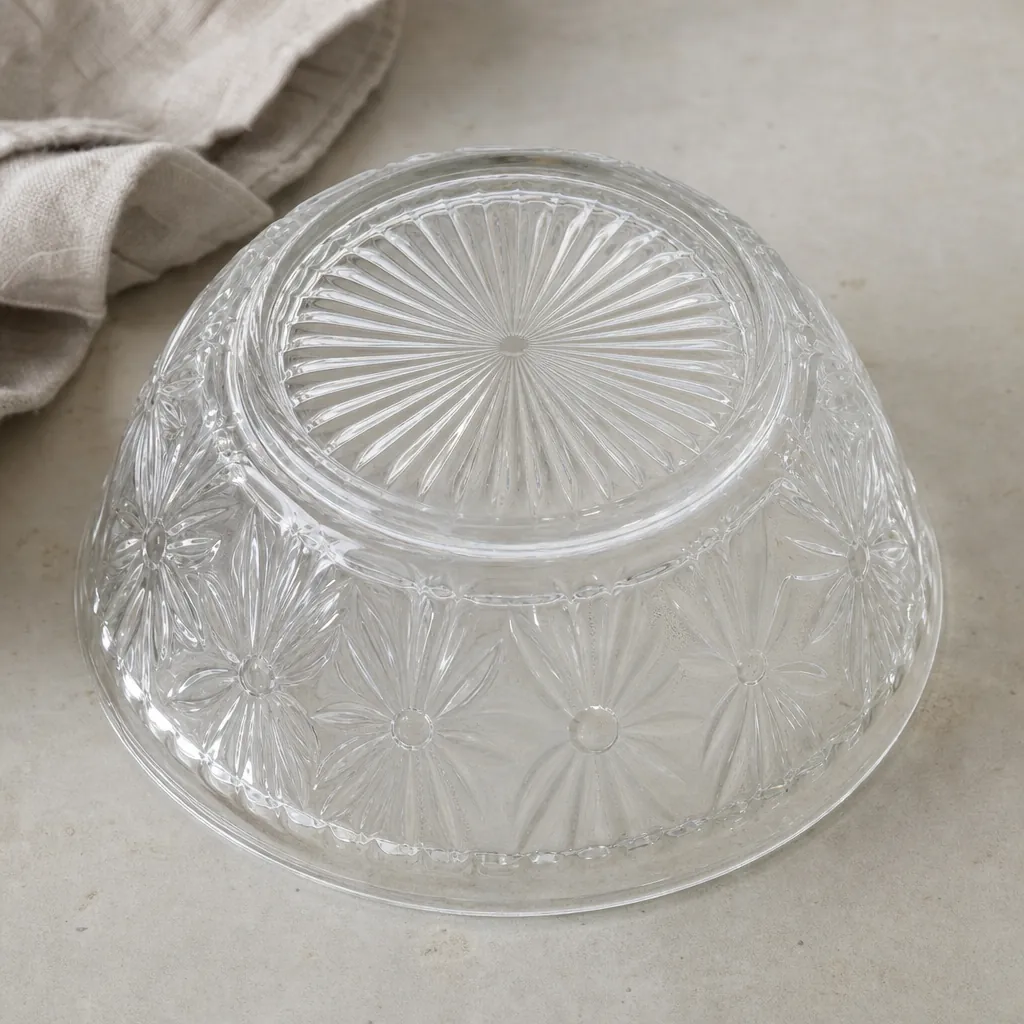
Pay close attention to the rim. A thin, smoothly finished rim can indicate one kind of finishing, while a visibly ground or fire-polished rim may indicate another. On a stemmed piece, inspect the join between bowl, stem, and foot. On a tumbler, notice whether the base is thick, flat, domed, or patterned. Take photos from more than one angle before you begin searching.
Search for a pattern before you search for a price
One of the quickest ways to get lost is to start with value. A price search tends to return whatever is currently listed, whether or not the seller has identified the item correctly. A pattern search is more useful. Start with the object type, color, design motif, and one or two distinctive construction details. Add the height and diameter when results are broad.
Try searches such as "amber pressed glass bowl scalloped rim 8 inch" or "etched floral goblet paneled stem." Compare several photos, not just the first close match. Look for the same pattern reaching the same places on the piece, the same number of panels or petals, and a similar foot, handle, or rim. Small differences can mean you have a related pattern rather than the exact one.
If you find a possible maker, go back to the object and test the match. Does the pattern line up? Are the measurements close? Is the color a documented option? Specialist references such as the 20th Century Glass Encyclopaedia can help when you are comparing a suspected maker or design family. A useful match should explain several features at once, not just one.
For a broader view of how glass is formed and categorized, the Corning Museum of Glass introduction to glass is a useful place to build context. It will not name every pattern for you, but it makes the language of glass easier to understand.
Maker marks matter, but the absence of a mark does not end the search
Check the underside first. Some pieces carry an acid stamp, molded logo, engraved signature, paper label residue, or a number. Use a soft cloth, raking light, and a phone camera held low to the surface. Marks can be very faint. Photograph any letters, symbols, or numbers exactly as they appear, including partial marks.
Many collectible pieces are unmarked, especially when a pattern was sold through different retailers or when a paper label has long since disappeared. That does not make the piece uninteresting. It simply means the pattern, shape, color, and construction must do more of the identification work.
Be skeptical of an isolated mark that seems too convenient. A scratch, mold artifact, or wear pattern can look like a signature when you want it to be one. Compare the full mark with a reputable reference image. If the line weight, spacing, or placement is different, keep researching. Good collecting is comfortable with an honest "unidentified, likely mid-century pressed glass" when that is all the evidence supports.
Use condition to separate character from damage
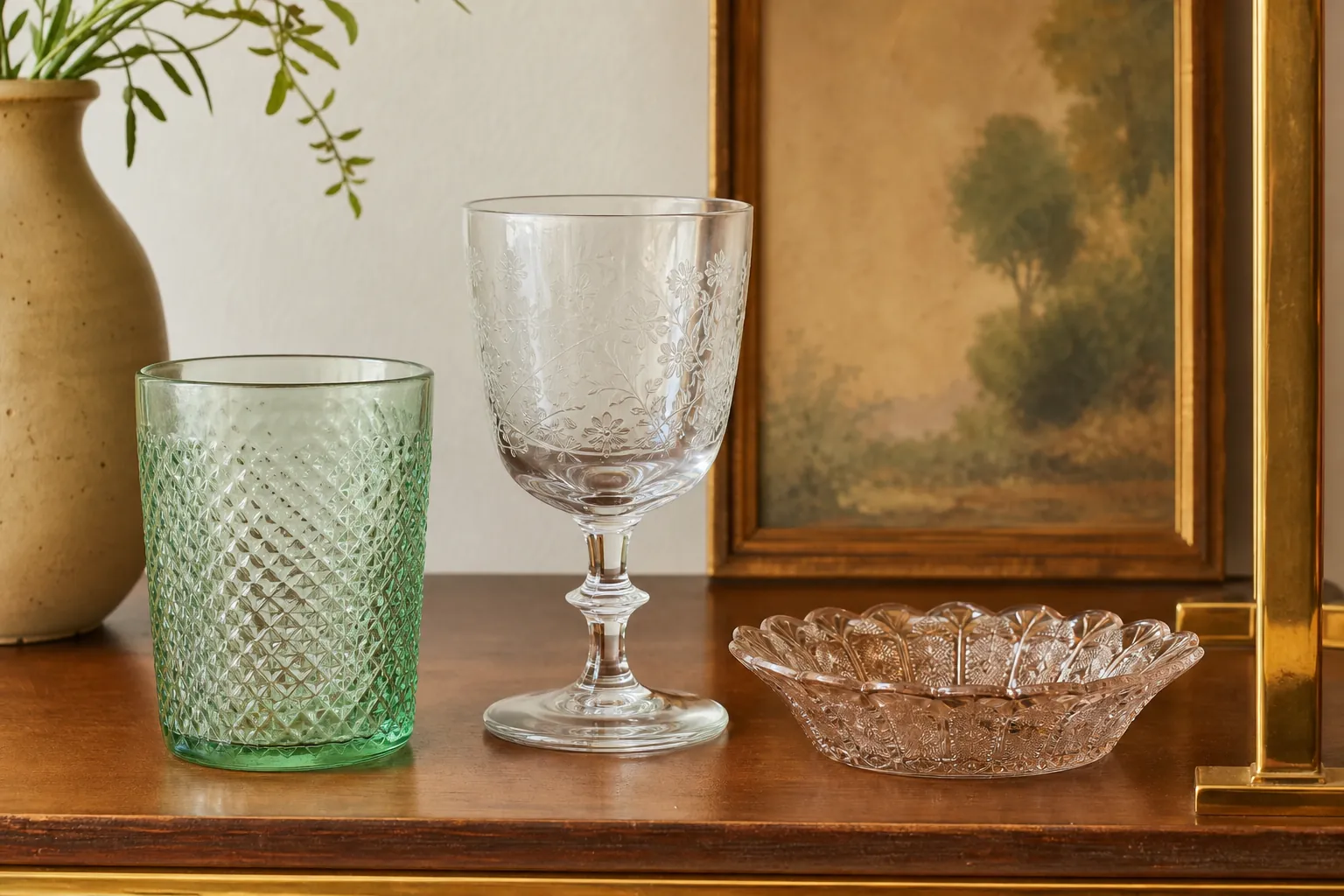
Vintage glass should be examined closely before it is purchased, gifted, or placed into daily service. Run a fingertip lightly around the rim and edge, keeping in mind that sharp chips can cut. Look for flakes, hairline cracks, cloudiness, deep scratches, worn gilding, and small fleabites along the cut or pressed edges. Hold clear glass up to a window or bright wall to make cracks easier to see.
Wear can be honest evidence of a life well lived. A tiny shelf mark on the base or light surface scratching may be perfectly reasonable for an older piece. A crack, a repaired break, or a chip on a drinking rim is different. Describe those issues plainly and decide whether the piece belongs in a display rather than on a table.
Cloudiness deserves a second look. Sometimes it is residue that can be cleaned carefully. Sometimes it is permanent wear to the surface. Avoid aggressive scrubbing, harsh abrasives, or a dishwasher while you are still learning what you have. The aim is to preserve the finish and gather information, not to force a quick transformation.
Collectors who enjoy a more formal table setting may also like our notes on vintage crystal goblets. The same careful habit applies: inspect the rim, foot, and surface before deciding how a piece will be used.
Be thoughtful about use, cleaning, and storage
Not every attractive piece of vintage glass needs to become a daily drinking glass. Pieces with unknown painted decoration, fading gold trim, damage, or an unclear history can be enjoyed beautifully as display objects. A small bowl can hold collected matchbooks, a pair of goblets can frame a shelf, and a patterned plate can bring light to a wall or cabinet.
When you do choose to use glassware, be conservative. Hand-wash with mild soap, avoid sudden temperature changes, and do not stack pieces that can rub against each other. For items with painted or gilded decoration, extra caution is sensible. The Food and Drug Administration's guidance on lead in decorative foodware is a useful reminder that decorated surfaces deserve care when an item's materials or intended use are uncertain.
For storage, give glass a clean, padded shelf and enough room that stems, handles, and rims do not knock together. Avoid wrapping damp glass, and do not store heavy pieces directly on fragile ones. If you are deciding where a newly found piece belongs, look at it as part of the room. A single favorite may be more compelling than a crowded cabinet.
Keep a short collecting record
Once you identify a piece, save more than the name. Note the pattern, likely maker, color, measurements, where you found it, condition, and the source that helped you confirm it. A small record prevents you from repeating the same search later and makes it easier to spot a missing companion piece when you come across one.
It also makes a collection more personal. A green tumbler may be a good find because it fills a set, matches a beloved tablecloth, or reminds you of a family kitchen. Not every collecting decision needs to be an investment decision. The better question is often whether the piece has enough beauty, usefulness, or story to deserve space in your home.
That is why collector plates, glassware, and decor can work so well together. Our guide to vintage collector plates shows a similar approach: notice maker clues and condition, then think about how the piece will live with you.
How Tucson Collectibles helps collectors shop with more confidence
Shopping vintage online is easier when the listing gives you the details you would look for in person. Tucson Collectibles selects individual pieces for character, photographs them carefully, and describes the visible condition so collectors can make an informed choice. That attention matters whether you are replacing a glass from a treasured set, looking for a statement bowl, or choosing a gift with more personality than something new.
Browse the current vintage collection for available glass, china, and decorative finds. The inventory changes often, so a piece that speaks to you is worth a closer look. For questions about a listing, condition, or local pickup, the contact page points you to the quickest way to reach the shop.
The best first step is simple: look closely, take notes, and let the object tell you what it can. That habit makes every future find more interesting.
Frequently asked questions
How old does glassware need to be to count as vintage?
There is no single rule for every seller or collector. In everyday collecting, vintage usually means a piece from an earlier era with enough age, design character, or historical context to set it apart from current production. The pattern, construction, maker, and condition are more useful clues than a hard cutoff date.
Does a rough pontil mark mean glassware is antique?
Not by itself. A pontil mark can be an important clue on hand-blown glass, but texture on the base can also come from mold seams, wear, or modern finishing. Treat it as one detail to investigate alongside the shape, pattern, color, and any maker mark.
Can I use vintage glassware for drinks and food?
Many collectors use pieces that are sound and intended for table service, but the safest choice depends on the specific item and its decoration. If a piece has unknown painted, gilded, or damaged surfaces, reserve it for display until you have better information.
What is the best way to photograph glassware for identification?
Take clear photos in indirect daylight: one full view, one of the base, one of the rim or stem, and close views of any mark, seam, chip, or pattern detail. Add height and diameter measurements. Those details make pattern matching much more reliable.
Ready to find a piece with a story?
See the current collection of vintage glass, china, decor, and gifts.
Shop Vintage