
What Vintage Glassware Is Worth Money? 7 Clues to Check
A pretty piece can be worth keeping. A valuable one usually has a few more specific reasons behind it.
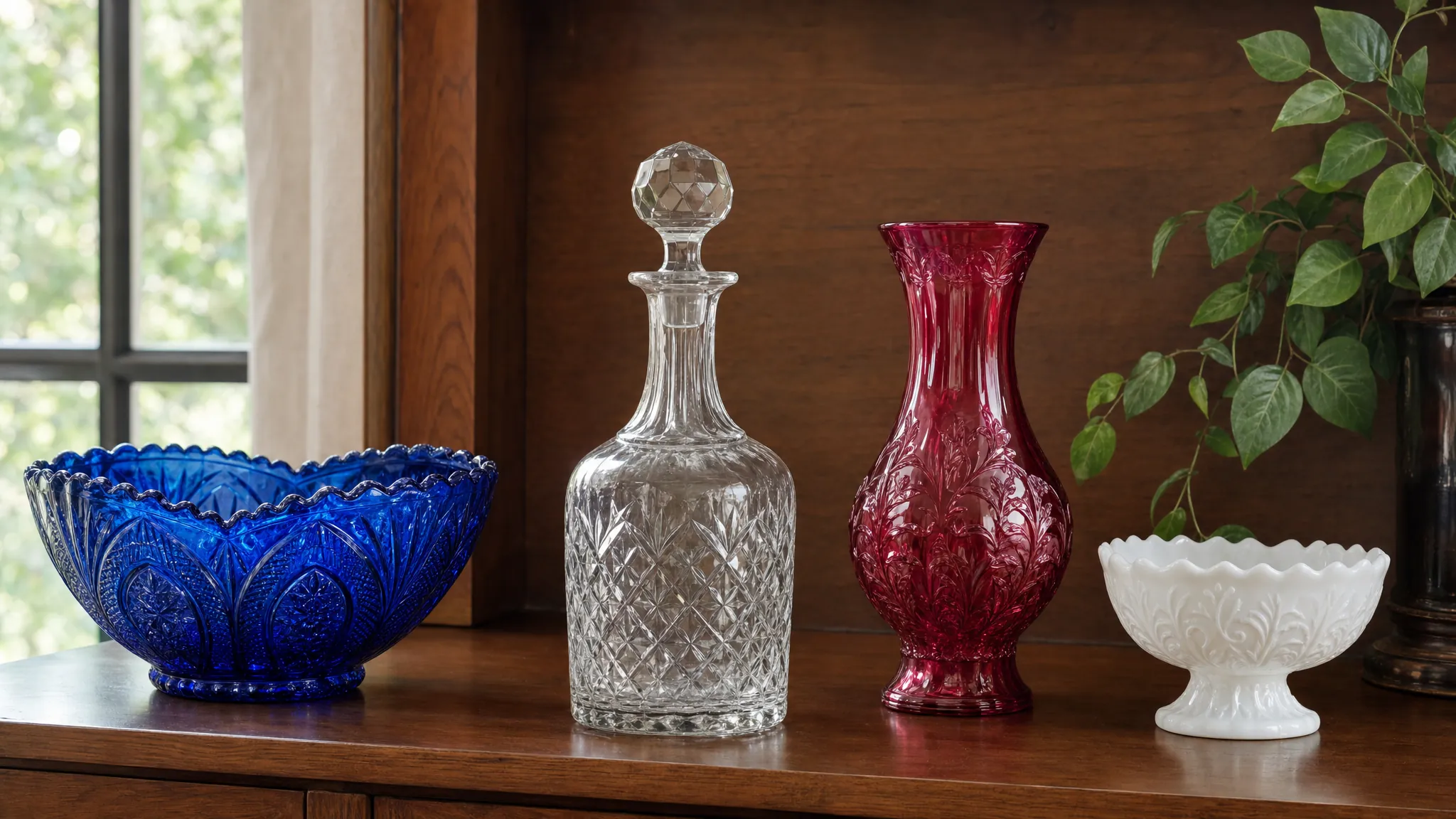
When people ask what vintage glassware is worth money, they are usually hoping for one quick answer: a color, a mark, or a certain age that settles the matter. Glass does not work that way. The same form can be common in one color and scarce in another. A well-known maker can produce both everyday pieces and highly sought examples. Even an exciting pattern can lose much of its appeal when a rim chip, cloudy finish, or missing stopper changes how it looks and lives.
The useful approach is to look for a group of clues that agree with one another. Start by identifying what you have, then judge its condition, completeness, design, and evidence of current collector interest. That takes a little longer than guessing from a photo, but it is the difference between a confident decision and a hopeful listing title. These seven checks work whether you are sorting a family cabinet, browsing an estate sale, or deciding which glass piece deserves a closer look.
A quick value check before you price it
- Photograph every angle. Include the base, any mark, the rim, and the piece beside a ruler.
- Name what you can prove. Record the maker, pattern, color, form, and number of pieces without filling gaps with a guess.
- Inspect it in good light. Note chips, cracks, cloudiness, repairs, worn decoration, and whether a lid or stopper is present.
- Compare sold examples. Match the same pattern, color, size, condition, and completeness before treating another price as useful.
- Keep the range honest. A strong asking price is not proof of value. Use several close completed sales, then allow room for the details that differ.
1. Start with the maker, but do not stop there
A name can open the door, not close the case. Fenton, Cambridge, Heisey, Fostoria, Imperial, Westmoreland, and many studio-glass makers remain familiar to collectors because their pieces have recognizable forms, colors, finishes, or patterns. A molded mark, an etched signature, a remaining label, or a catalog number can make the next step much easier. It gives you something concrete to compare instead of relying on a seller’s description.
Look at the whole object before deciding a mark proves value. Some pieces were never marked, and some markings are easy to misread. Use the base together with the bowl shape, foot, handle, rim, pattern, color, and measurements. A maker’s name is most useful when the details around it make sense. Our guide to identifying Fenton glass shows how a mark becomes stronger evidence when it agrees with the form and finish.
Take clear photos in daylight, especially of the base and any signature. A small flashlight held at an angle can reveal shallow lettering. Avoid tracing a mark with anything sharp or trying to polish it into view. You only need a good record of what is already there.

2. Condition often matters more than age
Collectors expect vintage glass to show some honest age, but they also notice damage immediately. Check the rim, base, handle, stem, stopper, and applied details before you fall in love with color or pattern. A tiny flea bite on an inconspicuous edge is different from a broad chip on a drinking rim. A repaired handle, a cracked foot, or a cloudy surface can affect both the price and the role the piece can safely play at home.
Hold clear glass against a light background and rotate it slowly. Look for a gray or milky cast, deep scratches, a rough spot on the rim, and lines that may indicate a crack. On colored or patterned glass, look for worn paint, rubbed iridescence, fading, and missing details. If a piece has a lid or stopper, confirm that it belongs and fits properly. A complete object is usually easier for another collector to understand and enjoy.
Do not try to improve condition with harsh cleaner, abrasives, or aggressive polishing before you know what the glass is. Those efforts can turn a modest flaw into a permanent surface problem. The careful routine in our vintage glassware cleaning guide is a better first move. A condition issue does not make a piece worthless, but it should change what you expect to pay, sell for, or use it for.

3. Exact patterns, shapes, and colors create the story
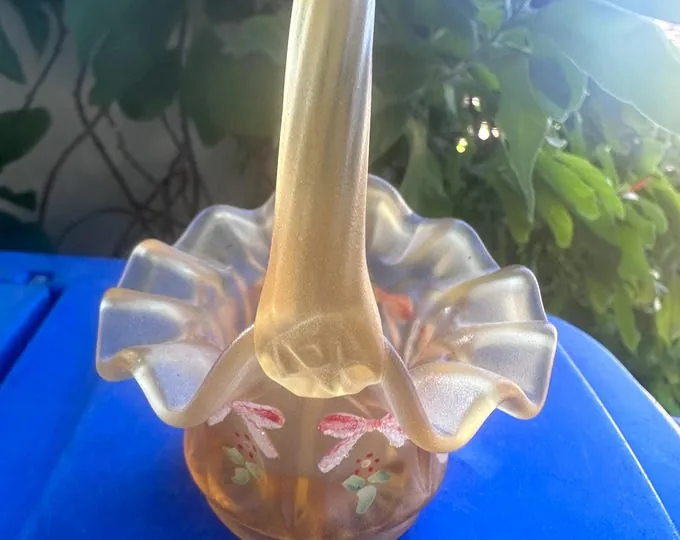
“Blue glass bowl” is a starting description. A named pattern, an unusual shape, a particular color treatment, or a limited decorative technique is what gives that bowl a stronger identity. Ruffled edges, hobnail texture, pressed motifs, carnival sheen, opalescent glass, swung vases, and unusual handles can all be useful descriptive clues. The point is not to collect fancy words. It is to describe what another person can actually recognize and compare.
Color can matter enormously, but it needs context. A color that appears often in a large production run may be lovely but common. A harder-to-find color within the same pattern can attract more attention. The same applies to unusual sizes and forms. A standard tumbler may be easy to find while a matching pitcher, covered dish, or larger centerpiece is less common and more useful to someone completing a set.
Write down the details you can see before searching. Include height, widest diameter, weight if practical, number of pieces, exact color, and any special finish. This makes comparison more honest. It also keeps you from being pulled off course by listings that use broad labels such as “rare” or “antique” without showing what distinguishes the item.
4. Complete sets and difficult pieces can carry more weight
Sets have a practical advantage: collectors often want to use or display them together. Four matching goblets, a bowl with its original stand, a covered candy dish with the correct lid, or a decanter with its stopper can be more appealing than one isolated piece. Completeness is not a guarantee of a high price, but it makes a collection easier to understand and harder to replace one part at a time.
Pay attention to the pieces that make a pattern functional. Serving bowls, pitchers, cake stands, salt cellars, and specialty barware can matter because they are less likely to have survived in large numbers than everyday glasses. A single unusual form may have more collector interest than a large group of common pieces, especially when the condition is clean and the maker is clear.
Still, do not assume a large set automatically wins. Ten mismatched glasses with worn rims are not necessarily more desirable than one excellent vase with a documented maker. Compare like with like: same pattern, same color, same form, same condition, and similar completeness. That is the only way a price comparison starts to mean something.
5. Rarity only matters when people want the piece
“Rare” is one of the loosest words in the vintage world. A piece may be hard to find because few were made, because many broke, or because hardly anyone kept them. It may also be hard to find because few people are looking. Scarcity without demand does not automatically create value. The more useful question is whether collectors are actively seeking that maker, pattern, color, or form.
Look for evidence in completed sales, specialist references, auction archives, collector groups, and established dealers who show detailed descriptions. Focus on sales that actually closed, not only asking prices. A high unsold price tells you what one seller hoped to get. A group of recent, comparable sales tells you what buyers were willing to pay. Dates matter too. The taste for a particular color or mid-century form can shift over time.
Be especially cautious when a listing makes a big claim but offers little proof. A meaningful rarity claim should be paired with clear photos, measurements, a maker or pattern identification, and an honest note about condition. Mystery can be charming on a shelf. It is less charming when it is being used to set the price.
6. Compare sold examples, not wishful listings
Once you have a solid description, search for sold examples that resemble your piece as closely as possible. Match the maker first, then the pattern or shape, color, size, and condition. Separate a full set from a single item. Separate a pristine piece from one with rim damage. A buyer looking for a replacement goblet may pay differently from someone looking for a decorative vase, even when both are made by the same company.
Keep a short list of three to five close comparisons rather than grabbing the highest number you see. Note what each example includes, whether it has damage, and how recently it sold. The middle of that range is often more useful than the outlier. A very low price may reflect a quick local sale, while a very high one may include original packaging, a rare color, or an unusually strong presentation.
When you cannot find a true comparison, say so. That is not a failure. It means you have learned enough not to pretend certainty. Describe the piece carefully, price with room for the unknown, or seek a specialist opinion before parting with something that appears genuinely unusual.
7. The right presentation helps buyers see the value
Collectors buy with their eyes first, then with the details that support what they see. Good light, sharp photos, a full view of the form, close-ups of a mark, and candid condition images make a listing easier to trust. Include measurements and say exactly what is included. If a bowl has a small base chip, show it. If a stopper is original but has light wear, say that too. Clear information protects both the buyer and the piece’s reputation.
At home, give glass room to be read. A crowd of objects can hide a beautiful silhouette or make a rare color feel ordinary. The ideas in our guide to displaying vintage glassware help separate pieces by height and light so their form has a chance to show. The same principle helps when you photograph a piece for a listing or simply decide which find deserves the best spot on a shelf.

How Tucson Collectibles helps you buy with your eyes open
The best purchase is not always the most expensive one. It is the piece whose color, condition, scale, and story fit the life you want it to have. Tucson Collectibles selects individual vintage glass, china, and decor finds with clear photos and condition details, so collectors can decide whether a piece belongs on the table, the shelf, or in a gift box.
Browse the current collection for pieces that are available now, or begin with glass, china, and collectible decor when you want to follow a particular material or mood. Shoppers drawn to colorful art glass can also visit our Fenton glass page for a focused path into the collection.
Frequently asked questions
Is all old glass valuable?
No. Age alone does not create strong collector value. A piece becomes more interesting when its maker, pattern, condition, color, form, and current demand give it a reason to stand out. Plenty of older glass is still worth enjoying even when resale value is modest.
What should I look for on the bottom of vintage glass?
Look for a molded mark, etched signature, paper-label residue, a pattern number, or a distinctive base design. Photograph the underside in good light, then use that detail with the shape, color, and pattern rather than treating one clue as a final answer.
Do chips make vintage glass worthless?
A chip usually lowers value, especially on a rim, foot, handle, stopper, or other visible edge. It does not automatically make a piece useless. A flawed example can still be a good display piece or a sensible way to enjoy a pattern before holding out for a cleaner one.
Should I clean vintage glass before selling it?
Remove loose dust and use only a gentle method appropriate for the piece. Avoid aggressive polishing or cleaners that can scratch, dull, or damage decoration. Clear photos of the glass as found and after a careful clean are more helpful than a surface that has been overworked.
Related notes
Find a piece worth noticing.
Browse vintage glass, china, decor, and gifts in the current Tucson Collectibles collection.
Shop Vintage