
How to Clean Vintage Glassware Without Damaging It
A gentle, practical routine for taking care of older glass without turning a small cleaning job into permanent damage.
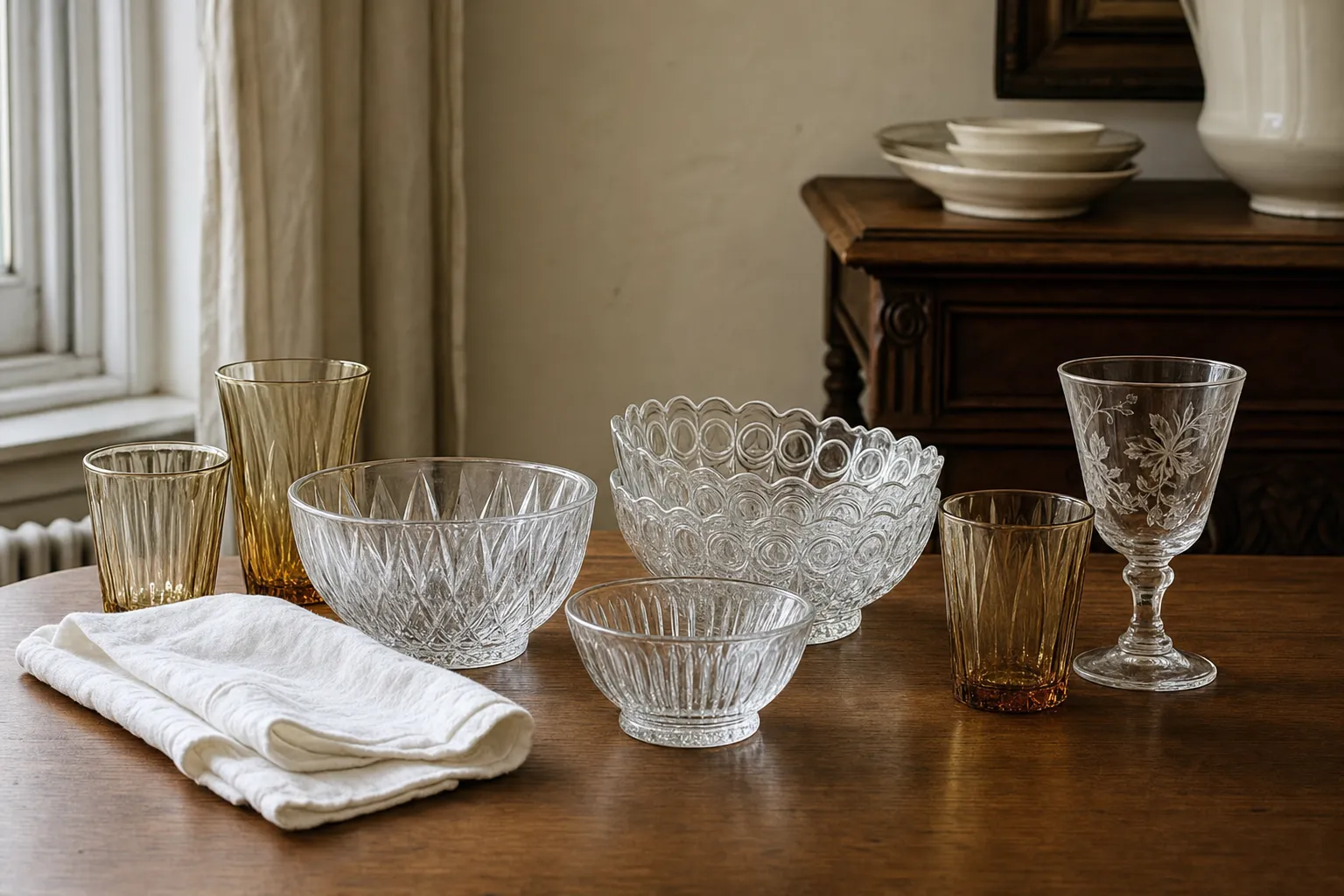
Vintage glassware is easy to over-clean. A cloudy bowl or a dusty set of tumblers can make a strong cleaner feel tempting, especially when a piece has been waiting in a cabinet, an estate-sale box, or a thrift-store bag. But older glass is not the place for a quick experiment. A little caution protects the surface, any painted or gilded decoration, and the small details that made the piece worth bringing home.
The best starting point is simple: clean only what you understand, use the least force that does the job, and stop when a piece gives you a reason to pause. This guide is aimed at everyday collectors, not conservation lab work. It can help you decide when a gentle hand wash makes sense, when dry cleaning is safer, and when an imperfection is part of the object rather than something to scrub away.
Decide whether the piece should be washed at all
Before water touches the glass, inspect it in good light. Look for cracks, chips, a loose stem, old repairs, flaking paint, fading gold, iridescent decoration, or a surface that looks powdery or unstable. Those are all reasons to step back. A delicate object can look sturdy until a little pressure, soaking, or a temperature change makes an existing problem worse.
Start with the type of dirt you are seeing. Loose dust on a stable, undecorated bowl may only need a soft brush. A water spot on a robust tumbler is different from grime tucked under a raised painted detail. Do not assume every dull surface needs to shine. Some haze is residue, while some cloudiness is permanent wear or etching that cannot be polished away safely.
For a useful conservation-minded baseline, the Canadian Conservation Institute recommends starting with a soft brush for stable glass and reserving a padded, lukewarm hand wash for robust objects in sound condition. That is good advice for a home collection too. When you cannot tell whether a piece is robust, treat it as if it is not.
Set up a soft landing before you begin
Most accidents happen around the sink, not during the actual washing. Clear the counter, remove rings and bracelets, and work with one object at a time. Line a plastic basin or a sink with a folded towel or soft mat so a bowl or glass cannot meet bare ceramic, metal, or stone. Keep the faucet out of the way and give yourself room to put the piece down safely.
Use lukewarm water, never a dramatic change from hot to cold or cold to hot. Sudden temperature shifts can stress glass, especially if the thickness varies from the rim to the base. Keep water shallow enough that you are not chasing a slippery piece around a deep sink. A soft cloth, a clean drying surface, and a second towel for your hands are usually all you need.
Skip abrasive pads, scouring powder, metal tools, and strong household cleaners. They can leave fine scratches or catch on a weak edge. A decorative piece with painted flowers, a gold rim, or an unknown coating should not be tested with a new product because the label says it is safe for glass. The glass may be fine while the decoration is not.

Use the gentlest method that fits the glass
For a sturdy, undecorated drinking glass or serving bowl in good condition, a brief hand wash in lukewarm water with a small amount of mild dish soap is usually the sensible option. Support the piece from the bottom rather than gripping a delicate handle, stem, or rim. Let water loosen ordinary grime instead of trying to force it off with pressure.
Rinse gently and keep the same calm pace from start to finish. Do not leave an older piece soaking while you do something else. A long soak can give water more time to reach old repairs, painted areas, or dirt trapped in a crack. If a spot does not lift easily, that is useful information. It may be residue that needs a different approach, or it may be a sign that the surface should be left alone.
For glass with a rough texture, fragile applied detail, or questionable decoration, dry cleaning is often better. A very soft brush can lift dust from crevices without dragging a cloth over a vulnerable surface. The Canadian Conservation Institute's care guidance for glass and ceramics also stresses caution around fragile surfaces and recommends avoiding heat to speed drying.
Know when to leave the cloudiness alone
Cloudiness is one of the most frustrating features of old glass because it can have several causes. A film from storage, hard water, or ordinary use may improve with a gentle wash. A permanently etched surface will not. The difference matters because stronger cleaning can make etched glass look worse while doing nothing to reverse the damage.
Look at the piece from several angles. Residue often looks like a surface film or spots that shift with the light. Etching tends to make the glass look evenly gray, hazy, or worn from within the surface. If you are not sure, clean a very small, inconspicuous area with the same gentle method you would use for the whole piece. Do not move on to stronger products simply because the first pass did not transform it.
A little honest age is not a failure. A bowl with soft cloudiness can still look beautiful on a shelf, hold wrapped candies, or become part of a collected table. The goal is not to make every object look new. It is to keep the piece stable and decide how it can still be enjoyed.
Protect painted, gilded, repaired, and damaged pieces
Decoration changes the decision. Hand-painted details, gold trim, decals, and metallic finishes can wear away with rubbing, soaking, or the wrong cleaner. A repaired object can be damaged by moisture even when the repair is hard to see. If a piece has a crack, a chipped rim, loose paint, or a repair line, it is safer to dust it lightly and keep it for display until you can learn more about its construction.
Be just as careful with unknown foodware. Cleaning a piece does not make it automatically appropriate for drinks or food. When the materials, decoration, or history are unclear, use it as a display object rather than assuming it is safe for regular table service. The Food and Drug Administration explains why decorative foodware with uncertain lead content deserves caution, especially when surfaces are damaged or intended use is unclear.
That does not reduce the pleasure of the piece. A vivid glass dish can hold jewelry, a decorated goblet can add height to a cabinet, and a treasured bowl can brighten a table without being asked to do daily kitchen duty. Good collecting is often about matching the object to the right role.
Use a simple check before each cleaning job
A short pause keeps the process easy to repeat. Ask yourself whether the object is stable, whether its surface is plain or decorated, and whether the dirt is loose dust or something that really requires water. Then decide what the gentlest reasonable method is. That small sequence is more useful than a shelf full of specialty products because it changes with the piece in front of you.
If the glass is sound, undecorated, and clearly built for everyday table use, a careful hand wash may be appropriate. If it has a weak spot, an unknown finish, a painted design, or a repair, shift toward dry dusting and display. When a cleaning attempt feels risky, there is no prize for finishing it. Put the piece aside, photograph the issue, and keep researching before you try something stronger.
This habit also makes shopping easier. When you look at a listing, you can focus on the rim, base, decoration, and condition details that affect how the piece will live in your home. A beautiful find is more satisfying when you already know whether it will become a useful bowl, a special-occasion glass, or a display piece with a quieter role.
Dry slowly and give every piece its own space
Once a piece is clean, move it with dry hands to a padded surface. Blot away excess water with a soft, lint-free cloth rather than rubbing hard around a rim, stem, or raised pattern. Then let it finish drying in open air. Heat from a hair dryer, dishwasher, radiator, or direct sun can add unnecessary stress and may encourage water to dry unevenly around decoration or a repair.
Keep glasses, bowls, and stems separated while they dry. Even a small knock can chip a thin rim. Do not nest damp bowls or turn a delicate piece upside down on a hard rack. A little room around each object is safer and makes it easier to notice any water still caught in a foot, handle, or textured base.
For more ideas on making the finished pieces feel at home, see our guide to displaying vintage glassware. A carefully edited shelf gives delicate pieces breathing room and makes each pattern easier to appreciate.

Store clean glass so it stays that way
Only put glass away when it is completely dry. Moisture left under a bowl, inside a tumbler, or between nested pieces can lead to fresh marks and makes the next cleaning job harder. Store heavier pieces low, leave a little space between rims and handles, and avoid stacking objects that can rub when a shelf moves or a cabinet door closes.
Soft, clean tissue or fabric can help separate individual pieces in longer-term storage, but avoid wrapping items so tightly that they cannot breathe or pressing padding against a fragile edge. Do not use newsprint directly against glass, and do not pack a cabinet until every item is touching. A calm shelf is safer than an efficient-looking pile.
When you find a piece you want to keep, take a moment to note its condition before it goes away. A quick photo and a few words about a chip, wear mark, or existing repair make it much easier to spot a change later. That same close attention helps when you are identifying vintage glassware and deciding what kind of care it deserves.

How Tucson Collectibles helps you choose pieces you can enjoy
The best vintage finds are the ones you can live with confidently. Tucson Collectibles curates individual glass, china, and decor pieces with an eye for character, and clear condition details help collectors understand what they are choosing before it arrives at home.
Browse the current vintage collection for glassware, serving pieces, and accents with a history. The collections page is a useful starting point when you know you are drawn to glass, china, or decorative objects. For a question about an available listing or local pickup, the contact page has the best way to reach the shop.
Frequently asked questions
Can vintage glassware go in the dishwasher?
It is better to hand-wash vintage glassware when you do not know exactly how it was made, how stable its decoration is, or whether a previous repair is present. Heat, strong detergent, and movement against other pieces can be hard on thin glass, painted details, gilding, and older finishes.
Can I use vinegar to clean vintage glassware?
Treat vinegar carefully. It can be useful for ordinary mineral residue on sturdy, undecorated household glass, but it is not a universal answer for older pieces. Do not use it on painted, gilded, cracked, repaired, or delicate glass without better information, and stop if you are unsure how the surface will react.
How do I remove cloudiness from vintage glass?
First decide whether the cloudiness is surface residue or permanent wear. A cautious wash may lift residue from a sturdy piece, but etched or permanently damaged glass will not become clear again through more aggressive cleaning. When the result is uncertain, preserve the finish and enjoy the piece as it is.
How should I dry vintage glassware?
Remove excess water with a clean, soft, lint-free cloth, then let each piece finish air-drying on a padded surface with room around it. Avoid heat, a crowded drying rack, and any position where a rim or stem can knock against another piece.
Find a piece worth caring for.
Browse vintage glass, china, decor, and gifts in the current Tucson Collectibles collection.
Shop Vintage