
How to Identify Depression Glass: A Collector's Guide
A little color is only the beginning. The pattern, shape, seams, and condition tell the fuller story.
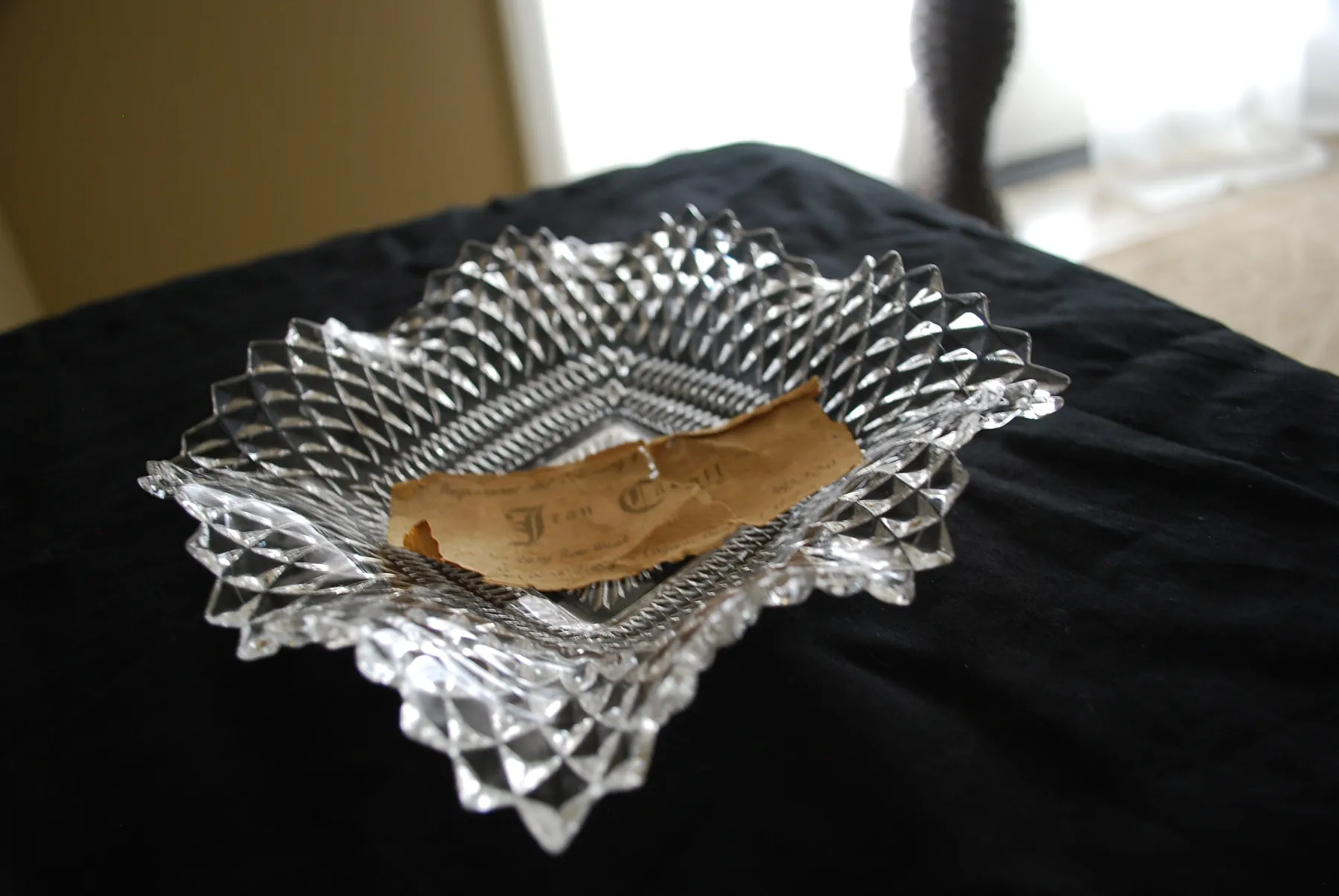
Depression glass is easy to notice. The colors can be cheerful, the patterns can feel instantly familiar, and a small plate or tumbler often carries more personality than its modest size suggests. That is why it attracts collectors, decorators, and people sorting through a family cabinet. It is also why quick identifications go wrong. Pink or green glass is not automatically Depression glass, and a familiar pattern is not enough on its own.
The reliable way to identify Depression glass is to let several details agree. Start with the whole form, then study the molded pattern, color, seams, base, and condition. Take a few measurements and compare the exact combination with a trustworthy pattern reference. That process takes a little patience, but it is much more useful than trying to name a piece from one photograph or one hopeful clue.
What Depression glass is
Depression glass is the name collectors commonly use for affordable, machine-made American glass produced mainly from the late 1920s through the 1930s. It was made in practical tableware forms such as plates, cups, saucers, pitchers, serving dishes, tumblers, and mixing bowls. Some pieces were sold in stores, while others appeared as premiums with groceries or household products. The National Depression Glass Association is a useful starting point for learning the period and comparing the many patterns collectors recognize.
Most people recognize it by color, but clear pieces are part of the story too. The glass is usually pressed in a mold, which made it possible to produce detailed patterns quickly and in quantity. That does not mean every piece looks identical. Different patterns use different rims, panel shapes, handles, footed bases, and decorative motifs. A pressed floral plate can feel very different from a paneled tumbler or an angular serving bowl.
The goal is not to decide whether a piece feels old. The goal is to describe what it actually is. A good identification gives you the vocabulary to care for it, find a matching piece, shop more carefully, or simply appreciate why it has held your attention for so long.
Start with the form before the color
Put the piece on a plain surface in daylight and look at its silhouette. Is it a dinner plate, berry bowl, cup and saucer, sherbet, pitcher, candy dish, juicer, or mixing bowl? Does it have a foot, a handle, a rolled rim, a scalloped edge, or straight panels? Make a short description before opening a search tab. The shape often narrows the possibilities faster than color does.
Then measure it. Note the height, widest diameter, base diameter, and the number of pieces if it is a set. A difference of even half an inch can separate a dinner plate from a luncheon plate or a serving bowl from a smaller berry bowl. Measurements also help when two patterns look close in a small online image but were made in different forms.
Use plain words. "Green footed bowl with eight panels and a scalloped rim" is a strong starting point. "Rare green antique glass" is not. A clear description gives you better comparison terms and makes it easier to keep an early guess from becoming a permanent label.

Read the molded pattern like a map
Depression glass patterns are usually molded, not carved or etched after the glass is made. Look for the repeated elements that make the pattern recognizable. You might see flowers, leaves, fans, ribs, diamonds, scrolls, arches, geometric panels, or a lattice-like texture. Notice where the design begins and ends. Does it climb the side of the bowl? Is the center plain? Does the rim repeat the same motif or break into scallops?
One motif is rarely enough. A floral design may appear in many periods and on many kinds of glass. What matters is the arrangement. Count the panels. Look at the center. Compare the curve of the rim, the shape of the foot, and the exact placement of the raised design. A true match should explain the whole piece, not just one attractive detail.
Take photos of the front, back, base, rim, and the most detailed part of the pattern. Then compare those photos with a pattern reference rather than relying on memory. The same method appears in our general guide to identifying vintage glassware, and it is especially helpful with pressed patterns that can look alike from across a room.
Look for seams, then keep them in perspective
Because Depression glass was made in molds, a seam may be visible where the mold sections met. Check the side, base, and edge in reflected light. The seam can be faint, and wear may soften it, but it is often easier to see when you rotate the glass slowly. A seam is a useful manufacturing clue, not a certificate of identity.
Many other kinds of pressed glass also have seams. Later reproductions can have them too. That is why the seam should be considered alongside the form and pattern. A convincing Depression glass identification comes from a cluster of clues: a documented shape, a matching pattern, a plausible color, molded construction, and measurements that line up with known examples.
Look at the base as carefully as the front. The design may continue underneath, the foot may have a distinctive profile, or the base may show a different texture from the sides. Photograph it before cleaning, especially if you notice a small number, label residue, or a shape that could help distinguish one pattern from another.

Use color as a filter, not an answer
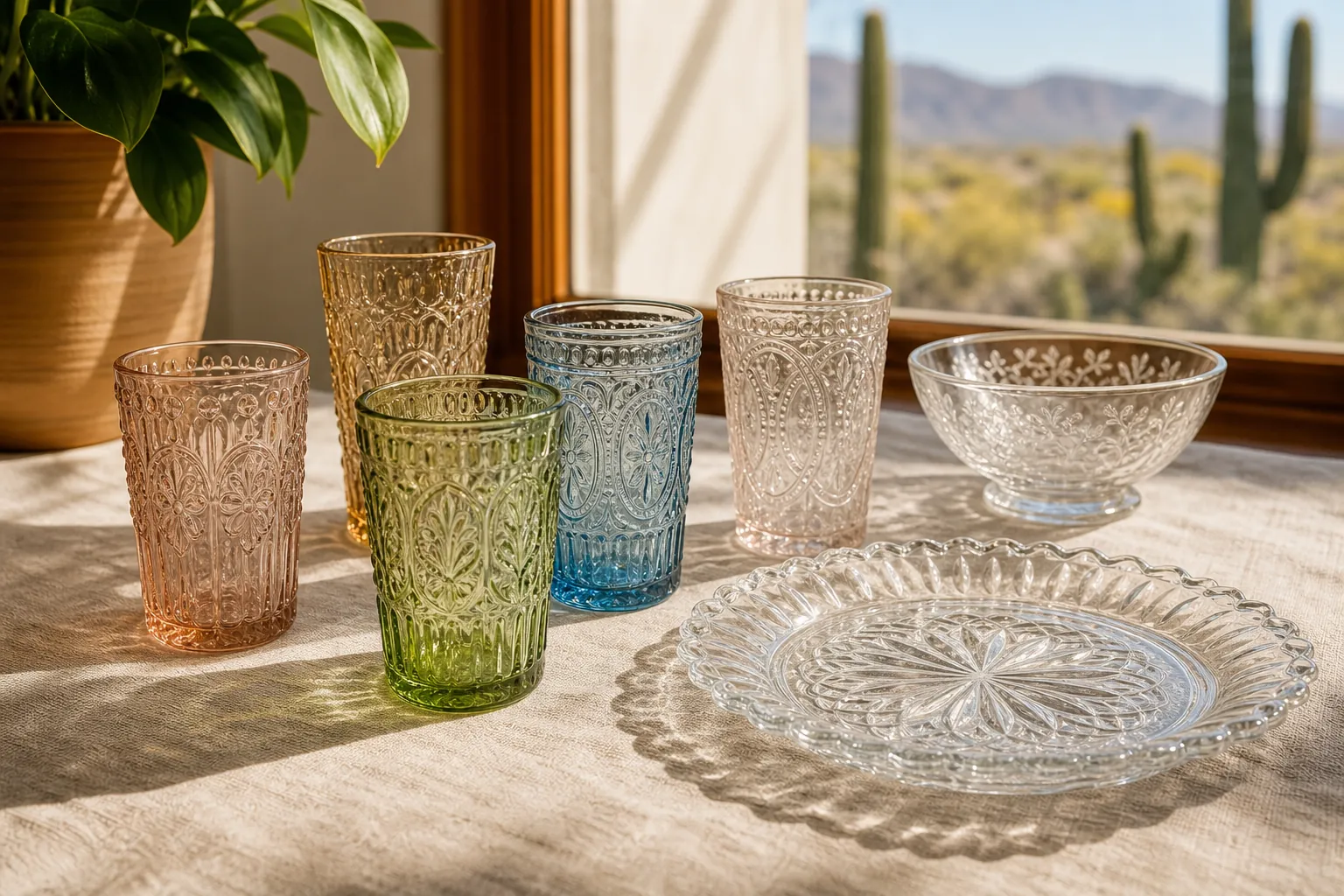
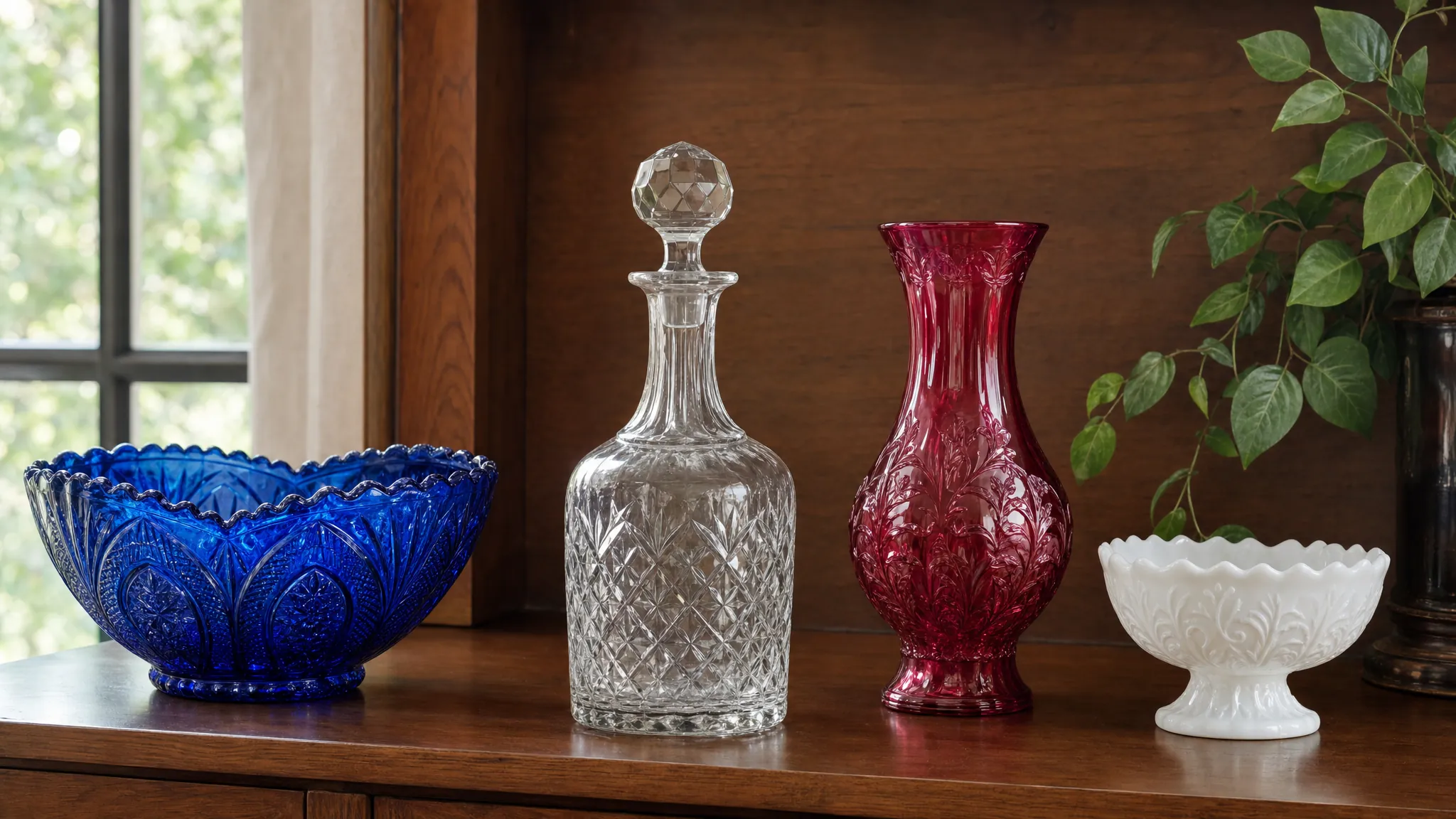
Color is part of the fun. Pink, green, amber, clear, blue, yellow, and occasional deeper shades all appear in collectors' cabinets. Yet one color can turn up across many patterns, and the same pattern may have been made in several colors. Lighting can make the difference between pale green and yellow-green look larger than it really is, so examine the glass in indirect daylight against a white or neutral surface.
Describe what you see rather than reaching for a value word. Is the color transparent, cloudy, opalescent, or iridescent? Is it even throughout the piece, or concentrated at the edge? Does the inside look different from the outside? These observations make a comparison far more precise. They also help you avoid mistaking one color treatment for another when a marketplace photo is heavily edited or shot against a colored wall.
Once you have a likely pattern, use color to test the match. If several documented examples show the same form and pattern in your color, that strengthens the case. If the shape matches but the color is not known for that pattern, keep the identification open. A beautiful piece does not need an inflated name to be worth keeping.
Condition can change how you enjoy a piece
Pressed patterns can hide damage until the light hits them. Before buying, selling, or using a piece, inspect the rim, base, foot, handle, and every pointed or raised detail. Look for chips, rough edges, hairline cracks, cloudy patches, deep scratches, and repaired breaks. A tiny flea bite on the base is different from a chip on a drinking rim. Both should be noted, but they do not have the same effect on use or collector interest.
Hold clear or light-colored glass against a bright wall. Rotate it slowly and let the light travel through it. Cracks and haze often show more clearly that way. If you find a rough area, do not drag a finger hard across it. A soft cloth and a close photograph are safer for both you and the glass.
Do not reach for strong cleaner in an effort to make an old piece look new. A gentle hand-wash is the safest first move, especially when you do not know the history of the glass. Our guide to cleaning vintage glassware explains how to remove ordinary dust and residue without taking unnecessary risks with a delicate finish.

Compare a group of details, not a single listing
Once you have a detailed description, search for comparisons that include the same form, pattern, color, and measurements. Look at more than one result. A single listing can be a useful lead, but it can also repeat a mistake that has been copied many times. Better evidence comes from several examples that agree on the pattern layout, dimensions, and shape.
Make a small checklist: Does the center design match? Are the panels or scallops counted the same way? Is the rim the same profile? Does the base have the same pattern? Are the measurements close? If the answer is no to several of those questions, you may have a related pattern or a later look-alike rather than the exact piece.
This is also the point to resist a rush toward price. Identification comes first. Then you can compare like with like: the same pattern, color, form, completeness, and condition. The checks in our guide to what vintage glassware is worth will help you separate real collector interest from an optimistic asking price.
How Tucson Collectibles helps you shop with a collector's eye
Buying vintage is more satisfying when you can see what you are choosing. Tucson Collectibles focuses on individual finds with character, clear photos, measurements, and candid condition details. That gives collectors room to decide whether a piece belongs on a table, in a display, or in a thoughtful gift without being pushed into a grand claim.
Browse the current vintage collection for available glass, china, and decorative finds, or explore the collection guide when you want to follow a material or style. A well-chosen piece does not have to complete a set or carry a famous name. Sometimes it simply has the right color, shape, and story for your home.
Frequently asked questions
What colors are common in Depression glass?
Pink, green, amber, clear, blue, and yellow are familiar colors, but color alone cannot identify a pattern or maker. Use it as one clue alongside the shape, molded design, measurements, and condition.
Is all Depression glass marked?
No. Many pieces have no maker mark, and old paper labels rarely survive. An unmarked piece can still be identified by comparing its full pattern, form, color, and measurements with reliable references.
Does a mold seam mean glass is Depression glass?
No. A mold seam only tells you that a piece was made in a mold. Depression glass is a particular period and style of mass-produced American glass, so the complete pattern and form still need to match.
Is Depression glass safe to use?
A sound, undecorated piece may be suitable for gentle occasional use, but chipped glass, painted decoration, gold trim, and unknown materials deserve more caution. When in doubt, enjoy the piece as display glass and hand-wash it gently.
Related posts
Find a piece worth noticing.
Browse vintage glass, china, decor, and gifts in the current Tucson Collectibles collection.
Shop VintagePhotographs: Depression glass by Missyvette619, CC BY-SA 3.0; Green glassware by holly, CC BY 2.0; Depression Glass Juicer by James Quinn, CC BY-SA 2.0; Depression Glass Set 3 Mixing Bowls by Tangerineduel, CC BY-SA 4.0.