
How to Recognize Vintage Ceramic Tiles
A vintage tile rewards a close look. Read the front and back together, and even a small square of ceramic begins to tell you much more.
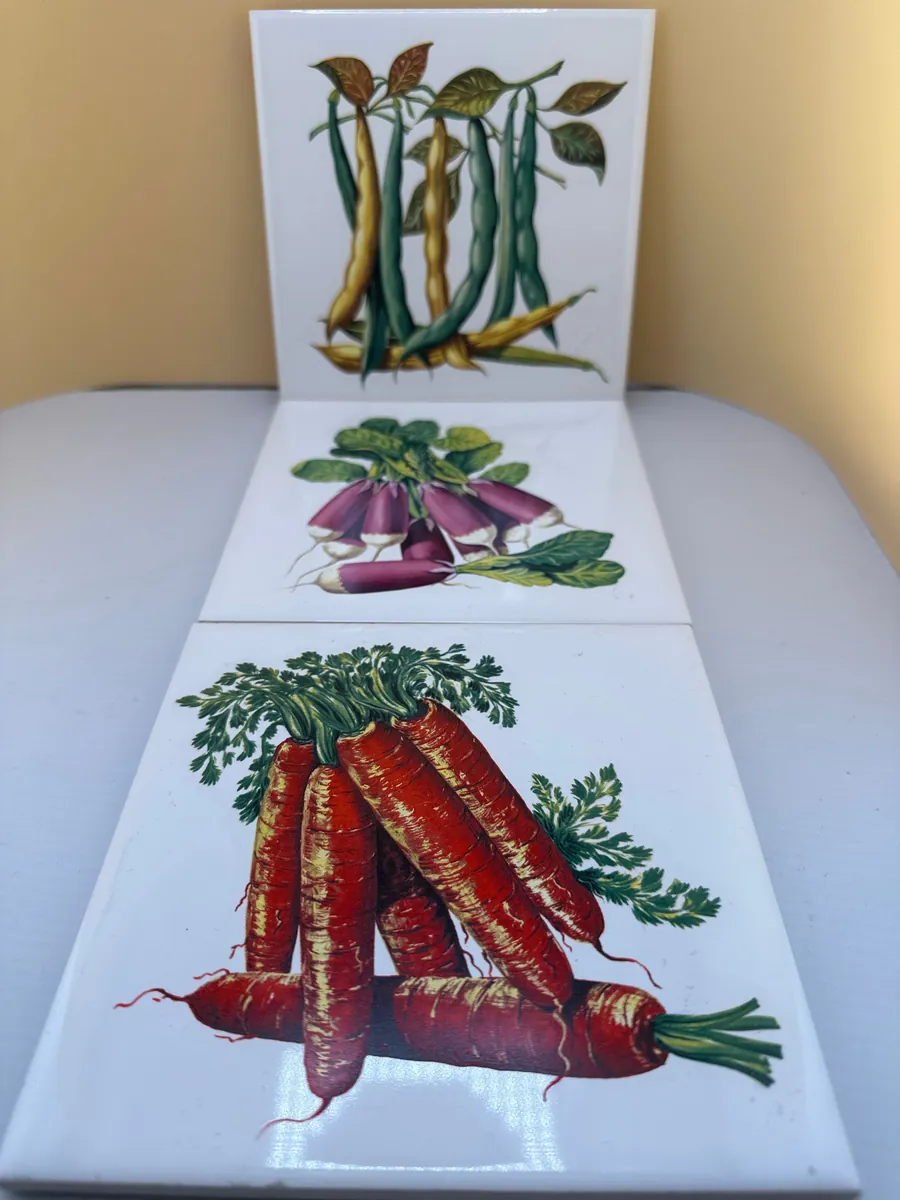
Vintage ceramic tiles sit at a pleasant crossroads between useful building material and small-scale art. One may have come from a kitchen wall, a fireplace surround, a trivet, a souvenir shop, or a studio potter’s workbench. The subject might be a vegetable, bird, flower, landscape, or graphic pattern. That front is usually what catches the eye. The back, edges, glaze, and dimensions are what help make the story more reliable.
You do not need to turn every tile into a museum object to enjoy it well. A simple, repeatable process will help you notice the evidence before a confident label gets ahead of the piece. This guide is for guests who want to recognize a likely vintage ceramic tile, understand what to photograph, and make a more careful decision before buying, displaying, or researching it.
1. Start with the whole tile
Place the tile on a plain, padded surface in even daylight. Before you focus on a mark, photograph the complete front, back, each side, and all four corners. Then measure the height, width, and thickness. A tile described as six inches square may measure slightly under or over that size, and that small difference can be useful when comparing it to a documented example or a missing tile in a larger installation.
Describe what you see without deciding what you hope it is. Is the design a transfer print, a hand-painted scene, an impressed relief, a decal, a stencil, or a molded motif? Does the surface look glossy, matte, crackled, or textured? Is the design set into the clay, painted over the glaze, or printed beneath it? A calm description gives your research a solid beginning and keeps a familiar bird or flower from becoming a famous maker too early.
Also note its job. A single decorative wall tile, coaster, trivet, fireplace tile, and floor tile may share a square format while being made for very different uses. Look for hanging hardware, cork, felt, a metal frame, heat wear, grout residue, or a heavy backing. Those details do not give a date on their own, but they tell you how to compare the piece fairly.
2. Turn it over and read the back
The reverse is often the most useful part of a ceramic tile. Look for a maker’s name, initials, logo, country mark, pattern number, registration number, date code, or a studio signature. Photograph the entire back straight on before taking close-ups. A single number can be important, but the arrangement of the rest of the surface can matter just as much.
The Tiles & Architectural Ceramics Society’s tile-back guide explains why the back should not be treated as an afterthought. Raised bars, grids, rings, diagonal marks, and grip indents were part of how many tiles were made and fixed in place. Its reference material also makes an important point: a back can offer strong clues, but the decoration on the front still belongs in the identification.
Copy letters and numbers exactly, including punctuation and their position. A mark may identify a manufacturer, decorator, retailer, mold, batch, pattern, or date code. It is not always a complete answer. A tile can have been made by one business and decorated or sold by another. When you search, keep the possibilities separate instead of assuming every mark names the maker.

3. Study the ceramic body, glaze, and edges
Next, look at the clay body where the glaze ends, especially along an unglazed edge, chip, or the back. Earthenware often has a warmer buff, red, yellow, or cream-colored body and can feel more porous. Stoneware tends to be harder and more compact. Porcelain is usually finer and more vitrified. These are broad families, not shortcuts to an exact maker or age.
The Maryland Archaeological Conservation Laboratory’s beginner guide uses the same sensible order: consider the paste, surface treatment or glaze, and decoration together. That sequence is especially helpful with an unmarked tile. A glossy white glaze over a buff body tells a different story than a dense white body with a thin clear glaze or a richly textured stoneware surface.
Look along the sides for a sharp factory-pressed edge, a gently irregular hand-finished edge, a molded border, or the remains of grout. Check whether the glaze reaches the edge evenly, pools in a low area, or stops short of the back. Small production irregularities can be interesting, but do not mistake every rough edge for proof of age. Modern handmade tiles can have lively surfaces too. The question is whether the body, glaze, construction, decoration, and mark all belong to the same explanation.
4. Compare decoration like a detective
When the front has a recognizable subject, compare more than the subject itself. A yellow warbler, a cactus wren, a fish, or a floral sprig can appear in many versions. Study the line work, border, palette, lettering, tile size, orientation, and where the image sits within the square. A close match should explain several of those details at once.
Use a clear front-facing photo for visual searching, then look for a second source that confirms the mark, back, or dimensions. Do not rely on the first listing whose colors feel close. Reproductions, later editions, and loosely related motifs can look persuasive in a small image. If you find a likely maker, search the name with the exact wording or number from the reverse, then compare the construction as carefully as the artwork.
For British ceramics, a country mark or registration detail may help narrow a period, but it needs context. The Potteries’ guide to ceramic marks notes that maker names, pattern numbers, registration systems, and country marks changed over time. That is useful evidence, not a magic date stamp. The safest conclusion is the modest one that matches every visible detail.

5. Separate honest wear from damage
Condition matters before value. Hold the tile under angled light and inspect the corners, edges, face, and back. Look for chips, hairline cracks, loose glaze, flaking decoration, stains, repairs, and old adhesive. Run a finger lightly around the edge only when it is safe to do so. A small edge nick may be acceptable on a display tile, while a crack through the body or a repair across the image can change how you use, value, and describe it.
Crazing, the web of fine lines that can appear in a glaze, is worth recording but should not become a dating method. It can occur on ceramics of many ages and under many conditions. Likewise, dirt in the cracks, a darkened back, or a bit of old mortar can be interesting context, but none should be used as a shortcut to a dramatic age claim. Honest condition notes make it easier to appreciate a tile for what it is.
If the tile feels fragile, resist aggressive cleaning. The Canadian Conservation Institute’s guidance for ceramics and glass recommends careful handling and avoiding unnecessary risks with fragile objects. For a vintage tile, start with dry, gentle observation. If the glaze, paint, or adhesive history is uncertain, avoid soaking, scraping, or strong cleaners until you know more.

6. Keep a small record before you search
A quick record makes a surprising difference. Save the front and back photographs, dimensions, thickness, every mark, a description of the body and glaze, condition notes, and any context you know. If it came from a particular house, collection, or trip, record that separately from what the tile itself proves. Provenance can enrich the story, but it should not replace the evidence you can see.
Then search in layers. Begin with the exact maker or initials, if known. Add the pattern number, country, size, and subject. If the piece is unmarked, lead with its visual facts: “six-inch hand-painted ceramic bird tile,” for example, is better than a guessed maker name. Keep a short list of possibilities and revisit it as you find stronger comparisons. “Maker unknown, likely mid-century decorative tile” can be a satisfying and accurate description when the evidence does not go further.
Identification and price should remain separate. A maker’s name or an appealing scene does not guarantee rarity or value. Compare examples only after you have matched material, size, decoration, condition, and form. A tile may be most valuable as a replacement in a home, a piece of regional design, or a small work of art you genuinely enjoy seeing every day.
7. Choose a display that protects the story
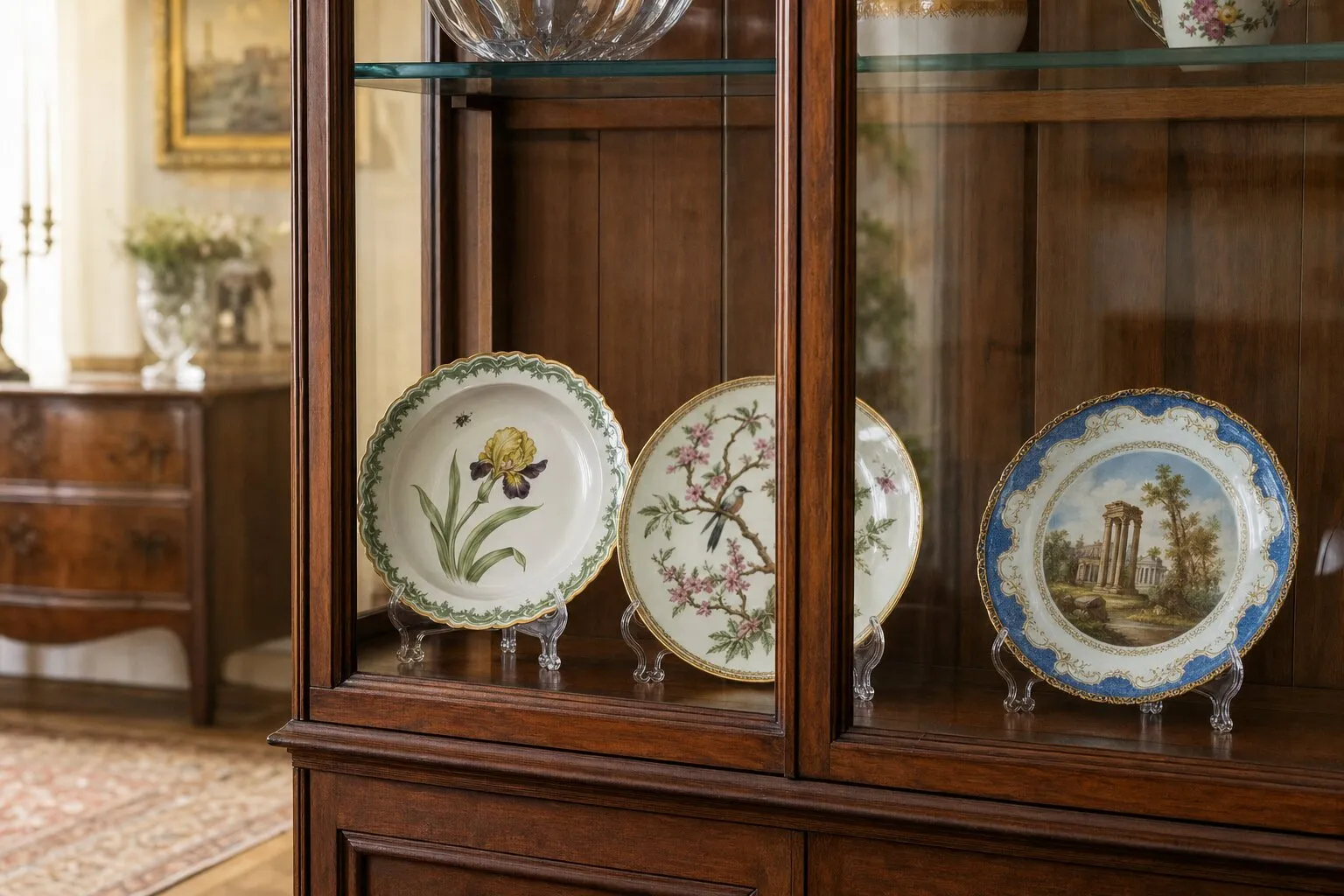
Once you know what you have, give it a stable place. A plate stand, shallow shelf, or proper wall hanger can show a decorative tile without asking it to balance on an edge. Keep it away from direct sun, active door swings, and places where it can be knocked by a frame or another heavy object. If it is part of a larger group, leave space around it so the image and edge details can be seen.
Small tiles are especially good at adding a personal note to a kitchen shelf, entry table, or gallery wall. Mix them with objects that support rather than compete with their color and scale. A natural wood frame, an open shelf, or a small easel can be enough. The right display keeps the tile safe while allowing the reason you chose it, the image, mark, memory, or craftsmanship, to remain visible.

Ceramic tiles with details worth noticing
These current TucsonTiques finds offer useful examples of how subject, glaze, size, maker clues, and condition notes can work together.
Ceramic Tile, Vintage Vegetable Wall Art, H&R Johnson 6x6 Trivet
$34.99BIEN VENIDOS Hand-Painted Floral Ceramic Wall Tile | Welcome Sign Art Vintage Spanish Decor
$59.99Tropical Fish Ceramic Tile, Jeffrey Court Retro Decor, Coastal Backsplash Accent
$29.99Handcrafted Wall Decor, California Quail Ceramic Tile, Teissedre Designs
$29.99Availability changes as individual vintage finds are claimed. Open each listing for current photographs and condition details.
Enjoy the tile before you solve every mystery
A good identification is not always a famous name or exact year. Sometimes it is a careful description, a likely material, a documented mark, and an honest list of what remains unknown. That is enough to buy thoughtfully, care for the piece sensibly, and enjoy the small artwork in front of you. Browse the Decorative Ceramic Tile collection for more individual finds, or explore the broader current collection when another object catches your eye.
Frequently asked questions
Where should I look for a maker’s mark on a ceramic tile?
Start on the back. Look for a printed or molded name, initials, monogram, logo, pattern number, registration number, or date code. Photograph the whole back as well as any close mark, since the arrangement of ridges, grids, and indents can be useful evidence too.
Does crazing prove a ceramic tile is vintage?
No. Crazing is a network of fine lines in the glaze, and it can occur on older or newer ceramics. Treat it as one condition detail, not a date. A stronger identification comes from the back, material, decoration, dimensions, and any documented maker information agreeing with each other.
Can I identify a tile from the front alone?
A distinctive front can start a useful search, especially when it shows a maker’s name, scene, or unusual pattern. For a confident match, add straight-on images of the back, sides, corners, and measurements. The reverse often provides the clues that a pretty front cannot.
How should I handle an old ceramic tile?
Support the tile with two hands and place it on a padded, stable surface. Avoid testing it by tapping, scraping, or soaking it. Check for chips and loose glaze before cleaning, and use a conservation-minded approach when the decoration, finish, or history is uncertain.
Related notes
Find a tile with a story of its own.
Browse vintage finds selected for guests who enjoy craftsmanship, character, and the details that make an object memorable.
Shop Vintage