
Cabinet Plates: How to Display Them Beautifully
A decorative plate does not need a formal dining table to earn its place. Give it a little room, the right support, and a setting that lets its details speak.
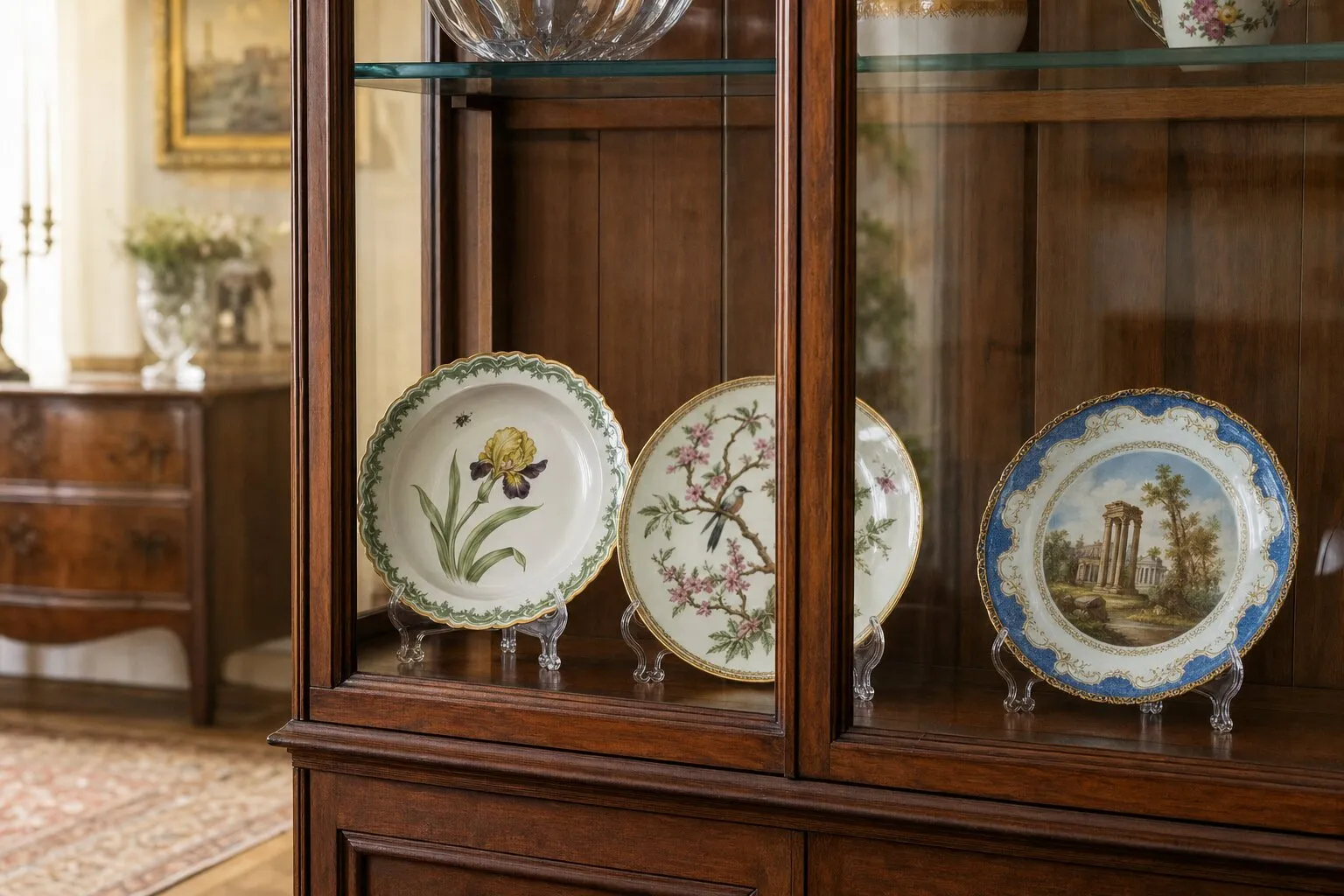
Cabinet plates are made to be noticed. Their painted scenes, gilded borders, unusual shapes, and commemorative details are often far too interesting to disappear into a stack of everyday dishes. Whether you have inherited one painted plate, collected a set over time, or found a single beauty at an estate sale, displaying it well is a way to enjoy the work that went into it.
Good display begins with a simple question: what do you want to notice first? A plate with a detailed central scene wants open space around it. A set of blue-and-white plates can become a calm visual rhythm on a wall. A group of floral plates may need a quieter backdrop so the color does not turn into noise. The goal is not to show every plate at once. It is to let the best details register, then give the collection room to grow.
What makes a cabinet plate different?
A cabinet plate is decorative tableware designed more for looking than serving. The term describes its intended home, a cabinet, curio, sideboard, or vitrine, rather than one strict size or maker. It can be porcelain, earthenware, bone china, or pottery. It may have a portrait, landscape, botanical painting, historical scene, calendar date, or elaborate border that would make a fork feel beside the point.
Some examples were sold individually as artistic showpieces. Others came as numbered series, holiday plates, souvenir plates, or companion pieces to a larger china pattern. PBS’s appraisal of a Vienna cabinet plate from around 1900 offers a useful example: the plate was made for looking, with an Art Nouveau border and painted subject taking center stage, rather than for a meal. That kind of decorative purpose is the common thread, even when the styles are very different.
That does not make every cabinet plate rare or precious. It does mean that the condition, maker, decoration, and story deserve a slower look. Turn the plate over before deciding where it belongs. A backstamp, decorator’s signature, series number, or old retailer label can add context. If you are building a collection, save those details with a photo and a few notes. The information becomes part of the pleasure.

Start with condition and weight
Before choosing a wall, shelf, or stand, inspect the plate in good light. Run a clean fingertip gently around the rim and foot ring for chips. Look for fine cracks, old repairs, rubbed gilding, flaking paint, or a slightly uneven shape. A sound plate with a stable foot is a good candidate for several display options. A repaired, thin, or irregularly shaped plate needs a calmer life where it cannot be bumped.
Weight matters just as much. Hold the plate with two hands and take a moment to feel where its weight sits. A heavier charger, oval platter, or plate with a raised border may not suit the same hanger or small easel as a lightweight porcelain plate. Measure the widest point, including any scalloped rim, before buying a stand or wall hanger. A plate should rest securely, never perch by a narrow edge or lean so far back that it can slip.
The Canadian Conservation Institute advises minimizing unnecessary handling of ceramic and glass objects, supporting them well, and keeping them on stable shelving. Its handling guidance is refreshingly practical: use two hands, do not lift by a handle or applied detail, and make the display easy to reach without moving other objects first. Those small choices make a home display much more relaxing to live with.
Use a stand for a single special plate
A plate stand is often the easiest and kindest way to show a favorite piece. It lets the full face of the plate be seen, avoids mounting hardware, and makes it simple to rotate a display when your mood changes. Clear acrylic blends into the background. Wood, brass, or painted metal can be a lovely part of the setting when its finish feels at home with the plate.
Choose a stand with a broad base and two stable points of contact under the plate, plus a gentle back support. Avoid bare, sharp metal against a soft glaze or gold rim. For a valuable plate, look for padded contact points, or add a thin, non-abrasive barrier approved for display use. Set the stand on a steady surface away from a swinging door, the edge of a table, or an enthusiastic pet’s favorite route.
A single plate has enough presence to anchor a vignette. On a sideboard, it can sit behind a low bowl, a small stack of books, or a vase, as long as those companions do not cover the painted center. On an open shelf, give it breathing room. A plate with a scenic center reads best when nothing competes with the view.

Make a cabinet display feel collected, not crowded
A glass-front cabinet is an excellent home for cabinet plates because it reduces dust, adds a little protection from accidental knocks, and lets guests enjoy the collection without constant handling. Start with a small group rather than filling every shelf. Three plates that relate through color, subject, or era usually look stronger than ten pieces packed rim to rim.
Vary the heights. Place the largest or most detailed plate toward the back on a stand, then use smaller pieces at a lower height or on the neighboring shelf. If you have a matched series, resist the urge to line every plate up like a catalog. A little staggered depth makes the display feel lived with, provided every plate remains stable and visible.
Keep heavy pieces low. The National Park Service recommends stationary, stable shelves, accessible placement that minimizes handling, and extra support for objects that do not stand securely on their own. Its ceramic care guidance also warns against stacking plates without protective separation. At home, that translates neatly: keep display plates upright on stands, do not stack them decoratively, and use the bottom shelves for substantial pieces.
Hang a plate wall only when the support earns your trust
A plate wall can turn an empty dining room, hallway, or kitchen wall into a personal gallery. It works especially well when the plates share a thread, such as blue transferware, botanical decoration, a holiday series, or soft cream-and-gold borders. Lay the arrangement on the floor first. Start with the largest plate, then place the others around it in a loose grid or an organic cluster. Take a quick photo before making holes, then adjust the spacing until the arrangement feels balanced.
For wall display, use a correctly sized hanger with padded or vinyl-coated contacts and a weight rating that comfortably exceeds the plate’s weight. A hanger should hold the plate at several points around the rim without squeezing or rubbing painted edges. Match the wall hook and anchor to the wall material. If the plate is heavy, repaired, unusually valuable, or you cannot test the support with confidence, choose a cabinet display instead. A pretty wall is not worth a broken heirloom.
Do not hang plates directly above a heat source or in a spot that gets hard sun every afternoon. The Canadian Conservation Institute recommends keeping collection objects away from direct sunlight and sources of heat or cold, which can create damaging temperature and humidity swings. A bright, indirect-light wall will show the decoration beautifully while asking less of the piece.

Choose one unifying idea
The most appealing plate displays usually have one organizing idea. It can be as simple as a color: cobalt blue, pale green, warm cream, or a border of gilt. You might collect botanical plates, travel souvenirs, birds, portraits, or plates from one maker. A mix works too, but it needs a thread the eye can understand in one glance.
If the plates are all different, keep the background quiet. A neutral wall, wood shelf, or plain cabinet backing lets the decoration do the work. If the plates are mostly pale, a deeper painted wall can give them definition. You do not need to buy matching furniture for a collection. A few familiar materials, repeated gently, will make individual finds feel like they belong together.
Then edit. Leave a little empty wall or shelf around the group. Space is not a missed opportunity to add one more plate. It is what lets a favorite border, a painterly scene, or a beautiful irregular edge be seen. The same principle works when arranging vintage china at a table or pairing a plate display with small collectible decor.
Keep the display easy to care for
Give plates a quick visual check whenever you dust. Look for a stand that has shifted, a wall hanger that no longer sits squarely, or a new crack that needs attention. Dust gently with a soft, dry cloth or a soft brush. Do not spray cleaner directly onto a plate, especially one with gilding, painted decoration, old labels, or a repaired area.
Rotate the display when you want a fresh look. A cabinet plate can move from a dining room shelf to a guest-room wall, or take a place in a seasonal arrangement for a few months. Rotation makes it easier to enjoy more of a collection without cramming it into one location. When storing plates, keep them upright where possible. If stacking cannot be avoided, use clean soft padding between plates and do not make a tall, unstable tower.
Most of all, choose a display that fits the plate’s life now. A flawless showpiece may deserve a quiet cabinet. A less formal souvenir plate might be happiest on the kitchen wall. A plate with a small old repair can still bring beauty to a shelf if it is stable and handled kindly. Collecting is not about turning every object into a museum piece. It is about giving the pieces you love a safe place to be enjoyed.
Find the next piece for your display
A good plate display comes together one find at a time. Tucson Collectibles brings together vintage china, decorative objects, glass, and gifts with the details that make a room feel personal. Browse the current collection when you are looking for the plate, figurine, or glass accent that gives a shelf a new direction.
For a thoughtful present or a piece with a story, our guide to choosing a vintage gift is a useful place to start. The best find is often the one that makes you picture exactly where it will live.
Frequently asked questions
What is a cabinet plate?
A cabinet plate is a decorative plate made primarily for display rather than everyday dining. It may be hand-painted, transfer-decorated, gilded, commemorative, or part of a themed series. The name comes from the cabinet or vitrine where an owner could safely admire it.
Should cabinet plates be hung on the wall?
They can be, provided the plate is sound, the hanger is correctly sized, and the wall fixing suits the plate’s weight. For a fragile, repaired, unusually valuable, or irreplaceable plate, a cabinet or plate stand is usually the gentler choice.
How do I keep a plate display from looking cluttered?
Choose one visual connection, such as a shared color, maker, subject, or border style. Start with fewer plates than you think you need, leave space between them, and add only when the arrangement still lets each plate be seen clearly.
Can I display cabinet plates in direct sunlight?
It is better to choose bright indirect light. Direct sun and heat can be hard on painted decoration, gilding, old repairs, and nearby organic materials. A display away from a hot window or spotlight is easier to enjoy for the long term.
Related notes
Find a piece worth setting out.
Browse vintage finds selected for collectors, gift givers, and homes with character.
Shop Vintage