
Vintage China Patterns: How to Identify Yours
A pattern is more than a pretty border. Read the mark, shape, color, and condition together, and an unknown plate becomes a much better story.
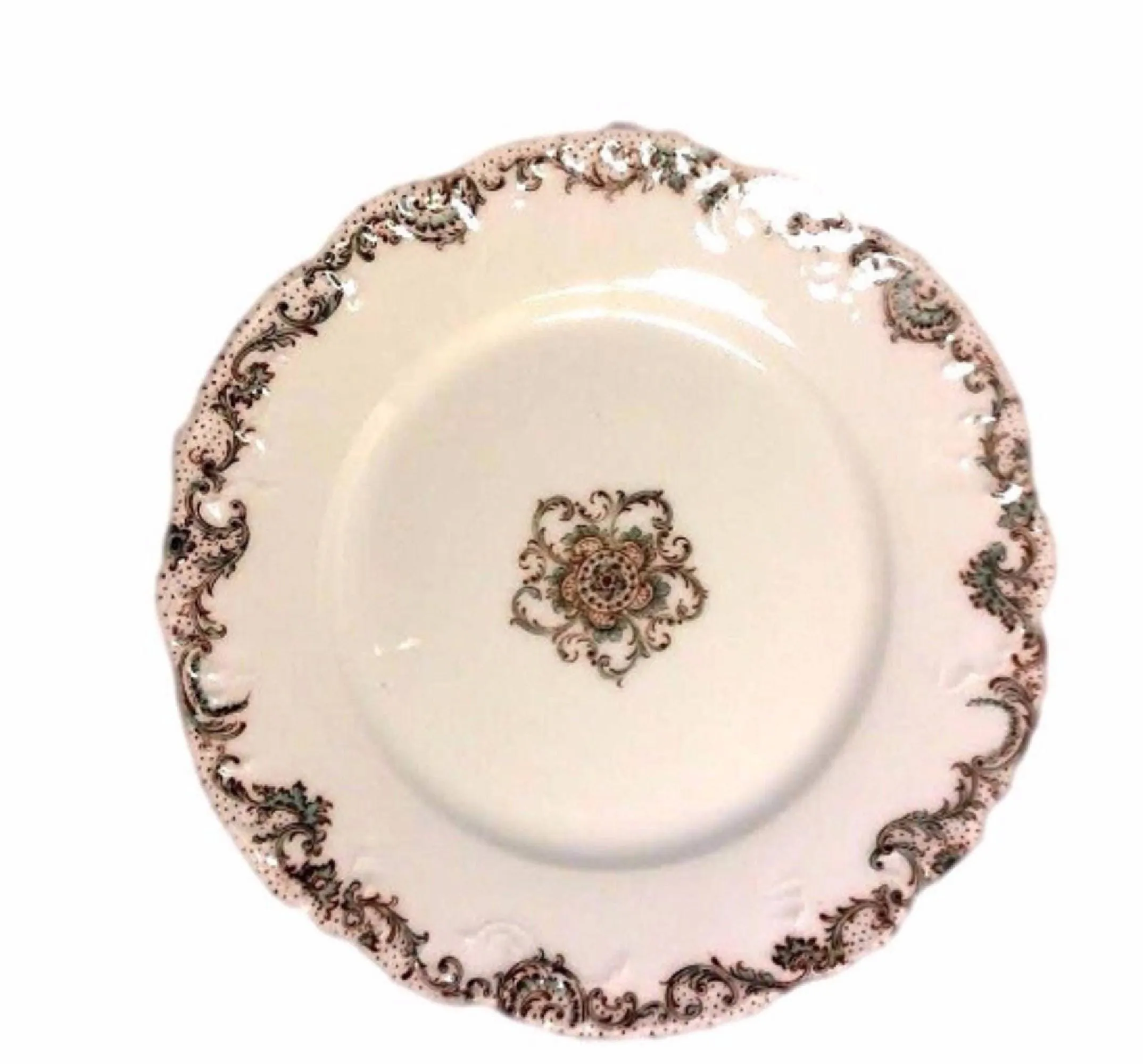
Vintage china has a way of making an ordinary cupboard feel like a family archive. A plate might be part of a wedding set, a single flea-market find, or the last survivor of a much-loved service. The first question is usually simple: what pattern is this? The best answer comes from looking at the whole piece rather than chasing a flower, color, or maker name you hope to find.
You do not need an expert eye to make a strong start. A clear routine will take you surprisingly far. Turn the piece over, record exactly what is there, photograph the front and back, then compare the details that are hardest to accidentally match. This guide is designed for guests who want to understand a piece before they buy, display, replace, or pass it along.
Begin with the largest, clearest piece
If you have a whole set, begin with a dinner plate, platter, or other large flat piece. It usually shows the border, center decoration, rim shape, and backstamp more clearly than a small saucer or cup. Set it on a plain surface in indirect daylight and take one photograph of the full face. Then photograph the underside straight on, followed by close images of any words, numbers, symbols, or impressed marks.
Write down what you see before searching. Note the background color, border width, flowers or motifs, trim color, edge shape, and whether the decoration is printed, painted, raised, or gilded. “Ivory plate with a brown scroll border and tiny blue flowers” is a much better research note than “old floral china.” Measurements matter too. A ten-inch dinner plate, a nine-inch luncheon plate, and a bread plate may share decoration while belonging to different place settings or shapes.
Keep the images together. A pattern name is much easier to confirm when the maker mark and the front of the piece are in the same small record. The pattern-identification guidance from Replacements, Ltd. makes the same practical request: an image of the entire front, a close-up of the backstamp, and the piece measurement give a researcher the useful basics.
Read the backstamp before you search the pattern
The backstamp is the mark on the underside of a plate, cup, saucer, platter, or serving piece. It may be printed, impressed into the clay, painted, or partly hidden by a foot ring. It can contain a maker’s name, a logo, the country of origin, a pattern name or number, a date code, a decorator’s mark, or simply a word such as “porcelain,” “ironstone,” or “bone china.” Not every mark answers every question, but it is usually the best first clue.
Copy the mark exactly as it appears, including punctuation, initials, and numbers. A pattern number is not just decoration. Searching the maker alongside that number can be more effective than searching a broad description of the flowers. If the mark is faint, take a photograph with light coming from the side rather than directly above. An impressed mark can become much easier to read when its shallow edges cast a tiny shadow.
Do not treat a country name as a complete date. Marks are often reused, and a piece may carry a retailer or importer mark in addition to the factory mark. Use the backstamp to narrow the field, then make sure the shape, rim, decoration, and material point in the same direction. Good identification is a set of matching clues, not one lucky word.

Describe the pattern as a collection of details
Once you know the likely maker, look closely at what makes the pattern distinct. Start at the rim. Is it plain, scalloped, fluted, embossed, or edged in gold or platinum? Does the decoration sit in a wide border, run around the edge in a narrow band, or appear as a central bouquet? Then move inward. Notice the exact flower, leaf, bird, geometric line, or scene, along with its colors and spacing.
Shape matters as much as color. Two patterns can use similar roses or blue bands while appearing on different plate bodies. Check whether the rim is gently coupe-shaped, deeply rimmed, square, oval, or scalloped. Look at handles, feet, lid knobs, and the profile of cups and pitchers. A reliable match should explain the entire piece, not just one attractive flower.
Be precise about trim. A warm gold band, cool platinum line, hand-painted enamel, and printed metallic-looking border can age and wear differently. Photograph high points of the rim where gilding is most likely to soften. Those close details help separate a true match from a similar pattern that only shares a color palette.
Use a careful comparison, not the first convincing photo
Image search and pattern databases can be excellent starting points, but a single image is never enough. Compare a possible match against your piece in several places: the center, the border, the shape of the rim, the underside, and the scale of the decoration. If a listing only shows the front, it may be useful inspiration, not proof. Look for a second example that confirms the maker or pattern in a more complete way.
Pay special attention to variants. A maker may repeat a motif on several shapes, use the same floral spray with different trim, or release a pattern in more than one colorway. A service can also be assembled over time from compatible but not identical pieces. That does not make it less enjoyable. It simply means the most honest description may be “matching maker and style, pattern still unconfirmed.”
For pieces with no readable mark, reverse the order. Describe the front in detail, include the shape and measurements, and search for a visual match. The back may still offer subtle clues such as mold lines, a molded number, a paper label shadow, or an unglazed foot. Save your search terms and comparison images so you can return to the question later with better information.

Separate identification from value
Knowing a china pattern gives you the language to research it. It does not automatically set a price. Value depends on the maker, age, demand, rarity, condition, completeness, and the particular form. A common dinner plate may be easy to find while a covered vegetable dish, gravy boat, or uncommon serving piece in the same pattern attracts more interest. A small chip, hairline crack, repair, worn gilding, or staining can change the picture again.
Identify first, then compare recently sold examples that match the same maker, pattern, piece type, size, and condition. An ambitious asking price is a clue to what someone hopes for, not evidence of what guests are choosing. Be equally cautious with broad claims that a maker name alone makes every piece valuable. China is often most useful and most loved when you know exactly what you have and can make decisions from there.
Personal value belongs in the answer too. A modest patterned cup may complete a family set or hold a memory that no price guide can measure. Knowing the pattern can help you find a replacement, choose a compatible piece, or simply give a favorite object the proper name in your collection.
Check condition while the piece is in your hands
Before you buy or use vintage china, inspect it in good light. Look around the rim, foot, handles, spouts, and raised decoration for chips, cracks, roughness, staining, repairs, flaking paint, or worn metallic trim. Turn a cup or pitcher slowly and look inside as well as outside. Hairline cracks and old repairs often hide where a quick front-facing photograph will not reveal them.
Handle the piece with two clean, dry hands. The Canadian Conservation Institute’s ceramic-care guidance recommends supporting fragile objects rather than lifting them by handles or spouts, and avoiding unnecessary handling. That is sensible advice for a home cupboard too. A well-supported piece is easier to examine and less likely to become a repair project.
Use gentle judgment with cleaning. Do not assume every old plate belongs in a dishwasher or should be scrubbed until it shines. Painted decoration, gilding, decals, repairs, and uncertain glazes deserve caution. When a piece feels too delicate or its condition is unclear, enjoy it as display china until you know more.

Build a useful record for each pattern
Once you have a likely identification, make a small record that can travel with the collection. Include the maker, pattern name or number, country mark, piece type, measurements, condition notes, and photographs of both sides. Keep it in a note, a folder, or a label tucked safely near the cupboard, not on the china itself. The next time you find a matching plate or need to answer a family question, the work has already been done.
Record the details you cannot see in a photograph as well. Note a faint hairline, a repaired handle, a maker’s label, or a missing lid. Honest notes protect you when you are buying, selling, gifting, insuring, or simply deciding which pieces can come to the table. They also make a mixed collection feel intentional rather than mysterious.
If you are still unsure, leave room for that answer. “Maker identified, pattern under research” is more helpful than attaching a confident but unsupported name. The goal is not to turn every plate into a trophy. It is to learn enough that the pieces you keep can be chosen, used, or displayed with care.
Use the same method when one piece does not match
One unfamiliar cup in a family cabinet does not always mean the set is wrong. Over many years, people replace a broken saucer, add a serving piece from a related line, or combine two patterns that feel good together. Begin by checking whether the shape, maker, and trim agree. A compatible piece may share a color, border width, or body style while carrying a different pattern name. That can be a thoughtful choice rather than a mistake.
When you are trying to complete a set, make a short wish list before you browse. Name the exact piece type, maker, pattern, trim, and size you need. “Royal Worcester bowl” is broad. “Royal Worcester Evesham two-handled vegetable bowl with fruit decoration” gives you a much better chance of recognizing the right match when it appears. Keep room for condition too. A flawless replacement may not be worth more to you than a gently worn piece that suits the rest of the set.
Photograph the group together after you identify it. A simple shelf or table image shows the scale and mood of the pattern in a way a single plate cannot. It also helps you see whether a proposed replacement belongs visually before you bring it home. Collections become more useful when the record captures both the individual object and the way it lives with the pieces around it.
China with details worth noticing
Current finds offer a chance to practice reading a border, shape, maker name, and condition note together.
Vintage Haviland Limoges Salad Plates, Set of 3 French Porcelain, Brown Scroll Border
$39.99Noritake Morimura 15 Piece Assorted China, Gilded Rim, Pattern 97875
$129.99Noritake Canterbury China Foxglove Flower Vintage Bread Plates, Set of 2
$24.99Porcelain Ramekins Royal Worcester Evesham Pattern, Set of 2
$17.99Availability changes as individual vintage finds are claimed. Open each listing for current photographs and condition details.
Find the next piece for your table or cabinet
Tucson Collectibles brings together individual china pieces, serving ware, decorative plates, and other finds with the character to make a collection feel personal. Browse the Vintage China collection when you want to explore patterns, shapes, and details at your own pace.
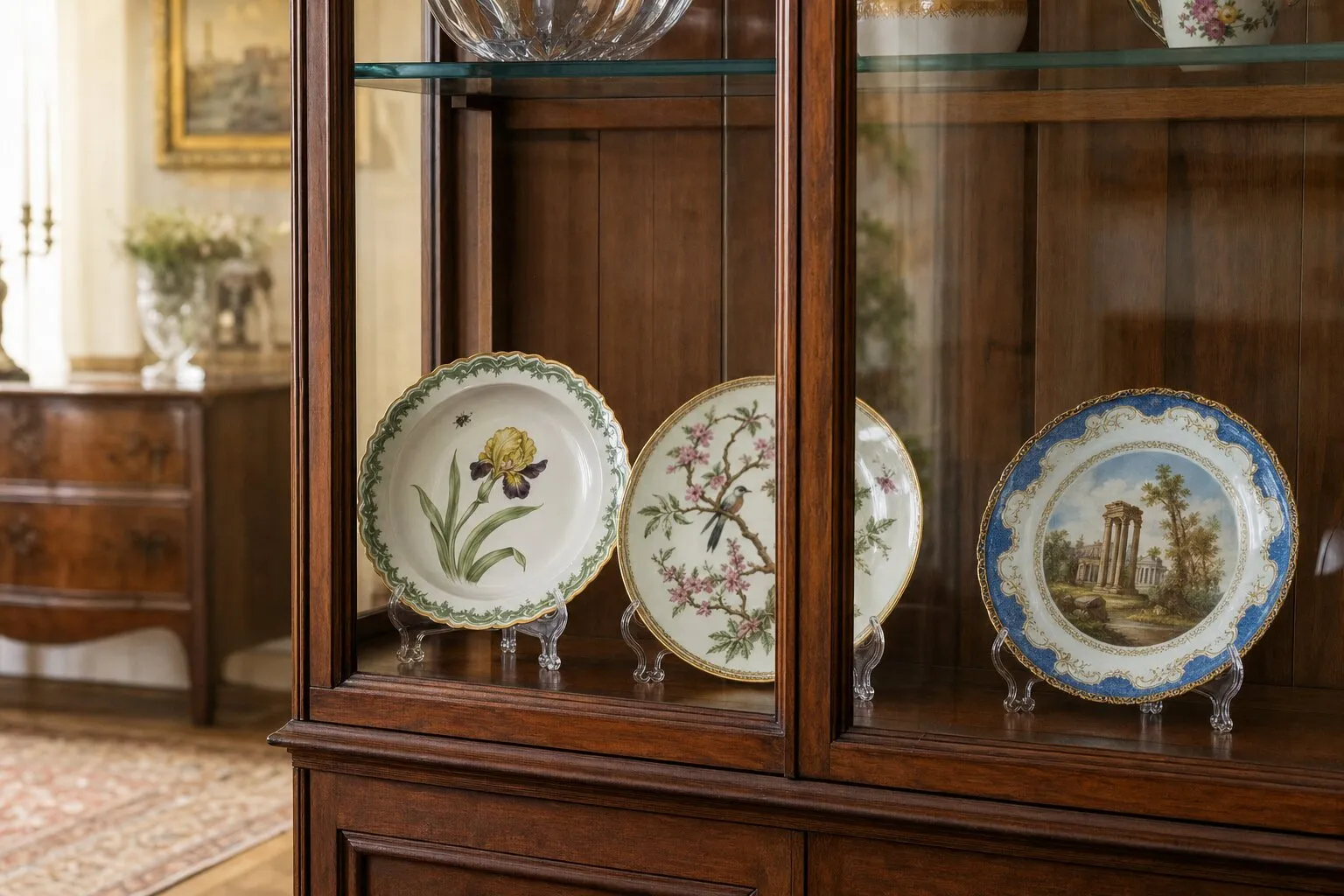
For ideas about giving a decorative find a proper place, see our guide to displaying cabinet plates. A well-chosen plate does not have to stay hidden in a stack to earn its place in a home.
Frequently asked questions
Where do I find a vintage china pattern name?
Start underneath the largest flat piece, usually a dinner plate. The backstamp may name the maker, country, pattern, or a pattern number. If it only gives part of the story, pair a clear photo of the mark with a full photo of the front before you compare patterns.
Can I identify china from a photo of the front only?
Sometimes, especially when the border or motif is distinctive, but the backstamp makes the search much more reliable. Photograph the full face in even light, then take a close, straight-on image of every word, number, and symbol on the underside.
Does a backstamp tell me the exact age of china?
Not always. A mark can narrow the maker, country, and production period, but many marks were used for years. Treat it as one clue, then check whether the shape, decoration, material, and any pattern number support the same conclusion.
Should I wash inherited vintage china before using it?
First inspect it for hairline cracks, loose gilding, flaking decoration, or old repairs. Sound glazed china may only need gentle handling, but pieces with delicate decoration, damage, or an uncertain history are better treated as display pieces until you have more information.
Related notes
Find a pattern worth bringing home.
Browse vintage finds selected for collectors, gift givers, and homes with character.
Shop Vintage