
Collector Plates: How to Identify and Value Them
A beautiful plate can be a family keepsake, a display piece, or the beginning of a focused collection. The useful answers start with the details on both sides.

Collector plates are easy to enjoy and easy to misread. A painted winter scene, a numbered backstamp, or a familiar artist can make a plate feel immediately important. Sometimes it is. Just as often, the real story is more specific: a plate may be one issue in a large decorative series, a carefully made cabinet piece, a souvenir, an annual holiday release, or a plate chosen simply because someone loved its subject.
The good news is that you do not need to guess. A calm routine helps you separate the details that identify a plate from the details that influence its resale interest. Start with the physical object, make a small record, then compare only like with like. That method works whether you are deciding what to keep, buying a companion piece, or learning about a plate from a family cabinet.
Begin with a complete record, front and back
Set the plate on a plain surface in bright, indirect light. Take one photograph of the full front, one of the full underside, and close images of every word, mark, signature, label, and number. Then measure its diameter at the widest point. A plate that is eight inches across is not necessarily the same issue as a ten-inch version with a similar scene.
Write down what is visible before you search: the maker, artist, title, series name, country, year, edition wording, plate number, and any catalog number. Also note the subject, colors, rim shape, material, and whether the decoration looks painted, printed, molded, or gilded. A phrase such as “blue winter village, scalloped rim, maker mark on reverse” is far more useful than “old Christmas plate.”
Use the front and back together. A recognizable image can appear in several series, while a maker mark may identify the manufacturer but not the exact plate. A strong identification explains the artwork, rim, measurements, and reverse details as one coherent answer. If a match only explains one of those things, keep looking.
Read the clues on the underside
The reverse of a collector plate often carries the best research terms. Look for a factory or issuing-company name, an artist credit, the plate title, a series title, a year, and an edition statement. Some plates also include a Bradex-style reference, a mold number, a country of origin, or a paper label. Record punctuation and spelling exactly, because one extra word can distinguish two closely related issues.
A number deserves attention, but not too much confidence. It might be a plate number within an edition, a mold number, an inventory reference, or a number added later by an owner. A date may describe the artwork, a commemorated event, or the issue year rather than the year your particular plate was made. Treat each item as a clue until the other details support it.
If the mark is faint, try raking light from the side and photograph it rather than rubbing or cleaning it. The pattern-identification guidance from Replacements, Ltd. makes the same practical point: a full front image, a clear backstamp, and measurements give a comparison the details it needs. A careful record protects you from having to start over each time you revisit the plate.

Understand what “limited edition” actually says
“Limited edition” is useful information, not a value guarantee. Read the statement word for word. An edition capped at a stated number is different from a plate offered during a set firing period, and both are different from a decorative plate that merely carries a serial number. The plate number tells you which example you have. It does not automatically make number 12 more desirable than number 1,212.
Original boxes, certificates, brochures, and receipts can help establish the exact title or series. Keep matching paperwork, especially if the plate was issued with it. At the same time, paperwork cannot turn a plentiful plate into a scarce one. It is evidence of completeness, not a substitute for checking what buyers are choosing now.
Artist, subject, and series are often more useful than a broad category label. A wildlife series may appeal to bird collectors, a local commemorative plate may matter to regional-history guests, and a plate needed to complete a set may have a different audience from its neighbors. Search the exact maker, title, and series together before deciding that a plate is common or unusual.
Inspect condition before comparing prices
Look at the plate in good light and move slowly around the rim, foot ring, front, and back. Check for chips, hairline cracks, crazing, stains, repairs, scratches, worn gilding, and damage to raised decoration. A flaw does not erase a plate’s decorative or sentimental pleasure, but it changes the right comparison and should be recorded honestly.
Support the plate with two clean, dry hands rather than lifting it by a narrow edge or an applied detail. The Canadian Conservation Institute’s guidance for ceramic and glass objects emphasizes that these materials are hard but brittle, and that preventing knocks and unnecessary handling is the most important precaution. At home, that means using a stable surface while inspecting a plate and keeping it away from crowded edges.
Photograph any condition concern while you can see it. A small rim chip can disappear in a wide image, and a hairline may only show from one angle. These photos make it easier to compare similar-condition examples, explain a plate accurately if you sell it, and decide whether it belongs on a shelf rather than at the table.

Find a realistic value, not the most optimistic asking price
Once the plate is identified, search for recently sold examples with the same maker, title, size, edition, and condition. Current sold results answer a more useful question than an open listing: what did someone actually choose to pay for this exact kind of plate? Compare several examples, because one unusually low or high result can be an outlier.
Separate market value from personal value. A plate can mark a birthday, a family tradition, a beloved artist, or a place someone remembers. That meaning is real, even when a large production run keeps the resale price modest. Likewise, an older plate is not automatically valuable. The maker, exact issue, condition, completeness, and current demand all work together.
Be cautious with claims that a familiar name settles the question. A particular artist may have designed many plates, and different issues can have very different levels of interest. The most honest answer is sometimes “identified, but demand is still limited.” That is better information than attaching a high value to a plate that has not shown recent buyer interest.
Choose a collecting focus you will enjoy living with
Collector plates make the most satisfying groups when they have a clear reason for being together. You might follow one maker’s annual series, a favorite artist, birds, ships, local scenes, holiday imagery, blue-and-white decoration, or plates tied to meaningful years. A focused idea helps you notice which piece adds something new and which is only a near-match.
Before buying, ask a short set of questions: Can I identify the exact plate? Is the condition clear? Does it fit my focus? Do I have a safe place for it? Have I compared the same issue rather than a vaguely similar plate? These questions are not about making collecting rigid. They give you more confidence to say yes to the plate that genuinely belongs in your home.
For a collection built around china patterns rather than decorative issues, our guide to identifying vintage china patterns walks through backstamps, shapes, and small details. For Christmas releases, the Christmas collector plates guide offers a closer look at annual issues, seasonal display, and care.
Display the plate in a way that lets it last
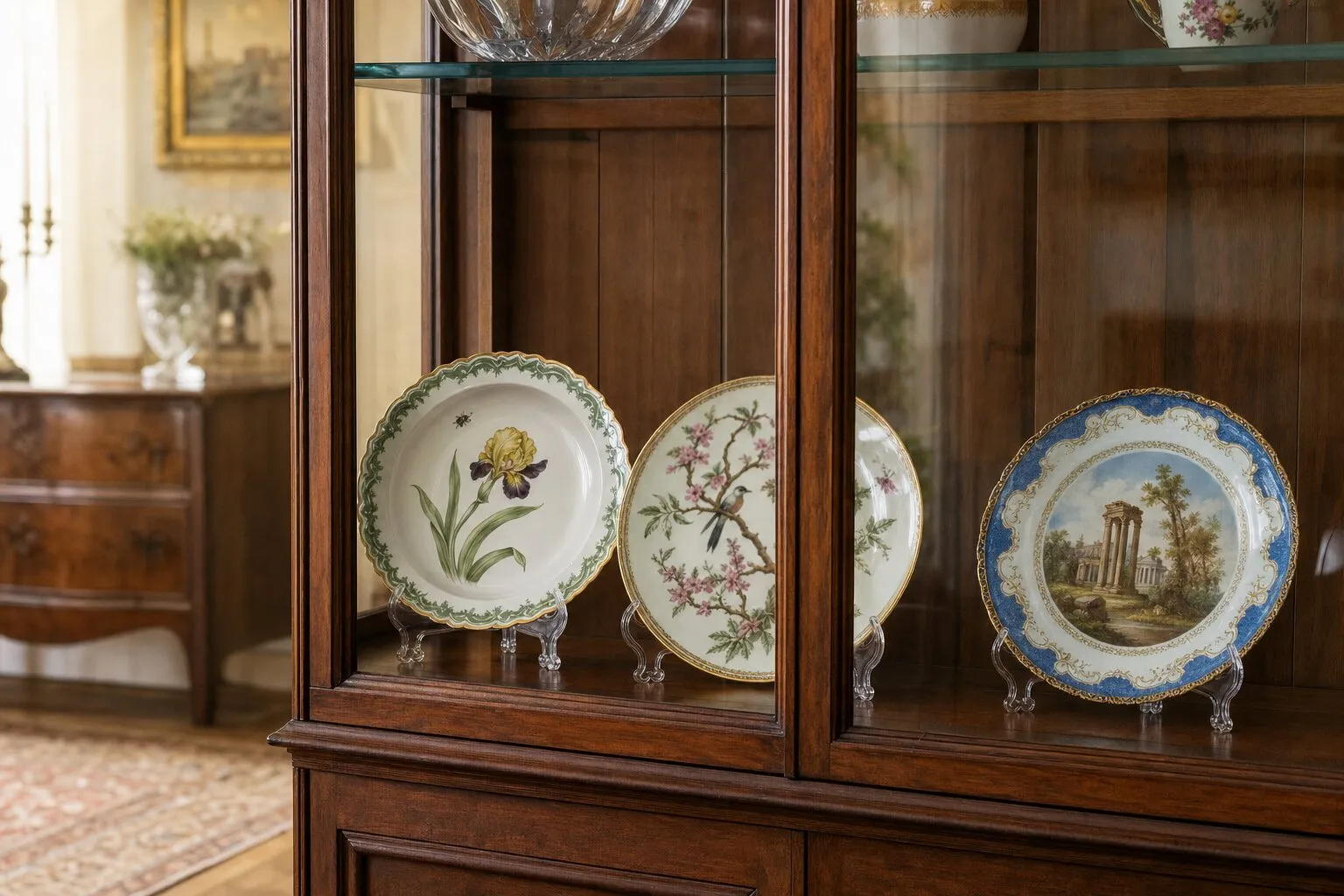
A stable stand in a cabinet or on a steady shelf is often the easiest way to enjoy a plate. It keeps the decoration visible without adding wall hardware, and it makes rotation simple. Choose a stand with a broad base, soft contact points, and enough depth to hold the rim securely. Heavy plates belong low, where they are less likely to be bumped or lifted over other objects.
Wall display can be lovely when the hanger is correctly sized and the fixing suits the plate’s weight. For fragile, repaired, valuable, or unusually heavy plates, a cabinet or shelf is usually the more forgiving choice. The National Park Service advises stable support and careful handling for ceramic collections, a useful reminder that a pretty display should never ask a delicate plate to take unnecessary risks.
Keep plates away from direct sun, heat vents, and busy traffic paths. When you dust, use a soft, dry brush or cloth and do not spray cleaners straight onto decoration or gilding. Our guide to displaying cabinet plates has practical ideas for stands, shelves, and wall arrangements that make a collection feel deliberate rather than crowded.

Collector plates with details worth studying
Current finds give guests a chance to practice reading a title, maker, series, materials, and condition notes together.
Rien Poortvliet Gnome Collector Plate, 8 Inch Fairmount Porcelain Winter Decor
$44.99Lionel Barrymore Nautical Collector Plate, Gorham China San Pedro Harbor Scene
$49.00Mulberry Plantation Wall Decor Plate: Ridgewood Colonial Heritage Series
$59.99Scalloped Plate Rosenthal Monbijou China, Small Porcelain Cabinet Plate
$49.99Availability changes as individual vintage finds are claimed. Open each listing for current photographs and condition details.
Find a piece with a story you want to keep
Tucson Collectibles brings together vintage china, decorative pieces, glass, figurines, and gifts for guests who enjoy the details. Browse the current collection when you are looking for a plate, cabinet piece, or companion find that feels worth setting out.
The best collecting decision is often the simple one: choose the piece whose maker, story, condition, and place in your home all make sense together.
Frequently asked questions
How do I identify a collector plate?
Photograph the whole front and the complete underside, then record the maker, artist, title, series, year, edition wording, plate number, and measurements exactly as they appear. Compare several details together before naming the plate.
Are numbered collector plates valuable?
A plate number identifies one example in an edition, but it does not prove scarcity or value by itself. The exact design, maker, condition, completeness, and recent sold examples for the same plate matter much more.
Do certificates and original boxes add value?
They can help confirm an exact issue and make a plate easier to store or sell, especially when the paperwork matches the plate. They do not create demand for a common plate, so compare complete examples with recent sold listings before assigning a value.
What condition problems should I look for?
Inspect the rim, foot ring, front, and back in good light for chips, hairlines, crazing, staining, repairs, scratches, worn gilding, and damage to raised decoration. Photograph any flaw and compare only with plates in a similar condition.
Related notes
Find a piece worth setting out.
Browse vintage finds selected for collectors, gift givers, and homes with character.
Shop Vintage