
Christmas Collector Plates: A Guide for Collectors
A Christmas plate can hold a season, a memory, or a satisfying collecting question. The best way to enjoy one is to read its details before you give it a place in the tradition.
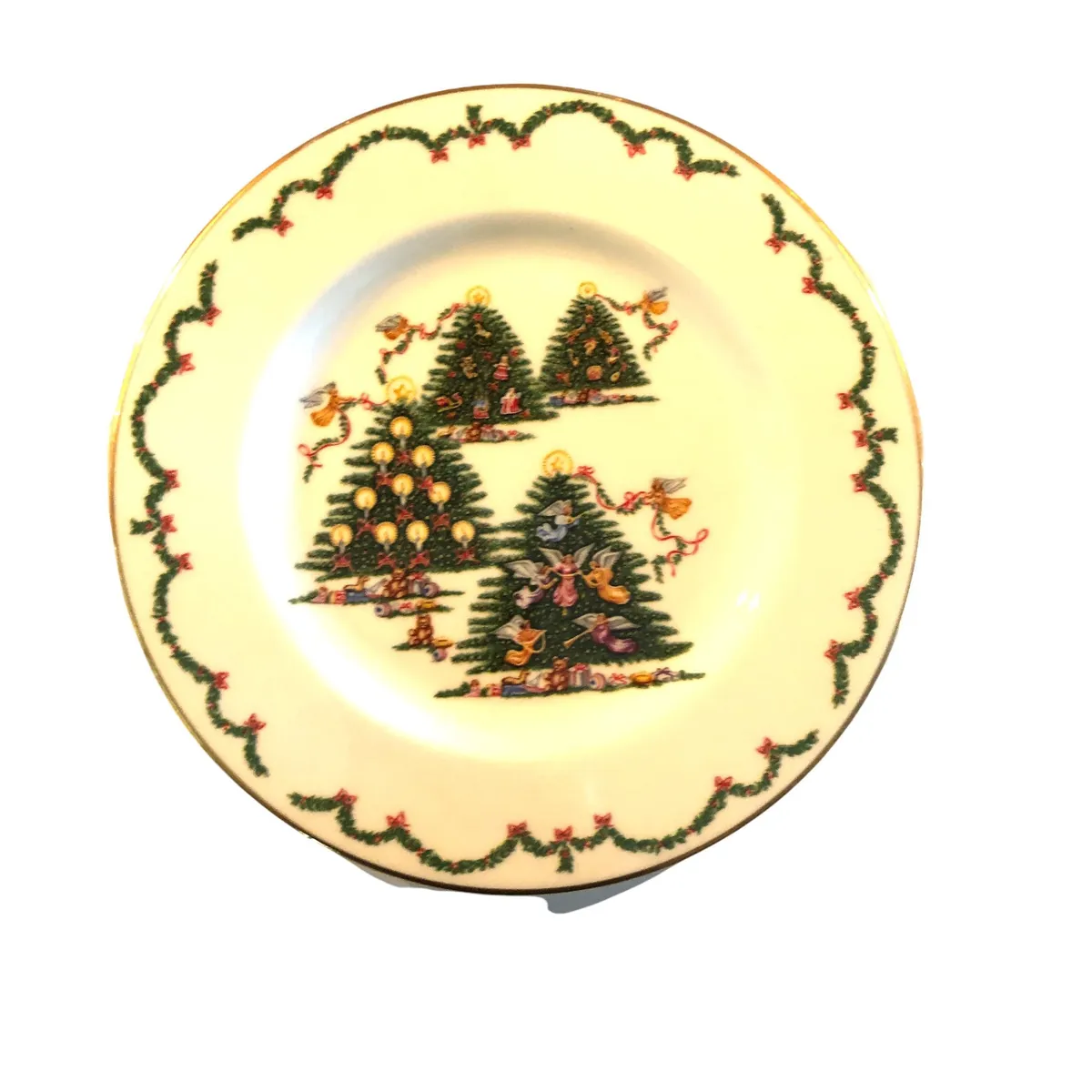
Christmas collector plates have a particular way of reappearing each year. A blue-and-white scene might come out with the ornaments. A plate from a grandparent’s cabinet may be the first thing someone remembers hanging in the dining room. Others are found one at a time, chosen for a favorite artist, a winter landscape, an angel, or a year that matters to the family.
The category is wide, which is part of its charm and part of what makes careful looking useful. A holiday plate might be an annual issue from a long-running series, a limited-edition commemorative, a decorative wall plate, or simply beautiful seasonal china. Its age alone does not settle what it is or what it is worth. A few patient checks will give you a more honest answer and help you decide whether it belongs on a wall, in a cabinet, or at the table.
Start with the story the plate is telling
Look at the front before turning the plate over. Is there a printed year? A winter scene, nativity, village, bird, or Santa motif? Is the image painted, transfer-decorated, molded in relief, or framed by a gold border? Note the colors, size, shape, and whether the plate looks made for a series. These visible details give you useful language for research and help separate one issue from a similar-looking plate.
Christmas plates are not all meant to do the same job. Some are annual collectibles made to mark a particular year. Others are decorative plates sold for seasonal display. Still others are pieces of festive dinnerware, designed to be used alongside matching bowls, cups, or serving pieces. Do not assume that a date on the front is the date a particular plate was made. It may refer to the design year, the series issue, or the occasion being commemorated.
Series can add a satisfying rhythm to a collection. Royal Copenhagen notes that its Christmas plates have been issued annually since 1908, each with a distinct motif, while Bing & Grøndahl introduced the first porcelain Christmas plate in 1895. The maker’s own history of those traditions is a good example of why the exact maker, year, and scene are all worth recording rather than treating every blue holiday plate as interchangeable.

Read the underside before naming the plate
The underside often gives the most useful clues. Take a clear, straight-on photograph of every word, logo, signature, number, label, and impressed mark. Then copy the information exactly, including punctuation and spacing. A maker’s name may be obvious, but a series title, issue number, artist name, mold number, country wording, or edition statement can be what turns a broad search into a confident identification.
Use the front and back together. A backstamp can identify a maker without identifying the exact scene. A front image can look familiar while appearing on several sizes or versions. Compare the subject, rim, dimensions, and mark as a group. If one detail does not line up, treat the match as a possibility, not a conclusion.
Be wary of a number that looks like a date. Some numbers identify a shape, mold, catalog entry, decorator, or limited-edition sequence. A handwritten number might be a production mark rather than a promise that the plate is one of only a few ever made. The same caution applies to phrases such as “limited edition.” Find out what was limited, how the maker described the series, and whether the plate still has the original certificate or box before letting that wording carry too much weight.
If a mark is hard to read, use indirect light and take several close photos rather than rubbing it or applying a cleaner. A shallow impressed mark often becomes clearer when light travels across it from the side. Keep the original image with your notes. It is much easier to revisit an uncertain mark later than to begin the search from memory.
Separate a cherished date from a market value
A Christmas plate can be precious to a family and still be widely available. That is not a failure of the piece. It simply means sentimental value and collector-market value answer different questions. The most useful market comparison is not an ambitious asking price. It is a recently sold example that matches the same maker, title or year, size, edition, and condition.
Condition changes the comparison quickly. Examine the rim and foot ring for chips, hairlines, rough spots, staining, repairs, worn gilding, or scratches across the image. Look closely at raised decoration and metallic edges, where wear can show first. A small flaw should be described honestly, not hidden by a festive display. It may not stop you from enjoying a plate, but it changes which comparable examples are truly comparable.
Original packaging, certificates, and complete series information can be useful context, especially for a plate made as a numbered annual issue. Keep those materials dry and separate from the plate itself. They are part of the record, not proof that every plate from the line is scarce. A well-loved plate with no box can still be a lovely addition if the exact design and condition suit the way you collect.

Choose plates you will actually enjoy seeing
The strongest collection is rarely the one assembled most quickly. Pick a thread that makes you want to put the pieces out each year. You might collect one maker’s annual series, winter birds, angels, village scenes, plates from meaningful family years, or a single color story such as blue-and-white porcelain. A simple rule gives a growing collection its own character.
Before buying, ask a few practical questions. Does the plate have a clear maker mark? Is the title or year confirmed? Are there chips, cracks, repairs, or rubbed decoration? Do you have a place to display it safely? Does it add something different to the plates you already love? These questions are less glamorous than a dramatic scene, but they are what keep a collection from becoming a pile of near-matches.
Scale matters, too. A small plate can sit beautifully in a shelf vignette. A larger charger needs more wall or cabinet space and a stand that truly supports it. If you are building a group, lay the plates on the floor first and notice whether their color, shape, and visual weight work together. A collection should feel gathered, not crowded.
Display the season without risking the plate
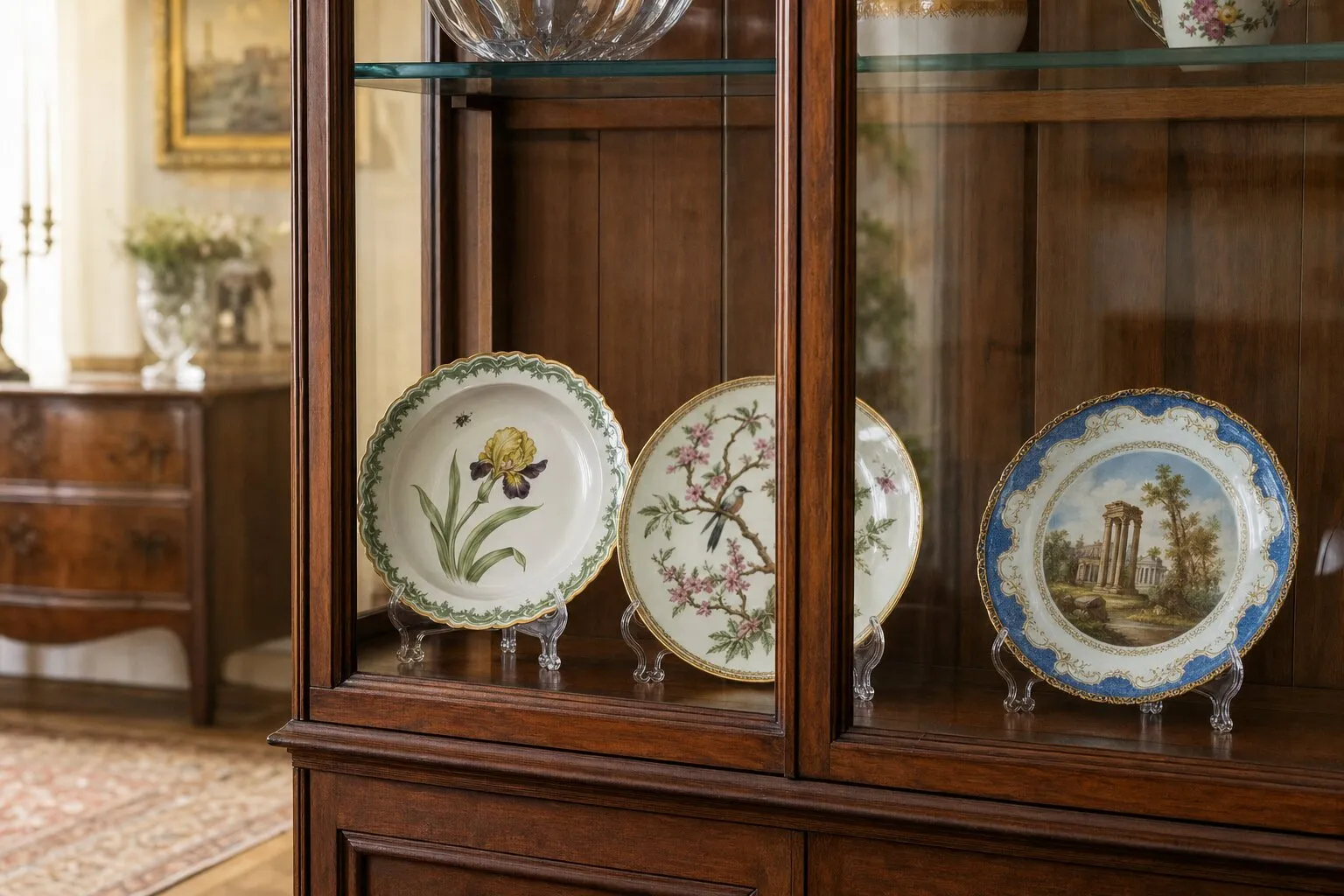
A plate stand in a stable cabinet or on a quiet shelf is often the simplest display choice. It keeps the face visible without adding wall hardware, and it makes rotating the arrangement easy. Choose a stand with a broad base, padded contact points, and enough depth to hold the plate securely. Heavy pieces belong on low, steady surfaces where they do not need to be lifted over other objects.
Wall display can be beautiful, especially for a small series. Use a padded hanger sized for the exact plate and a hook or anchor rated for the plate’s weight and your wall type. Do not hang a precious, repaired, or unusually heavy plate in a spot where a door, chair, or busy hallway can knock it. If the support is uncertain, a cabinet display is the wiser choice.
Museum care guidance for ceramic collections emphasizes stable support, careful handling, and avoiding damaging environmental swings. The National Park Service’s ceramic care handbook is built for collections, but its common-sense principles work at home: support the piece with two hands, do not stack display plates, and keep them away from heat, harsh sunlight, and high-traffic edges.
For more ways to give decorative plates a calm, secure setting, read our guide to displaying cabinet plates. The same approach helps a holiday group feel intentional rather than like an afterthought added to an already full room.

Decide whether it is display china or table china
Some Christmas plates were made for the table, but a decorative plate should not automatically become a dinner plate. Check its condition and maker guidance first. Cracks, repairs, flaking decoration, worn gilding, an uncertain glaze, or a plate that has spent decades as wall decor are sensible reasons to keep it on display. A sound piece from a dinnerware pattern may be better suited to a festive place setting, but careful handling still matters.
When a plate is mainly decorative, let it be decorative. Pair it with a candleholder, a small bowl, or a branch of greenery nearby, rather than putting wet food directly onto a surface with delicate painting or metallic trim. The best holiday table is not one that uses every collectible. It is one that lets the pieces you choose feel safe, seen, and easy to enjoy.
If you are collecting seasonal china as well as plates, our guide to identifying vintage china patterns can help you read backstamps and compare shapes with more confidence. A little identification work makes it much easier to find a replacement, a companion piece, or a plate that truly belongs in the same story.
Find one good piece at a time
Christmas collector plates are at their best when they mark something personal: a favorite winter scene, a family year, a maker you enjoy, or simply the pleasure of bringing a beautiful object out of the cabinet. Give each new plate a few minutes of inspection before it earns a place. You will learn more from one well-documented find than from several plates bought in a rush. Before storing it after the season, photograph it again and keep the notes with your other collection records.
Tucson Collectibles keeps a changing collection of vintage china, decorative objects, figurines, glass, and gifts for guests who enjoy the details. Browse the current shop when you are looking for a special seasonal piece, or explore the collections for ideas that can carry beyond one holiday.
Frequently asked questions
Are Christmas collector plates valuable?
Some are, but a Christmas theme and an older date are not enough on their own. The maker, exact issue, edition information, condition, completeness, and current buyer interest all matter. Identify the plate before comparing recent sold examples for the same design and condition.
How do I identify a Christmas collector plate?
Photograph the full front and the underside, then write down every maker mark, year, title, series name, artist name, edition statement, and number. Compare the plate’s subject, size, rim, and backstamp with a reliable maker or collector reference before drawing a conclusion.
Should I use a Christmas collector plate for food?
That depends on the exact plate, its condition, decoration, and history. A decorative plate with worn gilding, cracks, repairs, or an uncertain glaze is better treated as display. If you want a festive table, choose sound pieces intended for table use and follow the maker’s care guidance.
What is the safest way to display Christmas collector plates?
A stable plate stand in a cabinet or on a steady shelf is usually the simplest choice. For wall display, use a padded hanger correctly sized for the plate and make sure the hook and wall fixing suit its weight. Keep valuable or fragile pieces away from heat, direct sun, and busy traffic paths.
Related notes
Find a piece worth bringing out.
Browse vintage finds selected for collectors, gift givers, and homes with character.
Shop Vintage