
Vintage Coffee Table Books: How to Decorate With Them
A well-chosen old book brings depth, color, and an invitation to linger. Here is how to make a small stack feel collected, not staged.
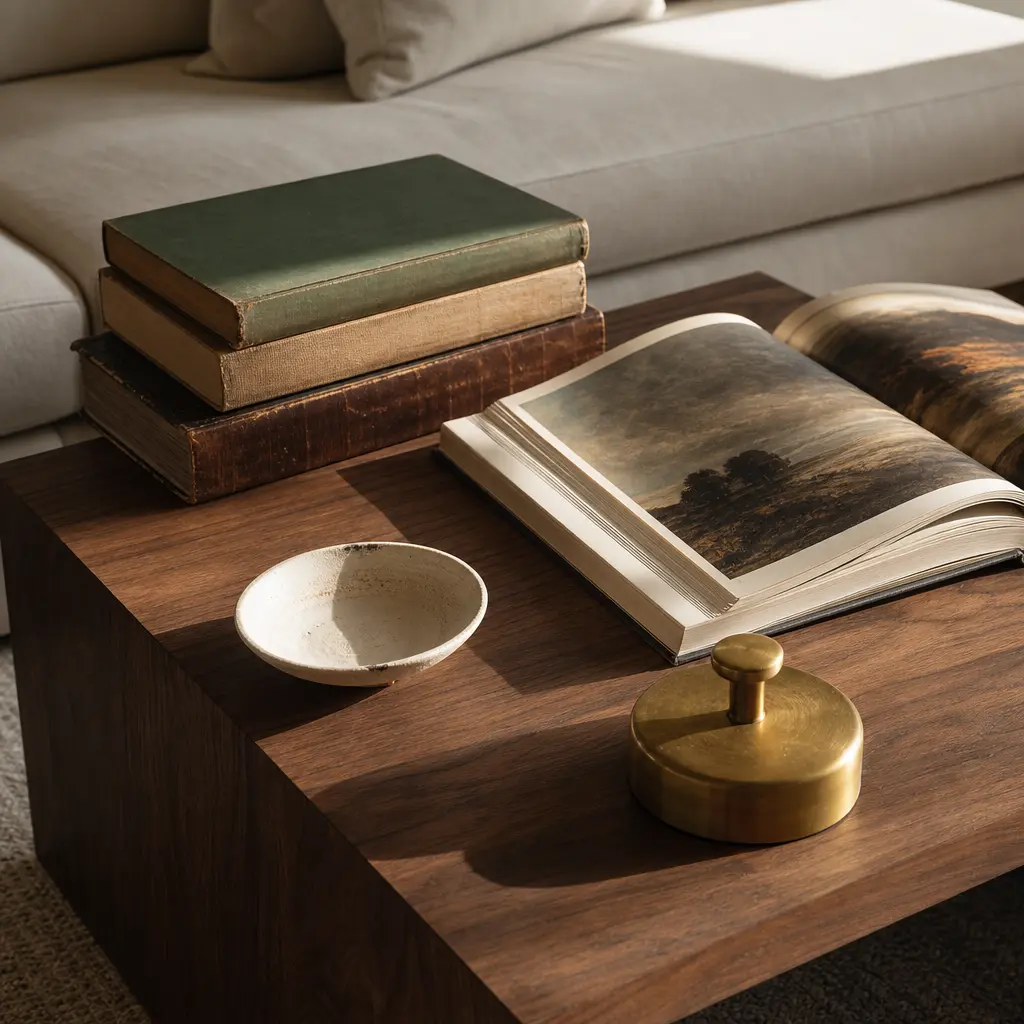
Vintage coffee table books are one of the easiest ways to make a room feel like it belongs to the people who live there. They add color without another throw pillow, history without a lecture, and a little low-key invitation to sit down and look closer. A book about garden design, desert photography, old homes, art, travel, or a place you care about gives a guest something to discover while also telling them what catches your eye.
The best display is not a tower built for a photograph. It is a small arrangement that still leaves room for everyday life. You should be able to set down a cup, pick up the remote, and open a book without moving half the table. Start with books you would actually enjoy reading or paging through. Beauty matters, but curiosity is what keeps the arrangement from feeling like décor bought by the foot.
Start with a subject that belongs in your home
Choose subjects that connect to the room or to your own story. A book on mid-century interiors suits a living room with clean-lined furniture. A regional history can give an entry table a sense of place. Botanical illustration works beautifully near plants, while a volume on pottery, glass, or gardens brings quiet texture to a shelf or side table. Books do not need to be rare to earn a place. The point is that they feel specific.
Look for illustrated books, exhibition catalogues, old travel guides, cookbooks, architecture surveys, design annuals, and photo collections. Their pages are naturally visual, so a guest can open one at random and immediately understand why it is there. A smaller vintage volume can work too, especially when it has a handsome cloth cover or an interesting spine. The scale simply needs to feel right for its spot.
When you are browsing, inspect the book as you would any vintage find. Check the binding, the hinge where the cover meets the pages, foxing or moisture marks, odors, loose signatures, and whether the illustrations are complete. The Library of Congress guidance on caring for books is a useful reminder that light, heat, and poor handling take a steady toll. A little honest wear can be lovely. A failing binding needs a gentler role.
Build a stack with different heights and textures
A small stack reads best when every book is not the same size. Start with the largest book on the bottom, then step down gradually. Two or three books are enough for most coffee tables. If your table is generous, you can create two small groupings instead of one tall stack in the center. That keeps the arrangement open and makes the surface easier to use.
Think in materials as well as color. A faded linen cover, a smooth paper jacket, a worn leather spine, and a matte art monograph create a richer grouping than three identical hardbacks. The covers do not need to match. They need one point of connection, such as a shared warm neutral, a jewel tone, a natural material, or a subject that belongs together. Let that one connection do the organizing.
If you have a favorite book that is too fragile for the bottom of a stack, let it stand alone on a shelf or display it cover-out on a book stand. A book is not less interesting because it is not doing all the structural work. Giving an older volume its own space often makes it more noticeable.
Give the books one useful companion
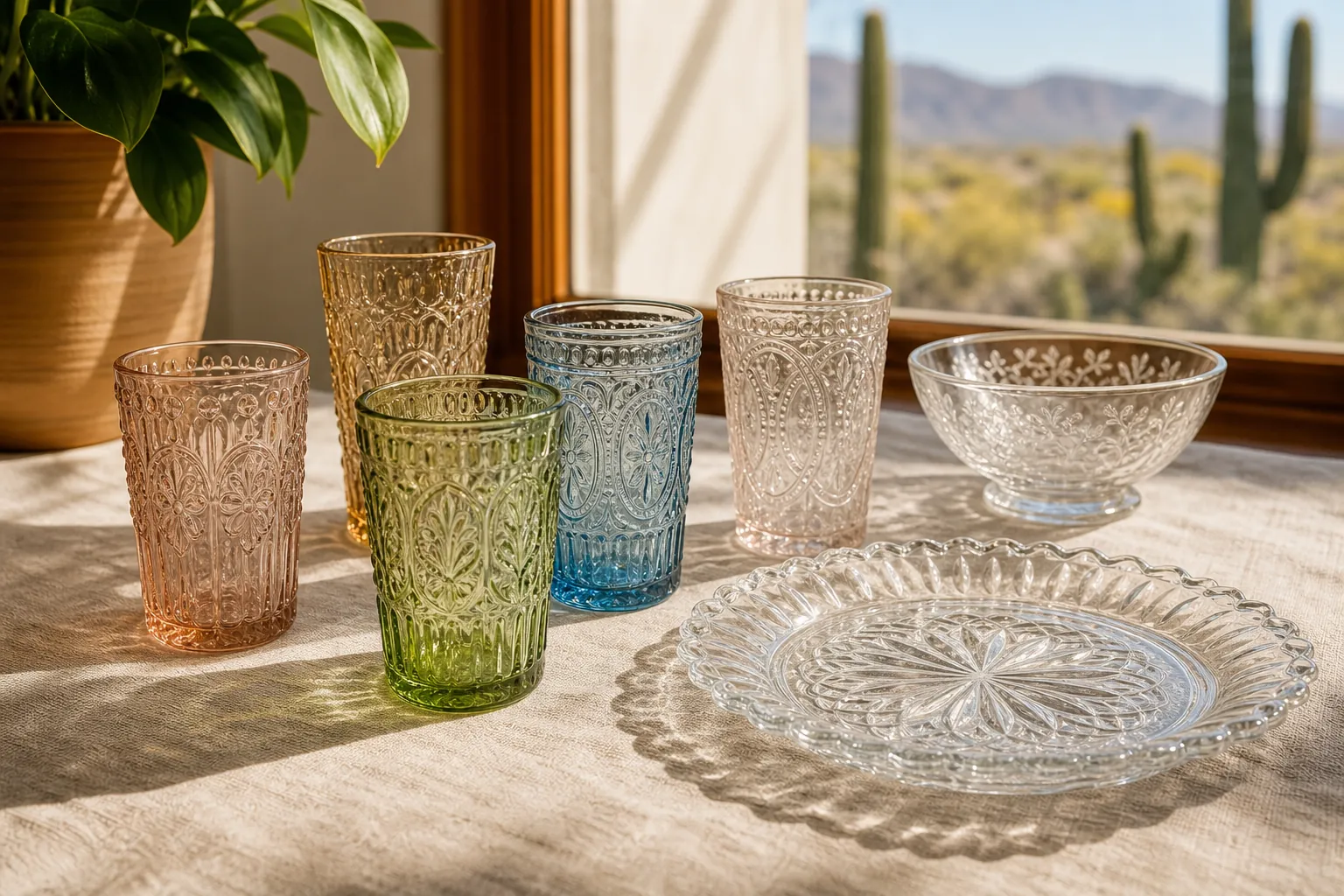
Books are a good foundation, not the whole arrangement. Add one object that changes the height or texture: a low ceramic bowl, a small tray, a brass box, a piece of vintage glassware, or a modest vase. The companion should leave the cover and spine visible. If it covers the book entirely, the books have become a coaster with a very complicated backstory.
A tray is especially practical because it gives the arrangement a boundary. It can hold the books, a candle, and the small things that otherwise drift around a living room. A shallow bowl works well for matches, reading glasses, or a few collected objects. One sculptural piece can add height, but choose something stable enough that opening a book does not turn the table into an obstacle course.
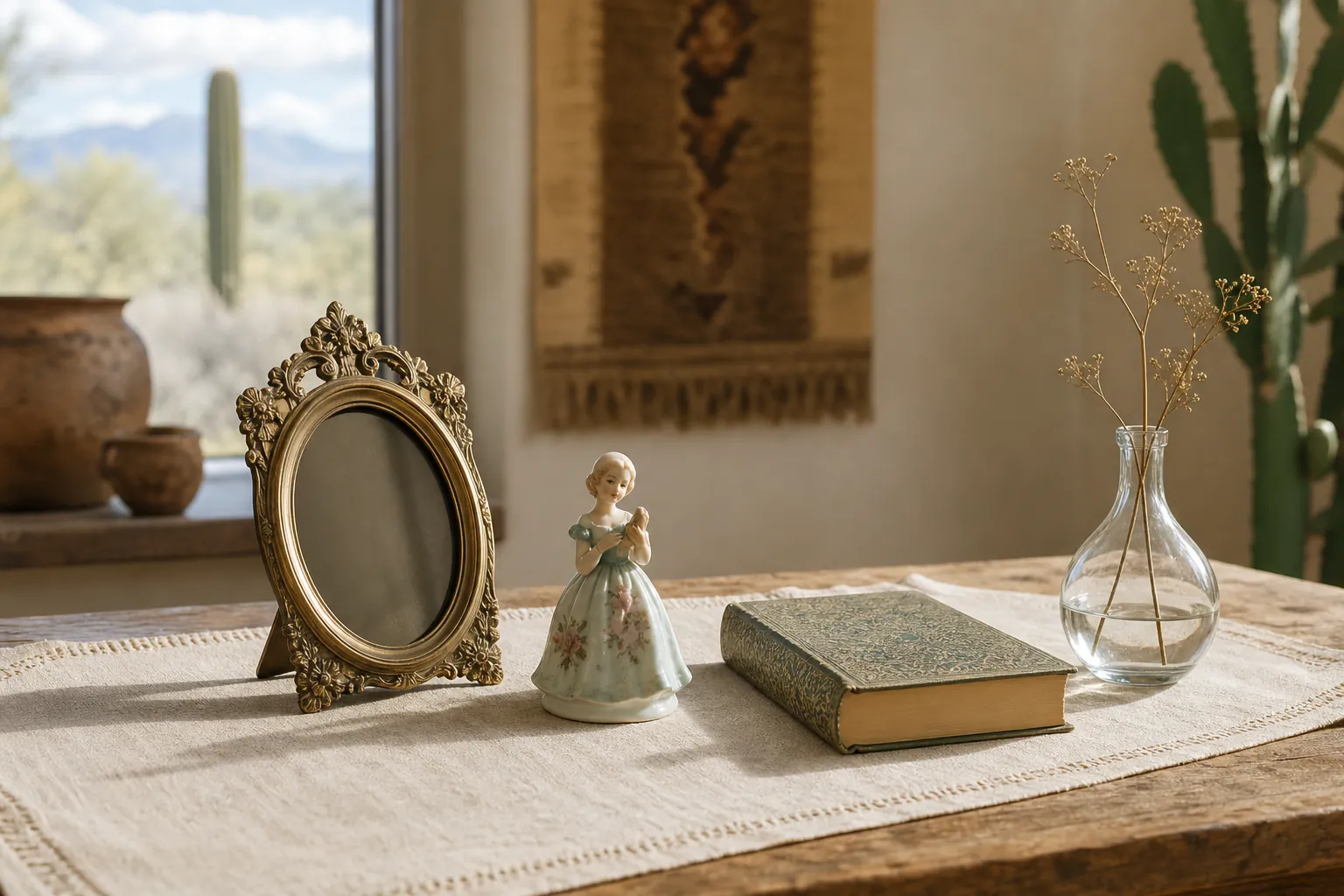
For a room with lots of patterned upholstery or art, keep the companion simple. For a quiet room, a hand-painted dish or a small vintage figurine can add a welcome bit of character. The book stack is there to create a pause, not to demand attention from every corner of the room at once.
Use books to make a display feel personal
A good coffee table arrangement gives guests a small clue about what matters to you. That can be as direct as a book about your hometown or as subtle as a collection of floral illustrations that echoes the colors in the room. The strongest groupings often combine one visual book, one personal book, and one book with a beautiful material or title on the spine.
Try moving the stack before buying anything new. A travel book might look better beside a brass candlestick than beside a plant. A book with a red cover may pull together an otherwise quiet rug and artwork. Photograph a few arrangements, then look at them later. It is much easier to notice when a stack is too tall, too busy, or too small for the table when you see it as a whole.
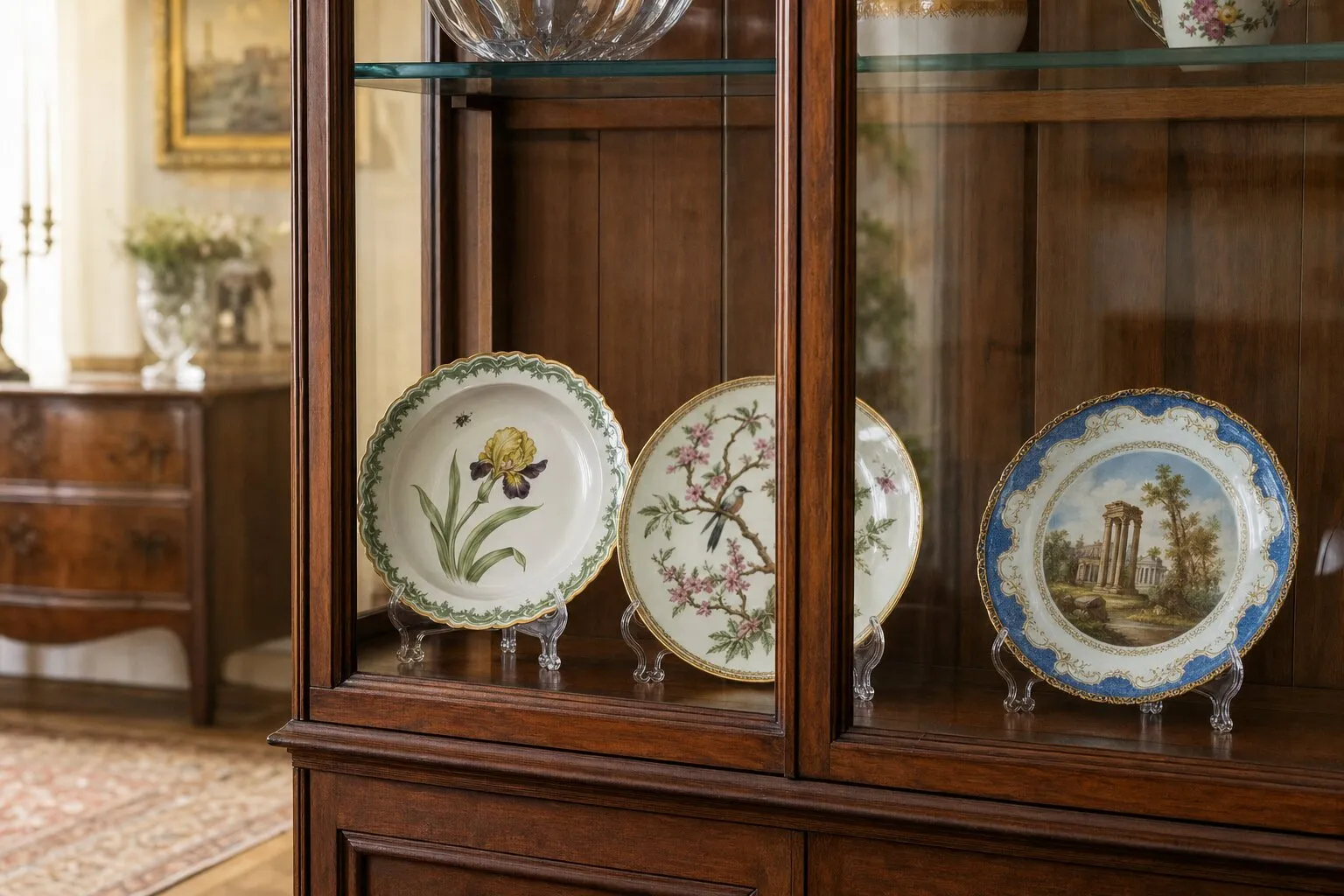
The same editing principle works in a cabinet or on an open shelf. Pair a small stack with a vase, a framed photograph, or one display piece, then leave some air around it. Our guide to displaying cabinet plates follows the same useful rule: empty space is what lets each detail be seen.
Keep the table useful, not precious
A coffee table needs a clear working surface. Leave room for a drink, a game, a delivery dinner, or a child’s drawing. If the table is small, use a single book with a low bowl rather than forcing a full stack into the middle. On an ottoman, a sturdy tray can give the books a stable base and make it simple to move the display when you need the space.
Place books away from a sunny window, radiators, damp walls, and direct candle heat. Avoid resting a drink directly on an old cover. It only takes one cold glass to make a permanent ring or wrinkle a cloth binding. If a book is worth keeping, treat it as a book first and an accessory second.
Rotate the stack now and then. Changing the top book, turning a few spines outward, or moving one volume to a bedside table gives the room a fresh look without adding more objects. It also means you get to enjoy more of your books instead of letting the same three become permanent furniture.
Choose vintage books with a collector’s eye
Condition should match the role. A book you want to read and open often needs a sound binding and clean enough pages to enjoy. A purely decorative book can carry more patina, provided it is stable and does not shed, smell strongly, or leave marks on your table. Look for complete covers and illustrations, and be careful with books that have been stored in an attic, garage, or humid basement.
Do not judge solely by age. A 1970s art book with a wonderful cover may be exactly right for your room. A much older book with a brittle spine may be better protected in a bookcase. Buy what you respond to, then give it the kind of display its condition can handle. That balance makes a collection enjoyable instead of anxious.
Books also make thoughtful gifts, especially when the subject connects to someone’s home, hobby, or memories. Pair one with a small piece of vintage china or a decorative object, and the gift begins to feel like the start of a story rather than another thing to store. For more ideas, our guide to choosing a vintage gift can help you look for the details that make a present feel personal.
Find your next display piece
Vintage books work especially well beside other finds with a little age and shape. A bowl, candleholder, small tray, figurine, or piece of glass can give the stack a sense of place without making it feel overly arranged. Browse the current collection when you are looking for the one accent that helps a coffee table, shelf, or reading nook feel more like your own.
Start small. One good book, one useful object, and a little breathing room are enough. A collected home is not built by filling every surface. It is built by choosing the few things you will be happy to notice every day.
Frequently asked questions
What kinds of vintage books work best on a coffee table?
Choose books with a subject you genuinely enjoy and a sturdy, well-proportioned format. Art, architecture, travel, gardens, design, photography, regional history, and illustrated reference books all work well because guests can open them at almost any page and find something interesting.
How many books should go on a coffee table?
A stack of two or three is usually enough for a typical coffee table. Add a tray, bowl, or small object only if there is still room to set down a drink or use the table comfortably. The books should make the table feel more inviting, not less useful.
Should vintage coffee table books match?
They do not need matching covers or the same subject. A shared color, material, era, or mood is enough to make different books feel intentional. A deep green art book, a warm tan travel volume, and a faded red history book can look wonderful together when their scale feels balanced.
Can I display fragile vintage books open?
An occasional open display is fine for a sound book, but avoid forcing a tight binding flat or leaving delicate pages in direct sun. For older, brittle, or unusually valuable books, show the cover or use a supportive book stand instead.
Related notes
Find a detail worth setting out.
Browse vintage books, glass, china, and decorative finds selected for homes with character.
Shop Vintage