
How to Identify Vintage Figurines: A Collector’s Guide
A close look at marks, material, construction, and condition can turn a charming mystery into a piece you understand well enough to enjoy.

A vintage figurine asks you to slow down. It may be a porcelain bird, a ceramic dog, a painted horse, or a small figure with a story suggested by its pose. The first impulse is usually visual. You notice the color, expression, or silhouette. Identification begins when you take that first impression seriously enough to look at the rest of the object.
This is not about turning every shelf piece into a treasure hunt. It is about learning a reliable order of observation. When you know what to photograph, where to look for a mark, and which flaws matter most, you can buy more confidently and describe your own pieces more clearly. A maker name is useful. The whole object is better evidence.
Start with the whole figure, not the name you hope to find
Before turning a figurine over, take in its shape. What is it depicting? Is it an animal, a person, a religious figure, a character, or a decorative scene? Note the scale, posture, colors, and any unusually specific details. A standing spaniel with a glossy black-and-white coat tells a different story from a matte bisque bird or a hand-painted resin horse.
Then name the material as carefully as you can. Porcelain often feels fine and dense, with a smooth glazed surface and a crisp edge where the glaze stops at the foot. Earthenware can feel warmer or more substantial, while bisque has an unglazed, velvety surface. Resin and composite figures may show a mold seam or a lighter, less ceramic feel. Do not rely on one clue. Material, finish, weight, and the underside should agree.
That simple description gives your research somewhere honest to start. “Small white porcelain bird with a blue mark” is far more useful than deciding it must be from a famous maker before the evidence is there. The Met’s cataloged Derby porcelain cat is a useful reminder that an object’s maker, material, date, and dimensions all work together to tell its story.
Read the base like a collector
The underside often holds the fastest route to a better identification. Look for an impressed mark pressed into the clay, a painted or printed backstamp, a paper or foil label, a model number, a country of origin, or an artist’s signature. Photograph the base straight on, then take a second close image with the light coming from the side. Faint impressions can be almost invisible in a quick overhead photo.
Write down every letter and number exactly as it appears. A number may identify a mold or model, but it does not automatically tell you a date. A country mark can provide context, but it is still only one part of the case. Labels can fall away, and printed marks can wear. Treat a mark as a clue that should match the design, body, and apparent age of the figurine.
When a mark is hard to read, resist the temptation to improve it. Search a description of the symbol, compare it with trusted museum or maker references, and keep your conclusion modest until the details line up. Good collecting has room for “possibly” and “not yet known.” That is much more satisfying than attaching a name that later proves wrong.

Look for the details that separate a match from a near-match
Once you have a likely maker or family of pieces, compare the details that are hardest to fake by accident. Look at the shape of ears, the curve of a tail, the fingers, flower petals, clothing folds, and the way a figure meets its base. On animal figures, study the breed, stance, and expression. On a human figure, the hairstyle, costume, or prop may narrow the search much faster than a general color.
Measure height, width, and depth. A listing photo can make a six-inch figure look monumental or a twelve-inch figure look small. Measurements also help distinguish a miniature from a standard edition, or one version of a figure from another. If there is a pair, compare both pieces directly. Similar figures may be companions, but they may also be different molds, sizes, or later reproductions.
Decoration deserves the same attention. Hand-painted features often have small variations and a more layered look than a flat printed transfer. Gilding may wear naturally at high points. A neat seam, a cleanly finished foot, and carefully modeled edges can be signs of quality, but no single trait proves age or maker on its own. The goal is a collection of clues that point in the same direction.
Condition comes before value
Figurines concentrate their vulnerable parts in exactly the places that make them charming. Fingers, ears, tails, flowers, handles, lace-like trim, and long narrow elements deserve a close inspection. Turn the piece slowly under bright light. Run a fingertip gently along the rim and raised edges, but do not press on a delicate detail just to test it.
Look for chips, hairline cracks, glue lines, overpainting, cloudiness, missing decoration, and scratches on the base. A repair can be hard to see from the front, especially when it has been painted to blend in. Check whether the glaze and color continue naturally around a suspected area. A repaired tail or finger does not make a piece worthless, but it should affect the price, description, and how you choose to display it.
Completeness matters too. A figure with its original companion, detachable prop, box, or certificate may be easier to document. Still, a complete story is not the only reason to keep a piece. A small, honest flaw may be entirely acceptable when a figurine has real decorative presence or personal meaning. Decide whether you are buying for a display, a gift, a maker-focused collection, or a specific period. That gives condition the right context.

Use sold examples carefully when thinking about price
It is easy to find an ambitious asking price. It is harder, and more useful, to compare pieces that have actually sold. Start only after you have a solid description: maker or likely origin, subject, model or pattern when known, size, condition, and whether the piece is complete. A beautiful title without those details can lead you to unrelated objects that happen to share a color or animal.
Compare like with like. A pristine porcelain figure and a similar figure with a restored hand are not interchangeable. A rare model number can matter, while a common form in excellent condition may still be the right piece for a collector who loves it. Market value shifts with demand, but the practical habit stays the same: identify first, compare carefully, and do not let one high listing set the story.
Personal value belongs in the decision too. A modest bird that completes a memory of a grandparent’s cabinet can be a better choice than an objectively grander piece that never feels at home. Collecting becomes more enjoyable when financial value and personal value are allowed to be two different things.
Give delicate figures a safe place to live
A figurine needs more room than its footprint suggests. Leave space around a tail, hand, flower, or other raised detail so it cannot brush another object when you dust. Choose a stable shelf or cabinet away from a door swing, busy edge, direct sun, and sudden changes in temperature. Keep heavier objects low and light, fragile pieces at a comfortable viewing height.
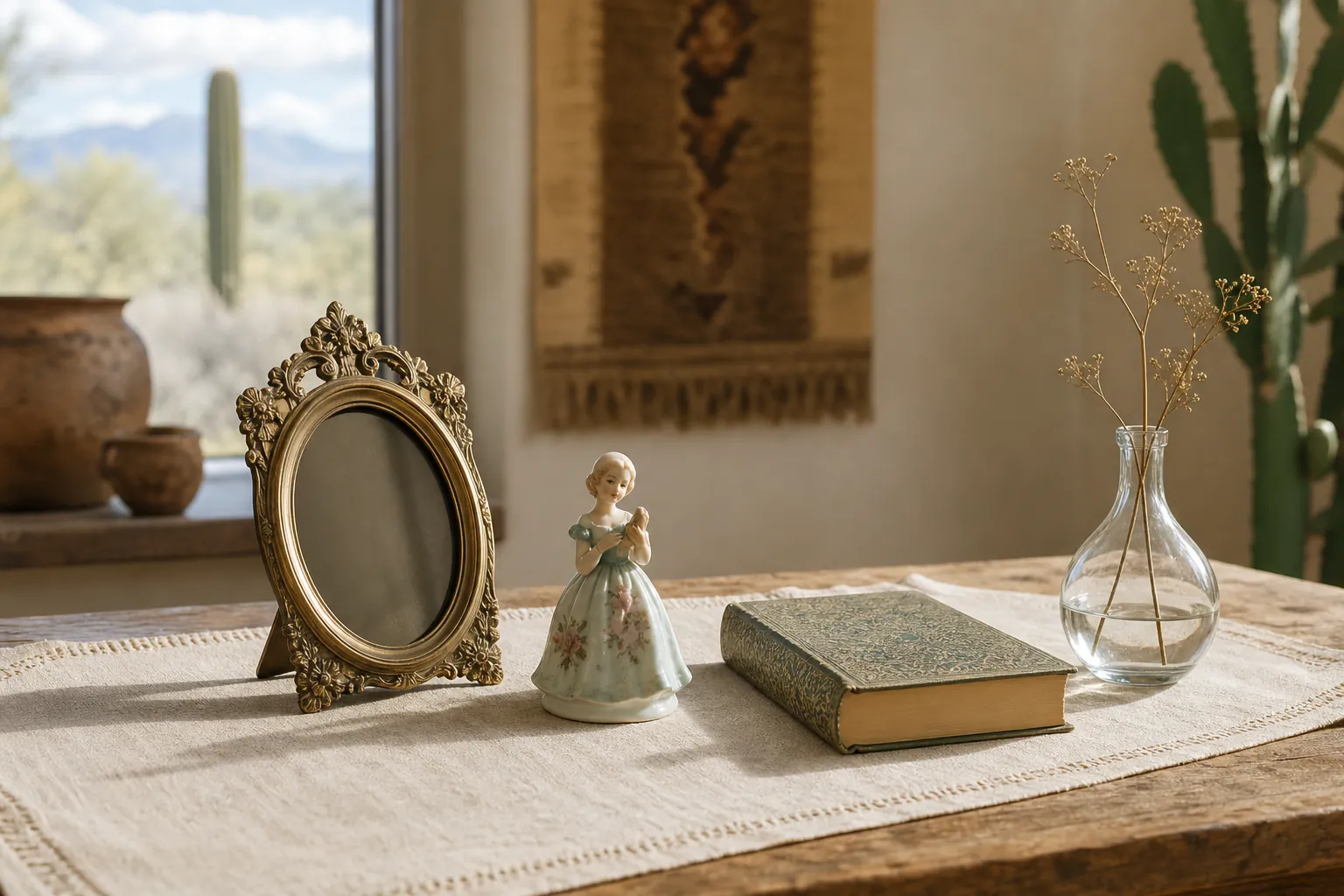
Group figures by a connection that makes sense in your room. A small animal group can sit with old books and pottery. A bird figurine may look right beside a framed print or a vase. One figure can stand alone on a stack of books. The goal is not to fill every inch. A little breathing room helps the modeling and expression read clearly.
Let the object be seen and enjoyed without asking it to balance in a risky spot. A stable shelf or cabinet makes it much easier to appreciate the details that drew you to the piece in the first place.

Build a collection around what you notice twice
You do not need one maker, one era, or one material to collect figurines well. You may be drawn to birds, dogs, horses, childhood scenes, small animal groups, or figures that make a room feel slightly more playful. A focus can be practical, such as a certain shelf size, or emotional, such as pieces that recall a family pet. Let the collection become specific through your choices rather than trying to make it look finished too quickly.
Keep simple notes as you go. A photo of the base, measurements, condition, maker information, and the reason you chose a piece can save you a great deal of confusion later. It also turns an assortment of objects into a collection with a story. The same patient eye is useful when choosing a vintage gift, because details and condition are what make a piece feel thoughtful rather than random.
Figurines with character, currently available
These current TucsonTiques listings are a good place to practice looking closely at material, modeling, condition, and individual detail.
Rare Find Vintage Porcelain Sheltie Dog Figurine | Collie Lassie Statue, Made in Japan
$54.99Trail of Painted Ponies Las Vegas Show Horse Figurine | La Marr Hand Painted Resin
$79.99Vintage Boehm Mockingbird Figurine, Porcelain Bird Sculpture Decor
$69.99Bronze Hippo Art Small Statue, Cold Painted Animal Desk Decor
$54.99The term “Etsy” is a trademark of Etsy, Inc. This application uses the Etsy API but is not endorsed or certified by Etsy, Inc.
Find the piece that keeps your attention
Tucson Collectibles selects individual finds for guests who enjoy the details. Browse the vintage figurines collection for more decorative pieces, or explore the wider current collection when you want to follow a different thread. The best figurine is not necessarily the most famous one. It is the one you can picture noticing every day.
Frequently asked questions
Where should I look for a figurine maker’s mark?
Start underneath the base, then check the back, inside a hollow form, and under any felt or paper label. Photograph every mark, number, and label before searching. A tiny symbol or mold number can be more useful than a broad description of the front.
Does an unmarked figurine mean it is not vintage?
No. Many older decorative figures are unmarked, and some marks were printed lightly enough to wear away. An unmarked piece calls for a more careful look at material, modeling, construction, decoration, and comparable examples. It is not a reason to invent a maker.
Are chips always a reason to pass on a figurine?
Not always. A tiny, clearly disclosed base nick may be perfectly acceptable for a display piece you love. Chips on delicate fingers, ears, petals, tails, or a visible face can matter more. The right decision depends on price, rarity, placement, and whether you want to use or simply enjoy the piece.
How can I display figurines safely?
Use a stable shelf or cabinet away from busy edges, direct sun, and opening doors. Give fragile pieces room around their hands, tails, flowers, or other raised details. A low museum putty or a secure cabinet can add reassurance where pets, children, or vibration are a concern.
Related notes
Choose a piece with a point of view.
Browse vintage figurines, glass, china, and decorative finds selected for their character and charm.
Shop Vintage