
Collecting Vintage Tools: A Practical Beginner’s Guide
Maker’s marks, honest wear, and the pleasure of finding an object with a working history.
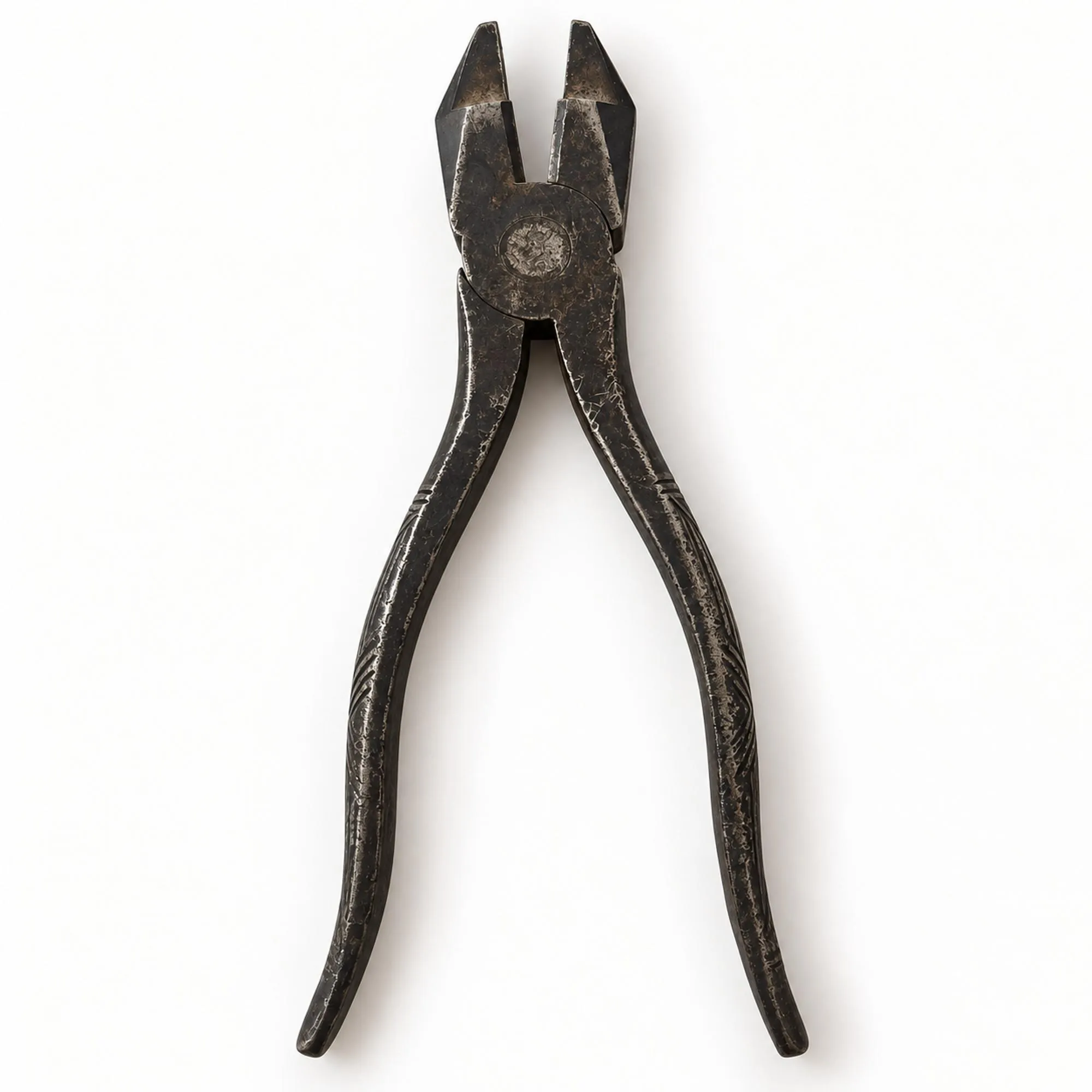
An old hand tool invites a different kind of collecting. Its shape tells you what it was made to do, and its worn surfaces suggest years of work. A small pair of nippers, a wooden plane, or a folding rule can be as satisfying to study as a piece of glass or china. These objects connect design to everyday effort: building a cabinet, repairing a fence, measuring a board, or making something last a little longer.
Collecting vintage tools does not require a workshop or a hunt for the rarest name. It starts with curiosity and careful looking. This guide focuses on hand tools, which are easier to examine and display than old powered equipment. Whether you want a useful bench companion, a thoughtful gift, or a small display of working history, learn to separate an appealing surface from sound construction. The best first purchase is one you understand well enough to enjoy.
1. Give your collection a clear direction
Before buying, decide what interests you most. You might collect tools from one trade, tools made in a particular town, compact measuring instruments, or pieces with distinctive handles. A narrow focus makes comparisons easier. After looking at several similar tools, you begin to notice a missing screw, an unusual jaw shape, or a maker’s stamp that would have escaped you in a mixed box.
Think about where the collection will live. A handful of small pliers and rules can fit in a shallow cabinet. Long saws and heavy planes ask for more space and stronger supports. Plan for the object’s full size, including handles and sharp edges, rather than the size of the photograph. Collecting should add interest to your home without turning every shelf into a storage problem.
Also choose between collecting for display and collecting for use. A beautiful tool with a damaged working edge may still have a place in a display. A tool intended for a working bench needs a closer assessment of its structure and operation. If you are just beginning, choose one complete, clearly described example rather than a large lot of unknown pieces. Our note on starting a vintage collection offers the same patient approach across other kinds of objects.
2. Learn the shape and purpose of common tools
Hand planes hold a cutting iron in a body that guides it across wood. Collectors may be drawn to wooden bodies, cast-metal bodies, shaped handles, or adjustment mechanisms. Before buying, check that the main parts are present and that the body is not visibly cracked. A handsome plane with an incomplete mechanism can become a much larger project than its price suggests.
Hand drills and braces introduce another family of forms. A geared hand drill turns a chuck through a crank; a brace has a sweeping handle that rotates a bit. Check the chuck, crank, grips, and any ratchet mechanism. A smooth-looking photograph cannot tell you whether the mechanism turns properly, so ask for a description of its movement.
Pliers, nippers, and wrenches make useful subjects for a smaller collection. Their jaws and handles are often easy to compare in photographs. An end-cutting nipper has its cutting edges at the end of the head, while other pliers may be made to grip or bend. Rules, calipers, and squares appeal to guests who enjoy precision and clear geometry. If measurement accuracy matters to you, remember that a surviving scale or straight-looking edge is not proof of calibration.
3. Read maker’s marks without rushing the date
Look for stamped names, cast lettering, model numbers, country names, and patent information. Photograph every mark before attempting any cleaning. A faint stamp can become easier to read under light from the side, and a close photograph gives you something to compare with catalogs and reference books. Copy the letters exactly, including words you cannot yet explain.
Keep the maker, the model, and the date as separate questions. A patent date describes a patent, not necessarily the year your particular tool was made. A company name may have remained in use across many years. An owner’s initials can be interesting history, but they do not identify the manufacturer. When the evidence only supports a broad period, a broad description is the honest one.
Compare construction as well as lettering. Handle shape, fasteners, the arrangement of moving parts, and the overall dimensions can help distinguish similar tools. Old repairs or replacement parts complicate the picture. Record those details rather than forcing them into a tidy identification. The Mid-West Tool Collectors Association is dedicated to studying and preserving tools, making specialist collecting communities a useful next step when a mark or function remains uncertain.

4. Use a real example: Bernard end-cutting nippers
The Bernard end-cutting nippers in the Tucson Collectibles catalog offer a good exercise in observation. The listing describes an approximately seven-inch steel tool with embossed crisscross handles and a circular Bernard mark near the hinge. It associates the Bernard name with the William Schollhorn Company of New Haven, Connecticut. The exact production year is listed as unknown, which is a useful boundary to keep when discussing the piece.
Begin with what the photographs actually show. Follow the outline of the handles, compare the two cutting faces, and study the hinge area. Decorative grip details give this everyday object visual character, but their appeal does not establish rarity. Ask whether the jaws meet, whether the joint moves, and whether there is any damage that the listing photographs do not reveal.
You can use the same process for an unfamiliar tool: name the visible parts, record the mark, note the dimensions, and separate confirmed details from open questions. Browse the current collection for the listing and its full condition description. Availability can change, but the habit of looking carefully remains useful long after one piece has found a new home.
5. Inspect condition from more than one angle
Start with the structure. Look for cracks in cast bodies, bent shafts, broken jaws, missing screws, and movement where parts should be firmly fixed. With wooden handles, examine the areas around fasteners and where the handle meets metal. A fine split in a decorative handle may matter differently from a split in a handle that will take force during use.
Next examine the working surfaces. A cutting edge can be worn, chipped, or uneven. Deep pitting on a gripping or cutting face deserves more attention than light discoloration on a handle. Do not test a blade with a fingertip, force a stuck hinge, or assume that tightening one screw will solve a structural problem. A tool can retain a wonderful shape while no longer being suitable for its original job.
For an online purchase, ask for the underside, both sides, the mark, and a close view of any flaw. Measurements should be explicit. If a seller says a tool works, ask what was checked. Opening and closing a pair of nippers is different from confirming that its cutting faces perform properly. Good descriptions make those limits clear. Missing information is a reason to ask, rather than a reason to fill the gap with optimism.

6. Compare prices for the same kind of object
Age alone is a poor guide to price. A tool’s maker, exact form, completeness, condition, and appeal to other collectors all affect what someone is prepared to pay. A familiar name on a badly damaged piece may be less useful to you than an unremarkable but complete example. Choose your budget before the excitement of a listing starts choosing it for you.
Compare completed sales when possible, rather than treating asking prices as results. Match the model and condition closely. A boxed tool, a tool with replacement parts, and a tool with an unreadable mark are different comparisons even when their titles look similar. Note whether shipping and auction fees are included. Heavy metal tools can cost enough to ship that the apparent bargain changes at checkout.
Avoid buying an unidentified object simply because it is described as rare. Ask what evidence supports that word. If you cannot find a confident comparison, price it as an object you want to own, with an amount you are comfortable spending on the information available. Collecting can be rewarding without becoming a promise of profit. The pleasure of understanding a modest piece often lasts longer than the thrill of guessing at a valuable one.
7. Preserve character before attempting restoration
Photograph the tool as received, including marks, finishes, repairs, and damaged areas. Remove loose dust with a soft brush and keep the object dry while you decide what further care it needs. A tool made from metal and wood needs an approach that respects both. Soaking the whole object, polishing every surface, or stripping paint can remove evidence you wanted to preserve.
The Canadian Conservation Institute’s guidance on iron care distinguishes compact, adherent corrosion from active corrosion that sheds powder or flakes. It also cautions against routinely cleaning museum objects down to bare iron. For a home collection, the practical lesson is to examine the surface before choosing a treatment. A dark, firmly attached surface and fresh, crumbling rust call for different decisions.
Aggressive abrasion can erase faint stamps, alter edges, and destroy an old finish. Leave an unusual, valuable, painted, or heavily corroded piece alone until you have suitable advice. Preparing a common tool for regular use may involve sharpening or other work, but that is a separate goal from preserving a collectible surface. Decide which goal matters first. If active corrosion keeps returning, consult a conservator rather than repeating stronger cleaning treatments.

8. Store and display tools thoughtfully
Display tools where you can see their forms without creating a hazard. A shallow cabinet or sturdy shelf works well for small pieces. Secure heavy objects against rolling or tipping, and keep cutting edges beyond the reach of children and pets. Avoid hanging a tool from a weak or cracked handle. Supports should carry its weight without squeezing fragile parts.
Keep the collection away from damp walls, open windows, and places with condensation. Even in Tucson, a bathroom, evaporative cooling, a leak, or seasonal humidity can create an unsuitable corner. The Canadian Conservation Institute’s basic iron-care guidance explains why moisture deserves attention when preserving iron. Check stored pieces periodically instead of assuming that a closed drawer will protect them indefinitely.
Group by shape, trade, or material and leave space between objects. A few tools with visible details often make a stronger display than a crowded arrangement. Keep a simple record of each purchase: seller, price, dimensions, markings, condition, and any care you perform. Save photographs separately from the object. For ideas on arranging your finds, read decorating with collectible hardware and tools.
A small checklist before you buy
Can you describe what the tool does? Can you read or photograph the mark? Are the dimensions clear? Have you checked the main structure, working surfaces, and moving parts? Does the price make sense beside comparable examples? Have you decided whether you are buying for display or use? Those six questions prevent many avoidable disappointments.
You do not need every answer to be perfect. You do need to know which answers remain uncertain. An unidentified piece can be a lovely purchase when its price, condition, and purpose fit your expectations. Leave room in the budget and on the shelf for learning. One well-understood tool is a better foundation than a box bought only because everything in it looked old.
Find objects worth a closer look
At Tucson Collectibles, our guests can explore vintage finds across tools, decorative objects, glassware, and china. Browse the shop for current availability and read each listing’s photographs and condition notes before choosing a piece. A tool can also make a thoughtful present when it connects to someone’s trade, hobbies, or family memories. Our guide to choosing a personal vintage gift can help you make that connection.
The strongest collection is one you enjoy studying as much as owning. Begin with a form that interests you, ask careful questions, and keep the evidence with the object. Worn steel and an old handle have plenty to say when you give them time.
Frequently asked questions
What should a beginner collect?
Choose a complete, clearly described hand tool whose purpose interests you. Condition and your intended use matter more than a famous name.
Does a patent date show the manufacturing year?
No. It refers to the patent. Compare marks, construction, and reliable references to narrow the period.
Should I polish a vintage tool?
Record its marks and condition first. Aggressive polishing can remove old finishes and faint stamps. Seek specialist advice for unusual or heavily corroded pieces.
Can I use a vintage tool?
Some sound examples can be used after appropriate inspection and preparation. Age and appearance do not prove working condition.
Related notes
Find your next conversation piece.
Explore vintage finds chosen for curious guests and homes with character.
Browse the Collection